
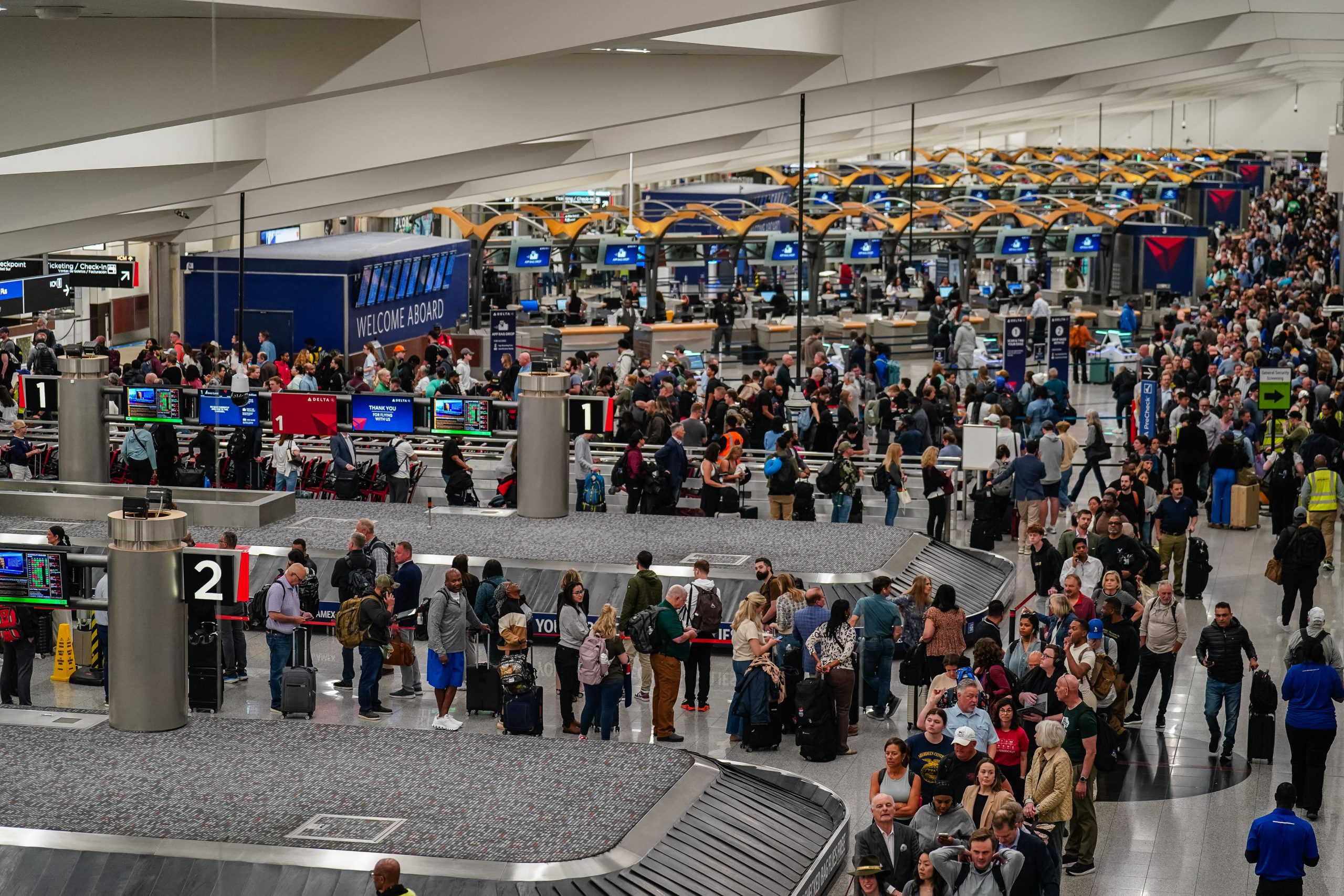

Privatization is no magic bullet. But the status quo is untenable as well. KC Guidry usually arrives at the airport two hours before a flight, but she anticipated a challenging experience at Houston’s George Bush Intercontinental Airport on March 23. “I heard the lines were long through TikTok and the news,” she said. With a reported 200-minute wait time the day before and the suspension of PreCheck and CLEAR services, she adjusted her schedule. Arriving at 12:30 AM for a 7:20 AM flight, she faced a lengthy security line, only getting through by 4:30 AM. By 9:30 AM, wait times were forecasted to be near four hours and averaged closer to five by day’s end, with lines extending into the parking garage.
Airport chaos defines the Trump era, compounded by high oil prices, a deteriorating safety system, and the Iran war. For the third time in six months, TSA funding lapsed due to a budget impasse. Nearly 50,000 Transportation Security Officers (TSOs) have been without pay since February. As “essential workers,” they must work unpaid, but many call out sick. Illegal to strike, TSA absences have spiked, and this week it’s close to 10% nationwide, exceeding 33% at major airports like JFK, Hartsfield-Jackson, and Bush Intercontinental.
Despite the disruption, the Trump administration is slow to resolve the budget deadlock. A recent CBS News/YouGov poll showed disapproval of the shutdown and the handling by Republicans. President Trump links TSA funding to passing the Safeguard American Voter Eligibility (SAVE) Act, which Democrats oppose. He rejected a compromise on reopening the department. Instead, Trump directed ICE agents to assist TSA at airports, an unexpected move. ICE agents were seen offering minimal help, merely present and occasionally assisting with luggage scanning.
Trump’s stance aligns with the Heritage Foundation’s Project 2025, advocating TSA privatization. The document suggests treating TSA as a national security provider and deunionizing its workforce until privatized. Ex-DHS Secretary Kristi Noem pursued deunionization but enjoyed her department’s power, attending ICE raids and misusing funds for private jets and a campaign ad. Her successor, Markwayne Mullin, prefers a less public role but supports the Heritage Foundation. He may see an opportunity to privatize the TSA, as Trump withstands public disapproval to push his agenda. TSOs are resigning at high rates. As Mullin takes charge, supporters of privatization sense a chance for change amid ongoing airport woes. The alternative models, like those at Kansas City International or Orlando Sanford with third-party security, offer contrasting outcomes, from efficient operations to reported challenges at Calgary International.
In an environment where the TSA serves as political leverage, travelers must brace for disruptions and lengthy wait times. If Trump criticizes airport conditions, the cause can be traced to his administration.