
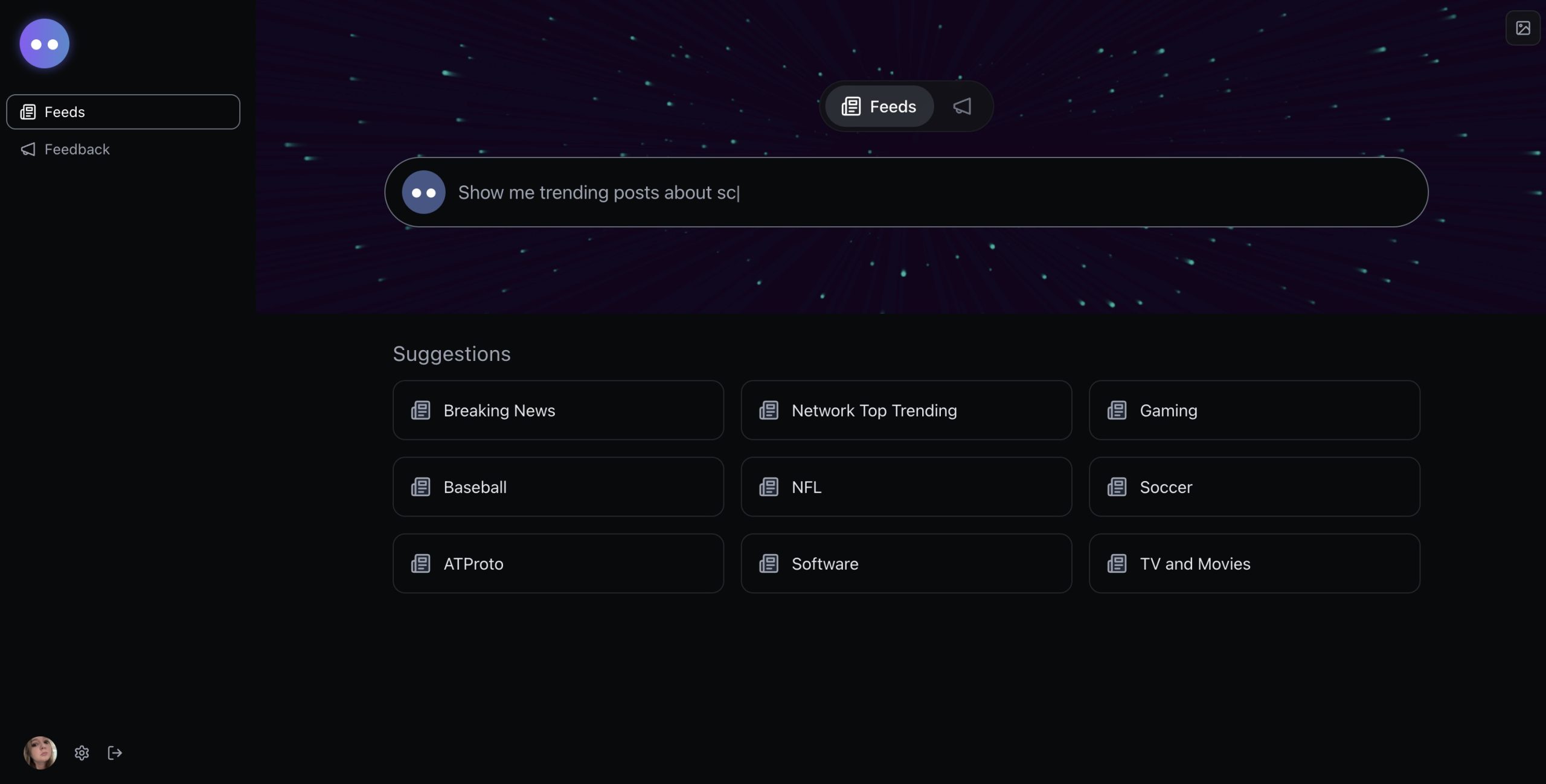

The team from Bluesky has developed a new app called Attie, an AI assistant that enables users to design their own algorithm, create custom feeds, and potentially develop their own social app. This is not a social network, distinguishing it from previous projects.
During the Atmosphere conference, Bluesky’s former CEO Jay Graber, now chief innovation officer, and CTO Paul Frazee introduced Attie. Attendees will serve as initial beta testers for the app, which uses Anthropic’s Claude to create an agentic social app based on the AT Protocol, Bluesky’s foundational protocol.
Interim CEO Toni Schneider clarified that Attie is a standalone product, separate from the Bluesky app, marking the first release from Jay Graber’s new team. Users can build custom feeds with natural language commands and sign in using their Atmosphere login, allowing Attie to access shared data across the ecosystem to tailor the experience.
Users can ask Attie questions, curate personalized feeds, and shape the app without coding expertise. Schneider highlights the aim to enable more people to build on the Atmosphere ecosystem. Attie is described as an AI product focused on benefiting people.
Initially, Attie will facilitate the creation and viewing of feeds, which will be accessible in Bluesky or any AT Protocol app. Future plans include allowing users to develop their own social apps and tools. The app was developed by Graber and her team shortly after stepping down as CEO to focus on building innovative solutions.
Graber criticizes AI’s current role in major platforms and envisions using an open protocol to empower users to create feeds, customize software, and find clarity in information. After securing $100 million in funding, Bluesky aims to ensure stability for its ecosystem and address challenges like privacy controls and monetization for its user base.
Despite financial backing from crypto investors, Bluesky does not plan to integrate crypto into its offerings but will explore other monetization methods. Potential models include subscription services and hosting options for communities on the protocol. Schneider draws parallels with WordPress, envisioning Atmosphere as an open system supporting a diverse and decentralized ecosystem.