

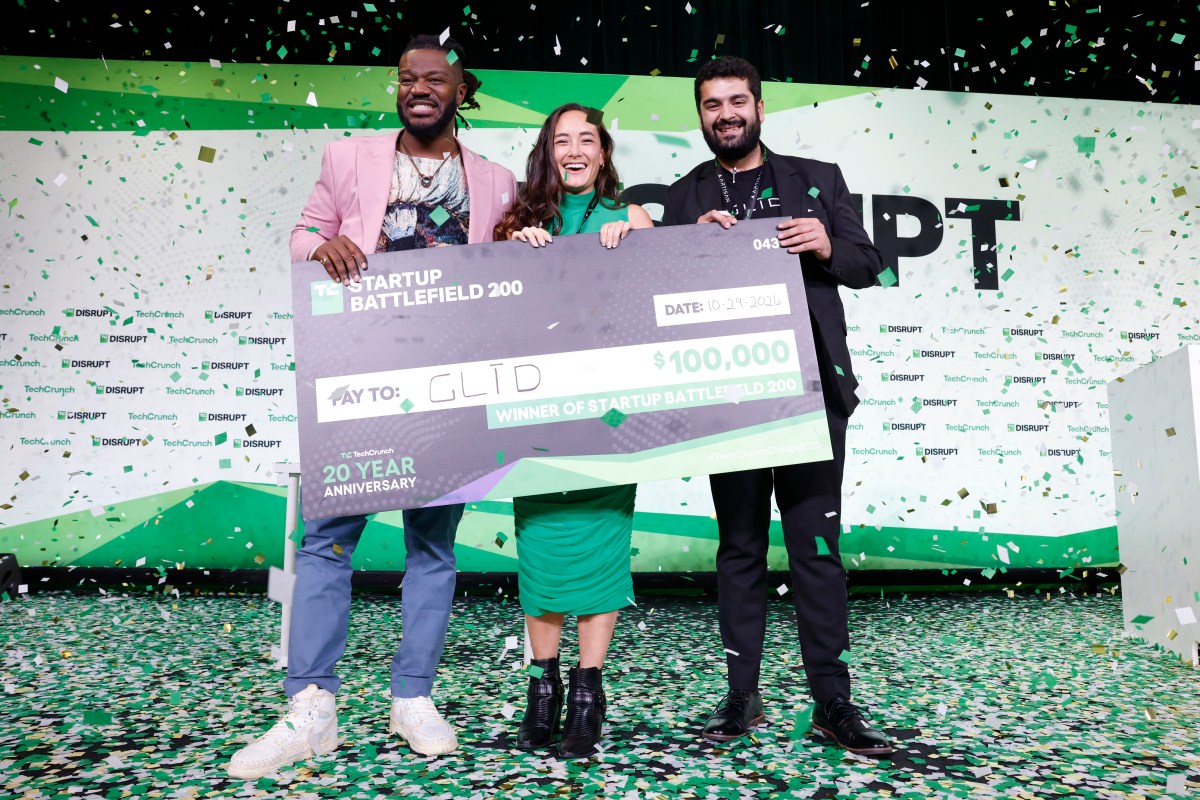
Every year, I go through thousands of Startup Battlefield applications, and consistently, the founders who ought to be on the stage often almost didn’t apply. They consider themselves too early, lacking traction, or assume the program is meant for more advanced companies.
Here’s what we’re truly seeking in applications and how to reflect it. The application deadline is May 27.
If you’re unfamiliar with this year’s Startup Battlefield details, it remains a premier element of TechCrunch Disrupt, scheduled for October 13-15 in San Francisco, culminating in the crowning of the future champion.
**What gets a company selected for Startup Battlefield**
Startup Battlefield is for the most promising, not the most polished, companies. We seek ideas that feel transformative and category-defining, capable of considerably impacting their industry or region. For each application, we ask a straightforward question: Does this introduce a genuine change?
**Product and disruption.** What are you creating, and does it signify a genuine shift in how something functions? We’re not looking for improved versions of existing solutions but what makes the current version seem obsolete.
**The founding team.** Why you, why now, and why this issue? Your origin story is a crucial component. Founders articulating their conviction clearly, beyond just market size, stand out.
**Industry and geographic diversity.** The Startup Battlefield 200 is globally diverse. We actively seek companies from all over the world and across tech sectors. If you’re innovating in a geography or sector that often lacks a spotlight, it’s significant to us.
**What doesn’t disqualify you from Startup Battlefield**
**Having press coverage.** Local or industry press is acceptable. Companies with core technology yet to shine fit well for Disrupt. Apply and present what you have.
**Being pre-launch.** While a working MVP is needed, having customers or revenue is not necessary. Pre-launch companies are welcome.
**Having applied before.** Many selected companies applied multiple times. A past rejection doesn’t determine your company’s future or current chances.
**Raising money.** Bootstrapped, pre-seed, and seed companies are welcome. Series A companies are reviewed case-by-case, especially in capital-intensive industries or markets with funding dynamics differing from Silicon Valley norms.
**Tips for a strong Startup Battlefield application**
**Show your product working.** Display your MVP in real-time, even if rough. We want to witness its functionality.
**Know your competitive landscape.** Acknowledge competitors honestly, and clearly explain why you excel. This is crucial and often overlooked.
**Tell your story.** Discuss why you started the company, your unique insights, and why you’re right for it. The founding narrative influences our team evaluations.
**Don’t overpolish.** Be honest about your stage. We can overlook roughness but not opaque applications.
**Resubmit if needed.** If you submit early, don’t worry. Resubmissions are allowed until the deadline, though editing the original is not possible.
**Learn from founders who’ve succeeded**
TechCrunch’s podcast for early-stage founders, Build Mode, is an excellent start. Hear from past Battlefield companies and investors on what it takes for a company to be globally showcased.
**The deadline to apply for Startup Battlefield**
Applications close on May 27, 2026. Selected companies are notified about two months before TechCrunch Disrupt.
If undecided, apply. The worst outcome is a non-selection, and you’ll have a stronger submission next year. We aim to discover you first. The application is your inaugural pitch.
**Apply for Startup Battlefield 200 →**