

Runway is stepping beyond creating AI video models to influence what is developed on them. The AI video generation company has introduced a $10 million venture fund to support early-stage firms working in AI, media, and world simulation, its founders revealed to TechCrunch. Additionally, Runway is launching a Builders program to provide seed to series C startups with free API credits, signaling its intent to cultivate an ecosystem around “video intelligence.”
Runway has established itself as a key player in AI video generation, with its tools utilized in film, advertising, and marketing. With the release of its “general world models” in December, the company is broadening its focus beyond creative tools to wider applications, partnering with startups to explore new use cases it cannot tackle alone.
“We believe video will lead to video intelligence, unlocking new use cases across industries that we currently can’t pursue but can potentially support with our research,” said Alejandro Matamala Ortiz, Runway’s co-founder and chief design officer, to TechCrunch.
Runway’s fund strategy consists of three categories:
1. Technical teams advancing AI and creating new architectures.
2. Builders forming the application layer on foundation models, bringing AI to novel applications.
3. Companies exploring new media creation, storytelling, and distribution.
For the past 18 months, Runway has discreetly supported a few early-stage entrepreneurs and firms, Ortiz mentioned. These include LanceDB, developing databases for AI applications, and Tamarind Bio, using AI for new protein design in drug discovery. Some startups, like real-time audio generation company Cartesia, are developing products that enhance Runway’s offerings.
“The future AI models will be based on multimodal data – video, audio, images, text combined,” Chang She, co-founder and CEO of LanceDB, stated to TechCrunch. “LanceDB is establishing the infrastructure for this, and Runway is uniquely supportive.”
Runway raised nearly $860 million so far from investors like Nvidia and Qatar Investment Authority, with a valuation of about $5.3 billion post-money. They financed the $10 million fund with current investors and close associates, planning to issue checks up to $500,000 for pre-seed and seed-stage firms.
Runway is not alone in investing in startups. OpenAI leads with its Startup Fund, AI search startup Perplexity opened a $50 million venture fund last year for seed-stage firms, and CoreWeave initiated CoreWeave Ventures in September to support AI companies.
“Many companies similar to ours are heavily investing in foundational elements to unlock new applications and companies,” Ortiz explained. “Companies our size, with only 150 people, can’t address everything, but we see potential in early partnerships with new teams benefiting from our work.”
Building with Characters
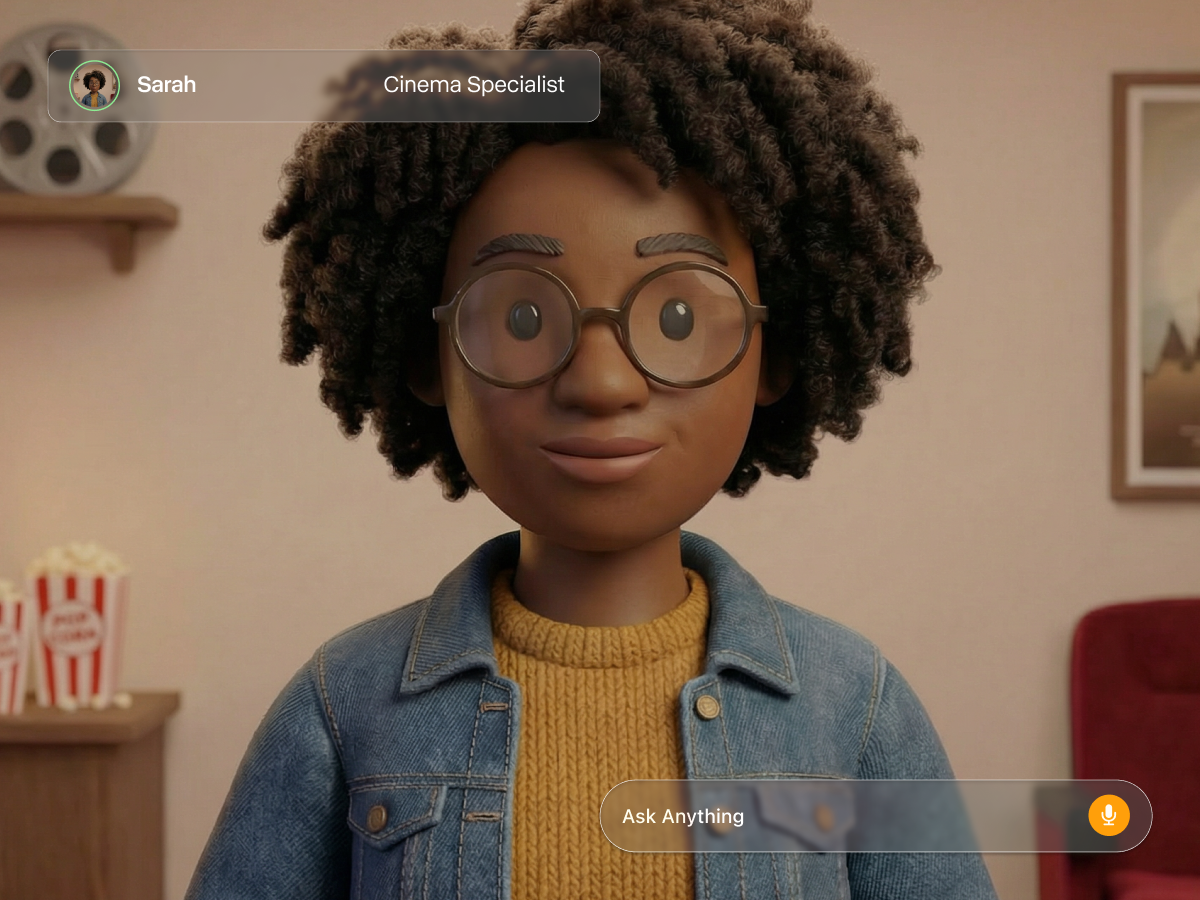
This philosophy drives Runway’s new program for builders. Eligible startups can apply to receive 500,000 API credits and access to Characters, Runway’s new real-time video agent API powered by its general world models.
Characters let users engage with generative AI agents in real-time, offering a range from cartoonish to photorealistic. The Builders program partly aims to see what startups will create with this technology.
“Until now, real-time video agent interaction wasn’t possible, so we are interested in how teams perceive the potential and benefits of this technology,” Ortiz expressed.
The program is active, with an initial cohort including Cartesia, MSCHF, Oasys Health, Spara, Subject, and Supersonik, using Characters for AI customer support agents, interactive brand characters, personalized onboarding, real-time sales assistants, and synthetic media tools.
Ortiz sees significant potential for telemedicine and education, expecting Characters to find usage in gaming and new entertainment experiences due to Runway’s entertainment focus.
“This is part of our general world models, transitioning towards models that are interactive, real-time, and immersive,” Ortiz noted. “Combining these elements, you could generate and simulate entire environments, interacting with characters in these worlds.”
Other startups like Inworld and Charisma are also creating interactive AI characters for games and storytelling, while StoReel experiments with AI-generated shows allowing user interaction. Character AI is already popular for its talkable AI characters.
“We genuinely believe a new type of internet is emerging—more personalized, immersive, and real-time,” Ortiz concluded.