

To create autonomous machines of the future, sometimes a model needs a model.
Companies working on self-driving cars, robots interacting with their environment, or autonomous construction equipment gather extensive video data for assessment and training.
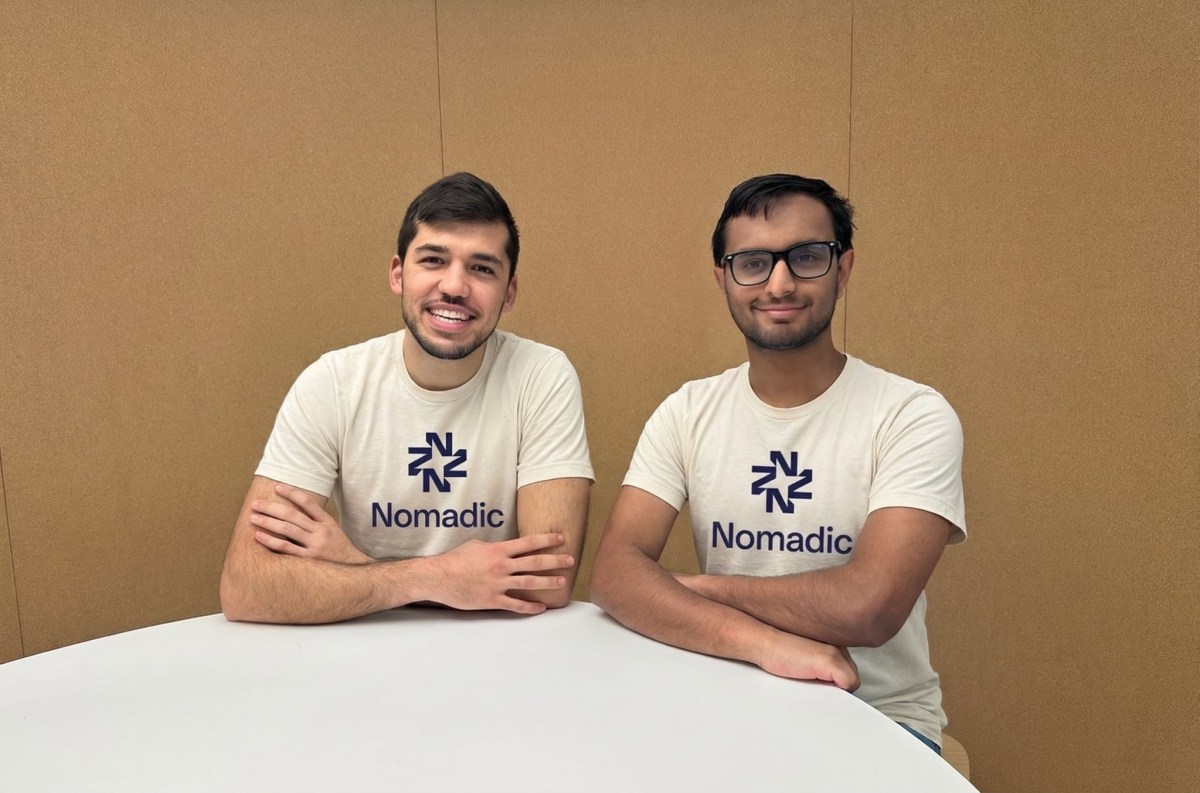
Currently, humans organize and catalog this video, but this approach isn’t scalable. NomadicML, launched by Mustafa Bal (CEO) and Varun Krishnan (CTO), aims to address challenges faced by companies with vast archives of fleet data.
The difficulty increases when searching for edge cases, which are rare but crucial for testing AI models.
Nomadic addresses this with a platform that converts footage into a structured, searchable dataset using vision language models, improving fleet monitoring and the creation of custom datasets for reinforcement learning.
The company announced an $8.4 million seed round at a $50 million valuation, led by TQ Ventures, with Pear VC and Jeff Dean participating. This funding will help expand its customer base and enhance the platform. Nomadic also secured first place at Nvidia GTC’s pitch contest.
The founders met as Harvard computer science undergraduates and encountered persistent technical challenges at companies like Lyft and Snowflake, Bal shared with TechCrunch.
“We provide insight on their footage, enhancing what drives AVs and robots,” he said. “That propels autonomous systems forward, not random data.”
For example, training an AV to recognize when it’s safe to run a red light as directed by police, or identifying vehicles passing under specific bridges. Nomadic’s platform identifies these for both compliance and training.
Customers such as Zoox, Mitsubishi Electric, Natix Network, and Zendar use the platform to advance intelligent machine development. Antonio Puglielli from Zendar noted the platform’s efficiency over outsourcing, highlighting its distinct domain expertise.
This model-based auto-annotation tool is becoming crucial for physical AI. Data labeling firms like Scale, Kognic, and Encord are developing AI tools for this, while Nvidia offers open-source models like Alpamayo for similar applications.
Varun emphasizes that Nomadic’s tool is more than a labeler; it’s “an agentic reasoning system” that discerns actions and context using multiple models. Backers believe this focus will lead to success.
Schuster Tanger from TQ Ventures explained that autonomous vehicle companies shouldn’t allocate resources to build Nomadic internally, as it detracts from their core focus—the robotics.
Tanger praised Nomadic’s team, noting Krishnan’s ranking as an international chess master and highlighting that all engineers have published scientific papers.
Currently, they are developing tools to understand lane changes from video or derive precise locations for robots’ grippers. The next challenge is creating tools for non-visual data, like lidar readings or integrating sensor data across modes.
“Handling terabytes of video and analyzing them with vast parameter models to extract insights is incredibly challenging,” Bal stated.