
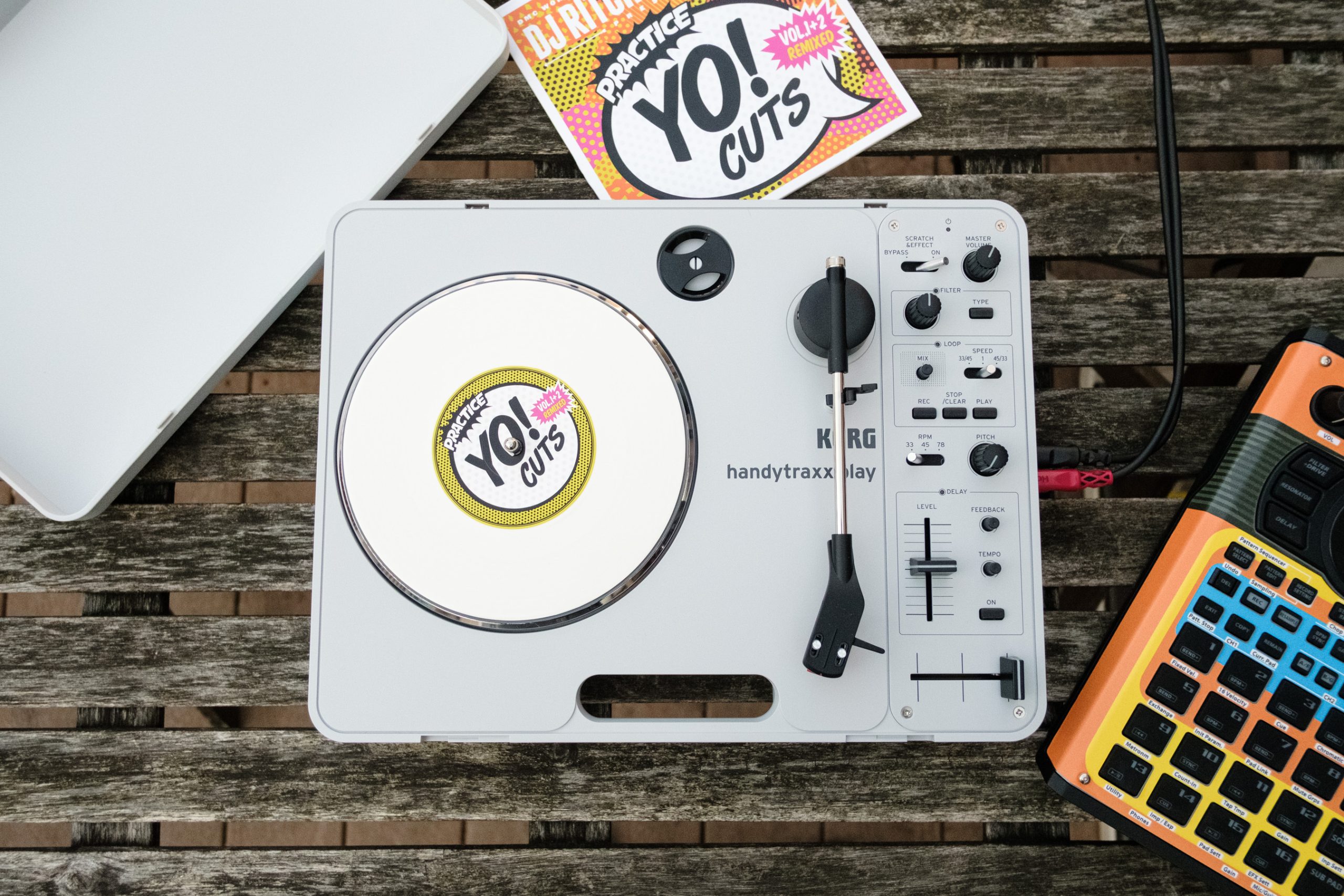

A portable turntable might be ideal for beginners, but a less expensive option could be preferable. About 20 years ago, I bought a turntable intending to use it regularly in my music setup. I hoped to learn scratching and explore vinyl for samples. Instead, it mainly connected to my stereo. Recently, I acquired the Korg Handytraxx Play, which, after some delay, allowed me to start learning to scratch, a long-held goal.
The Handytraxx is a self-contained, battery-powered turntable with an integrated speaker and fader, packaged like a suitcase. It can be easily stored away, making it convenient for sampling or scratching. Although I lack time for formal lessons, I’m enjoying practicing along with YouTube videos.
Conveniently portable, the turntable fits neatly in my cramped NYC office, shared with my wife, serving multiple purposes as a workspace, studio, and guest room.
The Handytraxx has both good and bad points. It’s easy to store and doesn’t require external speakers or power cords but has a cumbersome looper, a high price, and isn’t ideal for scratching 12-inch records. Reversible controls cater to both left- and right-handed users. While it features built-in effects, they’re not always practical. The looper is particularly clunky, requiring an unusual button-press technique.
Storage latches are problematic—misalignment issues allow the slipmat to fall out. These are minor for someone keeping it homebound, supporting up to 11 hours of battery power. Sound quality isn’t exceptional, with mediocre speakers, a headphones jack, and RCA outputs that don’t justify the $500 price tag.
As a learning tool, it’s effective, though expensive. Alternatives like the Reloop Spin ($349.99), Stanton STX ($249), or Numark PT01 ($169) might be better for beginners. However, the Handytraxx suits those seeking advanced portablism features.