
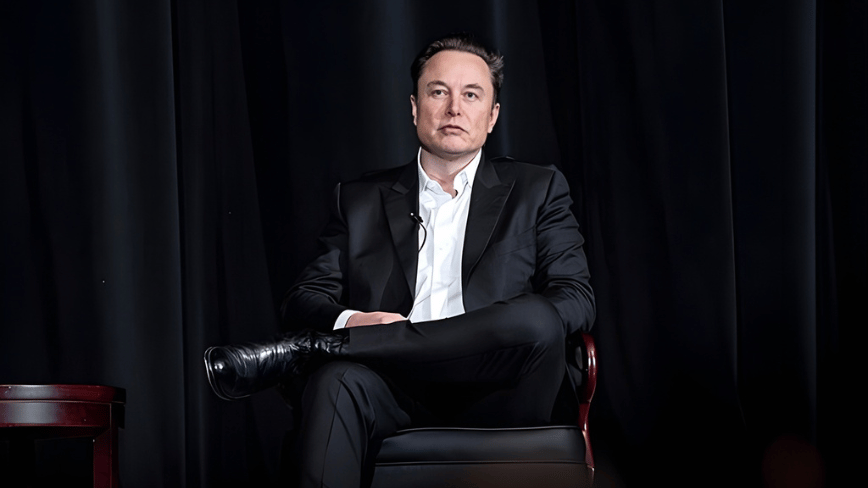

SpaceX has submitted confidential filings with the Securities and Exchange Commission to offer shares to the public, according to various sources familiar with the registration. This move could potentially result in the largest initial public offering in history and propel Elon Musk to become the first trillionaire globally. Dubbed internally as Project Apex, the offering may happen as soon as June, aiming to raise around $75 billion with a valuation potentially reaching $1.75 trillion. This would surpass Saudi Aramco’s $29 billion listing in 2019, the current record, valuing SpaceX at nearly 94 times its projected 2025 revenue.
According to CNBC, twenty-one banks are enlisted to manage the deal, with Goldman Sachs, JPMorgan Chase, Morgan Stanley, Bank of America, and Citigroup taking leading roles. Musk owns about 42% of SpaceX, according to PitchBook, with Forbes estimating his net worth at $823 billion. With a $1.75 trillion valuation, Musk’s stake would be valued at over $730 billion, catapulting his wealth past the trillion-dollar threshold, making him significantly wealthier than anyone else in modern history.
This company going public has evolved beyond its original rocket-centric focus. In February, SpaceX merged with Musk’s AI company xAI in an all-stock deal, valuing the merged entity at $1.25 trillion. This merger, which prompted questions about optics, governance, and valuation, combined a financially struggling company with one generating strong cash flow. SpaceX also incorporated Musk’s social media platform X, formerly known as Twitter, leading to a conglomerate involved in orbital launches, satellite internet, defense contracts, artificial intelligence, and social media, all under a single leader who is also the leading financial supporter of the current U.S. president.
The economic powerhouse behind the high valuation is Starlink, the satellite internet service, marking it as the most successful commercial space venture to date. In 2025, Starlink achieved $10.6 billion in revenue with 54% EBITDA margins, contributing to about two-thirds of SpaceX’s total $16 billion revenue. The subscriber base expanded from 10,000 beta users in 2021 to over 10 million paying customers across 150 countries by February 2026. The Federal Aviation Administration’s January 2026 approval for up to 44 annual Starship launches provided the operational capacity necessary for investors to support a public valuation of this magnitude.
The xAI segment is a work in progress. Musk admitted in March that xAI was “not built right the first time” and required a foundational rebuild. Since the merger, all 11 original xAI co-founders have exited the company, including prominent researchers from Google DeepMind, Google Brain, and Microsoft Research. Jimmy Ba, a co-author of the well-cited Adam optimization paper, left in February. Critics have described the merger as a financial bailout enabling xAI’s rising losses to be absorbed through Starlink’s cash flow ahead of the IPO, a claim Musk disputes.
The friction over conflicts of interest in this offering is unprecedented in U.S. capital markets. Over the last five years, SpaceX has secured $6 billion in contracts from NASA, the Department of Defense, and other federal bodies, per USAspending.gov. SpaceX is NASA’s primary contractor for crewed missions to the International Space Station, holding contracts worth over $4 billion for the Artemis lunar-landing program. The Pentagon is also reportedly set to award SpaceX a $2 billion contract for building a 600-satellite constellation for missile tracking under the Golden Dome missile-defense initiative, a $175 billion program announced by Trump with initial operations expected within three years.
Musk was the major individual donor to Trump’s 2024 presidential campaign and headed the Department of Government Efficiency (DOGE), which canceled over 10,000 federal contracts deemed wasteful. Observers noted that none of these cancellations impacted Musk’s own companies. Among SpaceX’s investors is Donald Trump Jr., the president’s eldest son, holding shares via 1789 Capital, a venture firm that brought him in as a partner after his father’s second presidential win. This fund, which exceeded $1 billion in assets, invested about $50 million in SpaceX and xAI and backed at least four companies that later received government contracts during the current administration. The White House has consistently denied any conflicts between the presidency and Trump family business activities.
The governance challenges extend beyond political ties. SpaceX, under Musk, has operated privately