
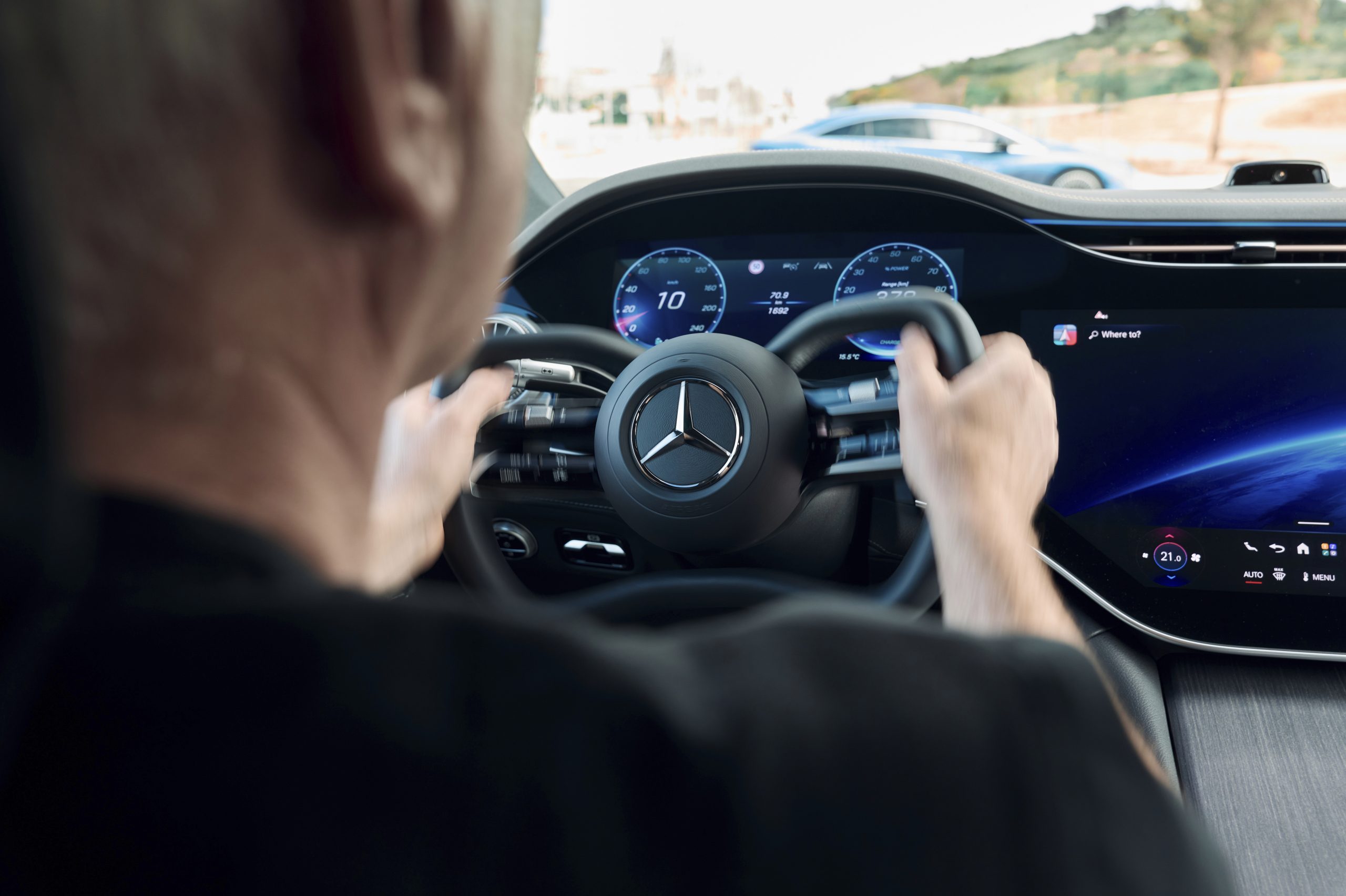

This marks Mercedes’ debut in steer-by-wire technology.
Steer-by-wire, a system that allows cars to be steered electronically without a physical link between the steering wheel and the steering rack, will soon be featured in Mercedes-Benz vehicles. The German automaker plans to introduce this technology in its upcoming refreshed EQS sedan.
Steer-by-wire systems substitute traditional mechanical steering components, like racks and pinions, with electronically controlled servos. Frequently used in aircraft, this electronic system processes driver inputs and transmits them to actuators that steer the car’s wheels.
Mercedes will still offer versions of the EQS with standard electromechanical steering alongside models equipped with steer-by-wire. Prior to production, the brand tested the new system over a million kilometers (over 621,000 miles). They implemented redundant system architecture and precision sensors alongside powerful control units to meet safety standards.
“These two signal paths ensure steering capability is always guaranteed,” according to a Mercedes press release.
In addition to steer-by-wire, the EQS will feature a new steering yoke that might be polarizing among fans. Resembling designs found in race cars or aircraft, many automakers, such as Tesla, Lexus, and Toyota, have experimented with similar yokes. Hyundai showcased an Ioniq 5 with fully sideways wheels at CES. Despite initial interest, automakers have retreated from yoke designs following feedback from users and safety groups, leaving uncertainty about Mercedes’ commitment to this style.
Mercedes claims the yoke changes the EQS interior by offering an unobstructed view of the instrument cluster and facilitates entry and exit. However, the importance of a standard wheel for support during turns and comfort over long distances shouldn’t be overlooked.
Initial responses to the new EQS are generally positive. The Drive hailed it as a “steering yoke that actually works,” while InsideEVs praised the steer-by-wire system as “the best one out there,” but refrained from specifically endorsing the yoke.