
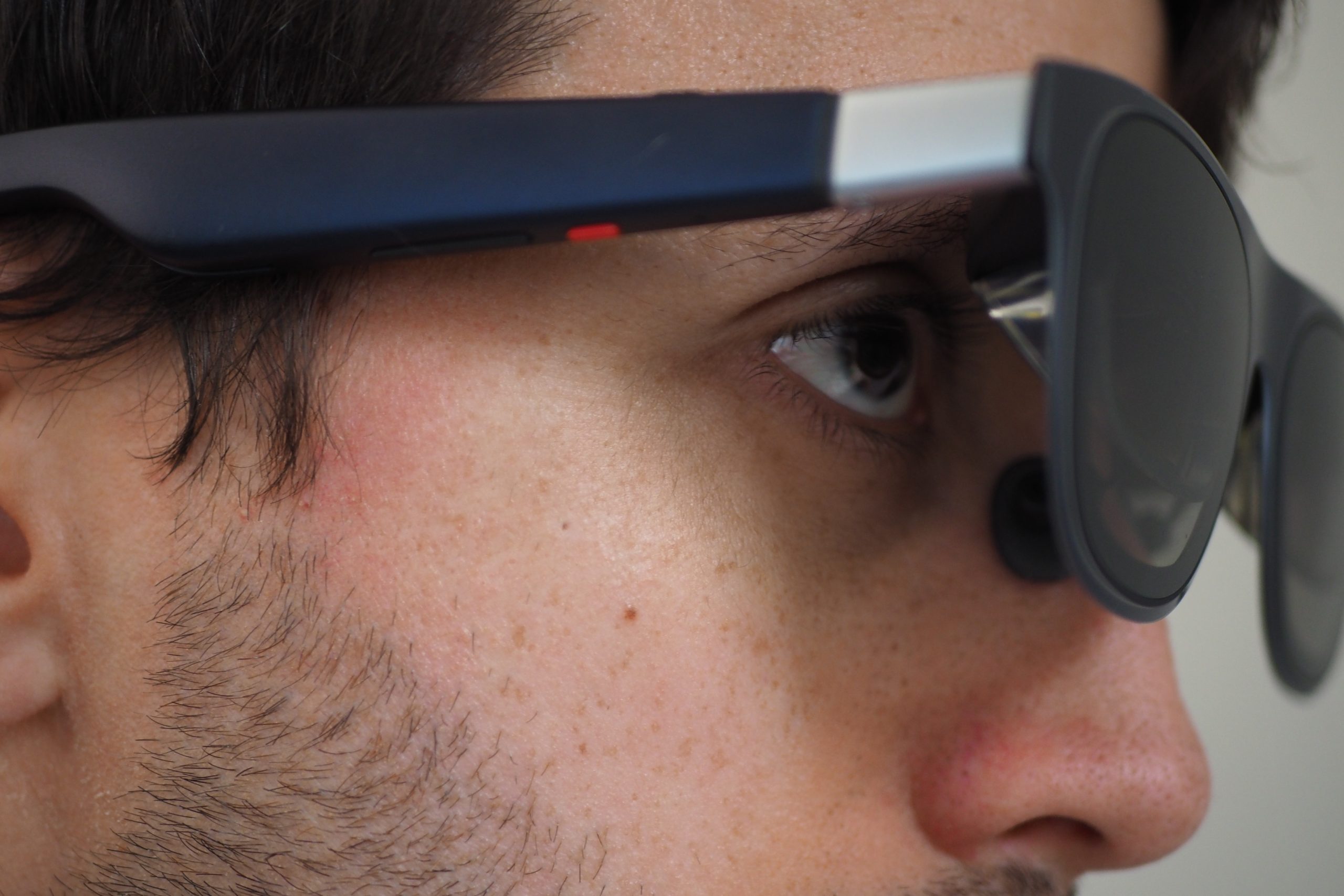

No available model offers all nine features, but the newest pairs from Xreal and Viture come close.
I’ve spent months testing the latest AR glasses from Xreal and Viture. By “testing,” I mean relaxing on my couch each night, playing my Steam Deck or Nintendo Switch 2 on a large virtual screen visible only through these glasses.
Using AR glasses as portable displays for handhelds and other USB-C devices isn’t new. However, the latest models share a key feature: three degrees of freedom (3DoF), allowing you to anchor the screen without it moving with every head movement. This might not justify their $400-plus price for most gamers, but it makes them handy for frequent travelers or those wanting a more ergonomic setup.
I tested three models — Xreal’s $449 1S, its $649 One Pro, and Viture’s $549 Beast. Each has strengths and weaknesses, which led me to list the ingredients for the perfect pair of gaming AR glasses.
The comfort, sound quality, and ease of use of Xreal’s glasses
All these AR glasses are heavier than regular glasses, but Xreal’s 1S are the lightest, weighing 85 grams. The One Pro weighs 91 grams, and the Viture Beast weighs 96 grams. Xreal’s glasses, including the One Pro, distribute weight well, and their thinner arms reduce ear strain. It’s notable that Xreal’s most affordable pair is as comfortable as their most expensive.
The 1S and One Pro provide better sound through Bose-tuned temple arms, offering balanced audio with good low-end performance. Viture’s Beast glasses, tuned by Harman, emphasize mids and highs, offering less impactful sound.
Xreal’s glasses also have fewer buttons than Viture’s, easing the learning curve. Xreal has four buttons along the right arm; the Beast has six spread over both arms, including an unnecessary button rocker for lens opacity adjustment.
The superior contrast and clarity of Viture’s Beast glasses
The AR glasses I tested use Sony micro-OLED screens, but Viture’s are top for rich contrast, deep blacks, and bright highlights similar to an OLED TV. They also reduce reflections. Xreal’s One Pro also shows excellent picture quality with minimal reflections but often costs more than Viture’s Beast.
The main downside of Xreal’s 1S is their reflection issues. Bright rooms cause their OLEDs to appear more like LCDs. They perform better in low-light conditions, though content can appear blurrier than on other glasses.
The great fit and finish of Xreal’s glasses
Xreal excels in build quality; the $449 1S feels as high-end as the pricier One Pro, with durable metal hinges that prevent arms from swinging open unintentionally. Xreal’s glasses resemble sunglasses more than the Beast’s somewhat gamer-like design.
User experience is smoother with Xreal’s glasses. Devices connect faster, and 3DoF implementation is better, with anchored screens staying put. Viture Beast screens tend to slide out of view.
Xreal’s Real3D feature, which is better than I expected (in small amounts)
Xreal glasses with the X1 chip now offer a Real 3D feature that converts 2D content into 3D. This mode, adjustable via a software slider, is surprisingly enjoyable in its mildest setting, especially in games requiring minimal fast movement.
Viture’s Switch 2 compatibility
AR glasses can’t connect to Switch 2 with a single USB-C cable due to Nintendo’s restrictions. A compatible dock is necessary, and Viture provides a $130 Pro Mobile Dock for the Beast, which also acts as a 13,000mAh battery. It allows HDMI passthrough, though Xreal’s compatibility with audio falls short.
Photography by Cameron Faulkner / The Verge