

After years of resistance, Google Chrome is now adopting vertical tabs, a feature recently popularized by the Arc browser and the AI browser Dia. Google announced that Chrome users can enable vertical tabs, moving tabs to the side of the browser window for easier reading of full page titles and better tab management.
Once activated, vertical tabs remain the default setting until changed by the user.
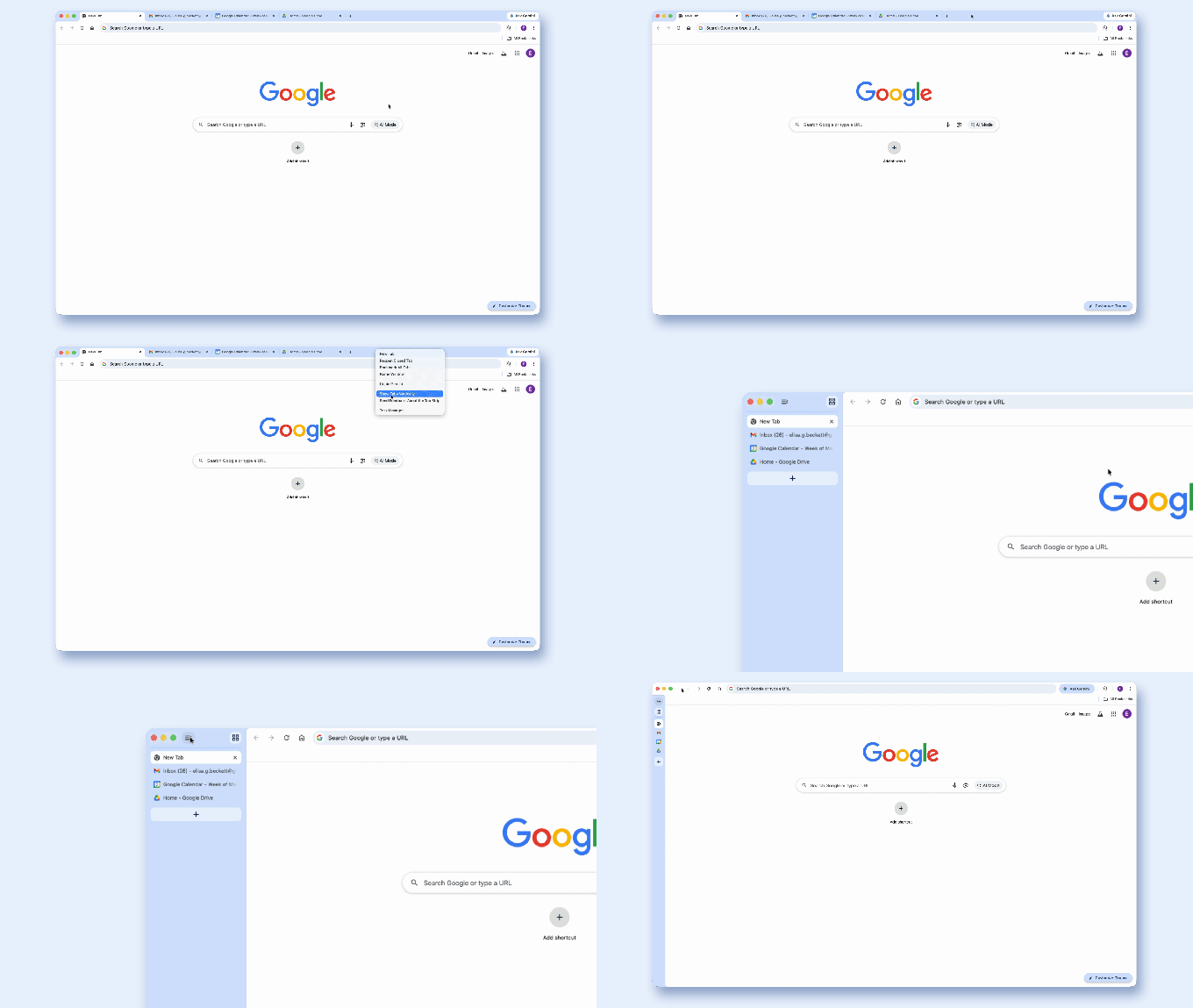
The company is adding vertical tab support alongside a new version of Reading Mode, which offers a distraction-free, text-focused experience.
The changes highlight how competition from modern browsers has influenced Chrome’s development while potentially limiting the appeal of rival browsers offering unique features.
Users can enable vertical tabs by right-clicking a Chrome window and selecting “Show Tabs Vertically.” There is no hard tab limit other than hardware constraints. Vertical tabs perform like horizontal tabs, allowing different windows with unique tab groups.
Vertical tabs appeal to power users and researchers who keep numerous tabs open and struggle to find the right ones when crowded, especially with identical favicons.
This isn’t Google’s first side-tab experiment, as a similar feature was tested in the past but never left beta. However, development has progressed, and savvy users have enabled it via a flag in recent builds. Interest in alternative browsers like Arc might have influenced Google’s decision.
Techcrunch event
San Francisco, CA | October 13-15, 2026
Recently, Chrome has rolled out updates like Gemini AI integration, autofill improvements, Split View mode, and a faster release schedule.
The vertical tabs are gradually being rolled out globally.
Along with vertical tabs, Chrome is releasing a new Reading Mode, offering a full-page interface to reduce clutter and focus on text.
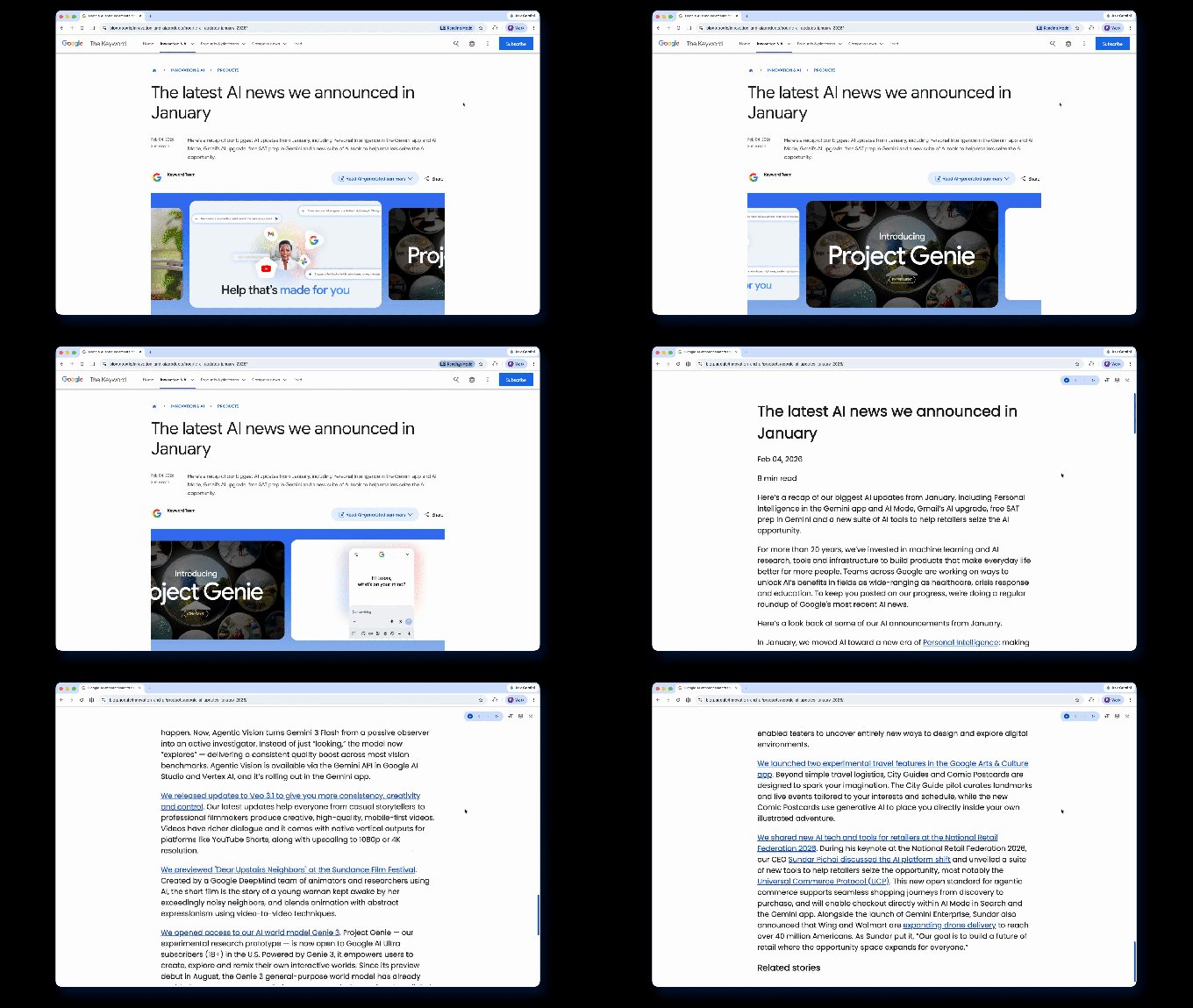
This will become the default experience for Chrome users, addressing the clutter of ads and newsletter prompts on news sites.
Ironically, media industry’s ad overload issues are exacerbated by Google driving less traffic to publishers as AI becomes more prevalent.