
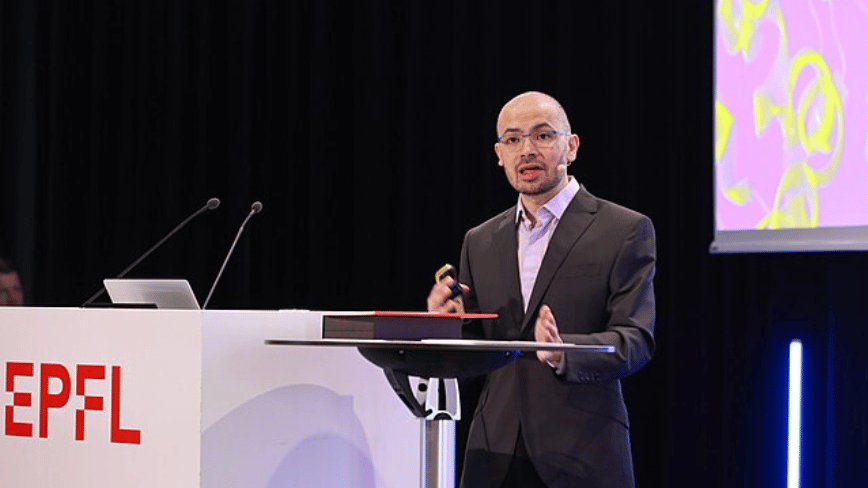

In brief: In April 2026, Demis Hassabis discussed on the 20VC podcast how Google DeepMind has increased its pace by merging with Google Brain and adopting a “startup or entrepreneurial” approach. He also mentioned managing Isomorphic Labs, the pharmaceutical AI spinoff, as a “second workday” starting at 10pm, with human trials in oncology expected later this year.
Assembling the components
The merger of DeepMind and Google Brain was completed in 2023. Since then, Hassabis has focused on accelerating by aligning company talent, accessing extensive compute infrastructure, and adopting a fast-paced and focused approach. This transformation was cultural and structural, with the company returning to its “startup or entrepreneurial roots” to meet the intense competition. Employees with decades-long careers have described it as the most intense environment they’ve encountered in the tech industry.
Hassabis communicates daily with Sundar Pichai, Alphabet’s chief executive, underscoring Google DeepMind’s centrality to Alphabet’s strategy. This is supported by a significant capital commitment. Google’s compute infrastructure, enhanced through chip partnerships with companies like Broadcom, is a critical factor: Alphabet spent $91.4 billion on capital expenditure in 2025 and expects this to nearly double in 2026, with supply constraints being the main limitation.
The 90% claim
Hassabis claimed that around 90% of AI breakthroughs came from Google Brain, Google Research, or DeepMind, supported by foundational developments like the transformer architecture from 2017, reinforcement learning, and deep reinforcement learning techniques. The claim acts as both historical and positioning statements, given the industry’s diversification since these developments. The legacy influences a rapid product release cadence, such as Google’s Gemma 4 open-weight models, closing the gap between research and open-source projects. By the end of 2025, Gemini had 750 million monthly active users, prompting urgent responses from competitors like OpenAI.
The second workday
Hassabis also manages Isomorphic Labs, the 2021-established pharmaceutical AI spinoff, working a “second workday” at 10pm focused on drug discovery. This dual role signifies his commitment to applying AI in drug discovery, seen as his most crucial long-term goal requiring personal engagement. In April 2025, Isomorphic raised $600 million and holds agreements with Eli Lilly and Novartis worth up to $3 billion. February 2026 saw the release of IsoDDE, a tool claiming double the accuracy of AlphaFold 3 for drug candidates. Oncology trials are anticipated later in 2026. AI-driven drug discovery competition is rising, evidenced by Anthropic’s $400 million acquisition of Coefficient Bio.
The competitive frame
Hassabis’s journey, explored in Sebastian Mallaby’s biography “The Infinity Machine” published on March 31, 2026, demonstrates his thesis that critical research and products are interconnected. An organization capable of executing both at scale will shape the industry. The consolidation of AI as a strategic priority in 2025 reorganized capital, talent, and structure around pace. Hassabis introduces the agility of a startup within the vast resources of a major tech company, treating it as a strategic edge.
However, the influx of capital poses challenges to maintaining this advantage. SoftBank’s $40 billion loan to OpenAI illustrates a level of capital that exceeds even Alphabet’s compute investments. Hassabis’s description of a fiercely competitive environment is a structural reality where incumbents’ resources and challengers’ ambitions have aligned, making institutional inertia a significant liability. Thus, the startup mindset at Google DeepMind is essential, not optional.