
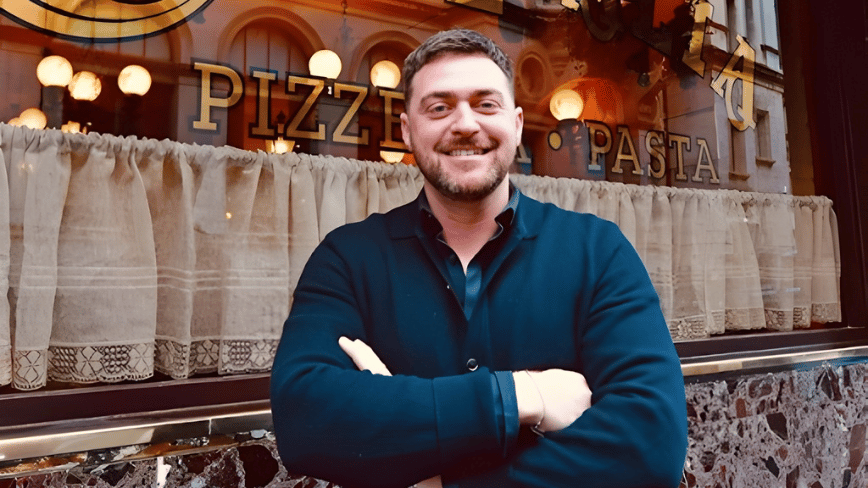

Hospitality has traditionally been tied to human interaction, yet the supporting systems have constantly evolved. Arran Campolucci-Bordi, owner of Casa Italia, a 50-year-old establishment in Liverpool, UK, offers insights on this transformation, moving from handwritten reservation systems to digital booking, and now toward AI-driven operations. He believes each shift represents broader changes in managing time, communication, and customer expectations.
He notes that earlier methods depended solely on manual efforts, where reservations were noted down, availability checked manually, and customer queries addressed individually. With digital tools, processes gained structure and consistency. Arran describes the current stage as one where systems can dynamically respond to customer needs without human input.
AI in hospitality is seen by Arran as an enhancement to operations rather than a human substitute. He explains that Ayra functions like a well-trained staff member, especially in information handling. Once provided with menu details, booking systems, and policies, it can engage with customer inquiries in a conversational manner, handling tasks such as checking availability, managing reservations, and answering common questions in real time. This allows businesses to maintain consistent external interactions, freeing staff to focus on what matters most.
This operational change is gaining ground across industries. A report highlights that 58% of employees say AI tools help them save time, with users reporting around 52 minutes saved daily, roughly five hours weekly. In sectors like hospitality, where much time is spent on inquiries and bookings, these savings can significantly redirect team focus.
Arran stresses that such systems are designed to work alongside existing teams. Many roles in hospitality involve repetitive administrative tasks that detract from direct customer engagement.
He further explains that reallocating this time can reshape service delivery within restaurants. “By shifting those tasks to an AI-driven interface, businesses can let staff focus on service in the restaurant’s physical environment,” he states. “It aligns people with role aspects requiring attention, awareness, and personal interaction.”
The impact of this shift is linked to how restaurants manage time and resources. Arran points out operational inefficiencies often stem from fragmented communication, especially with similar customer inquiries or booking requests. “Each interaction might be brief, but collectively they demand significant time,” he observes. Ayra can manage these interactions 24/7, increasing customer time and capturing missed opportunities.
Changes in customer behavior highlight this perspective. “As digital communication becomes immediate, expectations for quick, accurate responses have evolved,” Arran says. “Whether making a reservation or inquiring about menu options, customers expect rapid, precise answers. Instant-response systems help meet those expectations and maintain clarity and consistency.”
Despite beliefs that hospitality is slow to embrace new technology due to its human focus, Arran attributes major challenges to the industry’s lack of adequate vetting of what they adopt. He underscores the importance of simple technology adoption. Many restaurant owners hesitate, not due to resistance, but uncertainty about practical application. The platform he developed is accurate and simple to implement, needing minimal input to train the AI agent. With this input, the system operates autonomously.
This reflects a larger shift in technology integration into traditional industries. Instead of necessitating major operational changes, tools fit established structures. Arran suggests this compatibility is crucial for adoption in sectors where consistency matters.
Looking forward, he views AI as part of an ongoing progression rather than an endpoint. The shift from manual to digital systems has already transformed hospitality, with AI as the next phase in that evolution, adding efficiencies while maintaining the primary goal of effective customer service.
“People visit restaurants for the experience, and that will never change,” Arran states. “If technology handles everything else, it allows staff to excel, providing customers with the best possible experience.”