
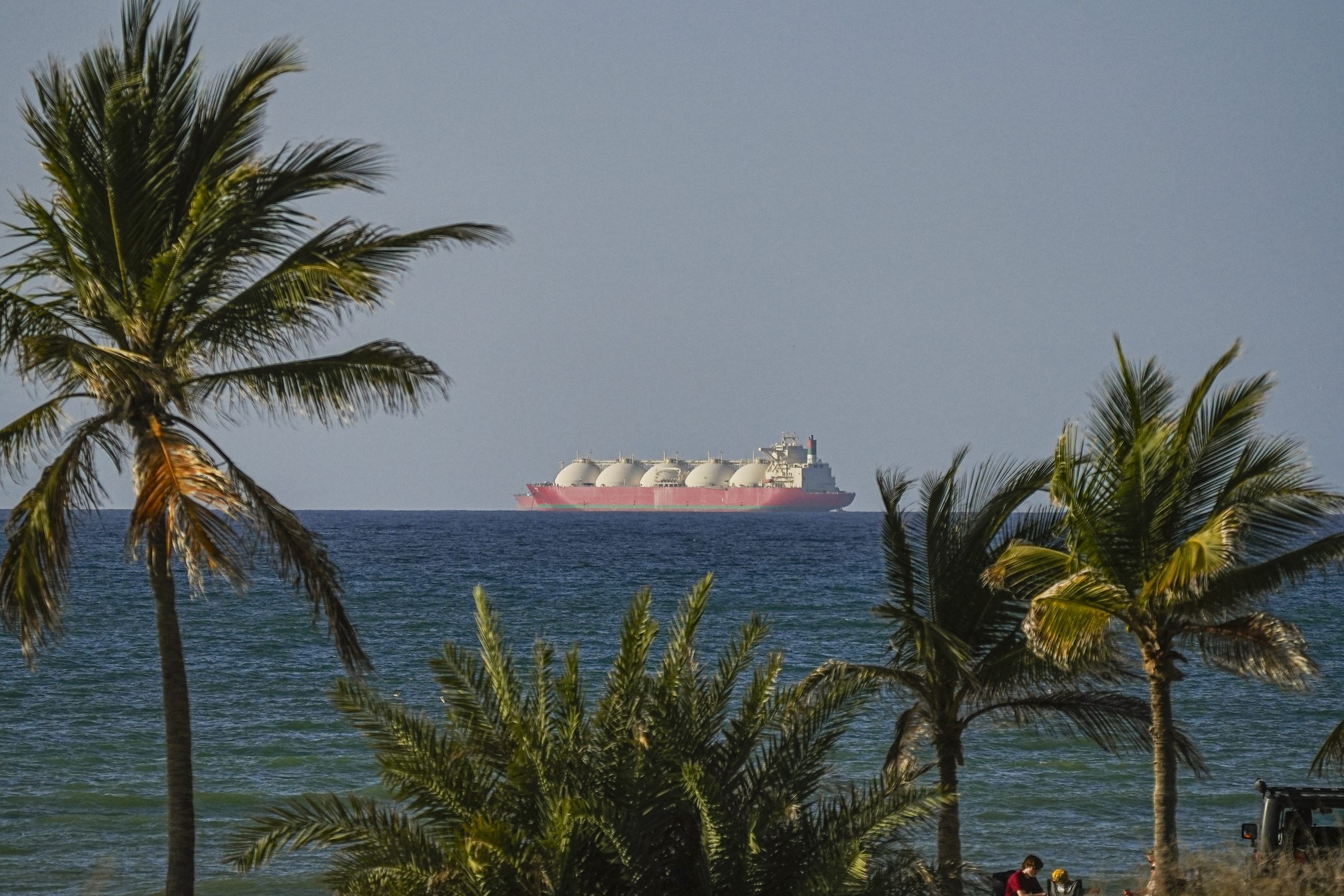

The closure of the Strait of Hormuz is severely limiting the global supply of fertilizer feedstock, raising alarms about potential increases in food prices and looming shortages.
Farmers, who are typically busy in the spring due to the thawing of the Northern Hemisphere, face unprecedented challenges this year. This is largely due to the intensifying conflict in Iran and the subsequent shutdown of the Strait of Hormuz. The strait, a crucial passage about 30 miles wide at its narrowest, sits between the Omani Musandam Peninsula and Iran. It is responsible for half of the exports of fertilizer feedstock, which includes essential raw materials like urea, ammonia, sulfur, hydrogen, natural gas, and nitrogen. Fertilizer is vital for food production, supporting roughly half of the global food supply, as noted by Veronica Nigh, chief economist at The Fertilizer Institute.
A significant number of U.S. farmers—around a quarter—failed to secure fertilizer prices last autumn and are now scrambling to cope with war-related costs they hadn’t foreseen. The ongoing closure or restriction of the Strait exacerbates the crisis five-plus weeks into the Northern Hemisphere’s crucial spring planting period. “This is a slow-moving food crisis in the making,” commented David Ortega, an agricultural economist at Michigan State University. The International Fresh Produce Association warns that the fertilizer shock might cause grocery store food prices to rise by 1 to 3 percent or trigger global fresh food shortages.
A brief U.S.-Iran ceasefire was agreed upon last week, conditioned on Iran reopening the waterway for shipping. Yet, within 24 hours, Iran closed the strait again, referencing Israeli strikes on Lebanon as a breach of the ceasefire terms. As of April 9th, no ships are moving through the channel, and the ceasefire’s validity is under dispute. This uncertainty is weighing heavily on farmers nationwide. “If you have a calendar for planting season, it’s like you have to discard it because a bomb has exploded,” says Andy DeVries, co-owner of a large soybean and corn farm in Iowa. DeVries indicates that his farm locks in around 80-85 tons of nitrogen and phosphorus fertilizer prices annually in August before spring. Now, nitrogen fertilizer costs have skyrocketed by over 35 percent locally, while phosphorus fertilizer has risen by 19 percent.
Such financial decisions involve tens of thousands of dollars each, significantly impacting farmers’ profits already reduced by oil price surges, immigration raids, climate change, and tariffs. DeVries acknowledges that purchasing phosphorus fertilizer today would cost him an additional $35,000. With the strait closed for more than a month, the price of fertilizers in the U.S. has increased by 30 to 40 percent over the last four weeks, as per Jacqui Fatka, CoBank’s lead economist for farm supply and biofuels.
Nigh from The Fertilizer Institute emphasizes that prolonged disruptions to the Hormuz Strait heighten the likelihood of increased fertilizer prices filtering into food costs. “If the closure lasts a month or two, the impact is minimal,” Nigh explained. “If it goes on for three to six months, it overlies the Northern Hemisphere’s growing season, impacting food prices and availability.” March and April imports have mostly met expected demands, according to her, but May imports are becoming an increasing concern.
The traditional method of producing nitrogen fertilizer hinges on the LNG-dependent Haber-Bosch process, unchanged since 1913. This process consumes between 3-5 percent of global natural gas reserves each year. Under current circumstances with constraints like the ongoing Russian-Ukrainian conflict in 2022 and the recent war in Iran, LNG futures increased by 10 percent in the U.S. and doubled in Europe and Asia since Iran’s conflict began a month ago.
As of 2023, nitrogen fertilizers constitute 59 percent of total global fertilizer use, according to the Center for Strategic and International Studies (CSIS), and 45 percent of that is dedicated to staple crops such as wheat, rice, and maize worldwide. The U.S. produces about 80 percent of its own fertilizer but only accounts for 10–15 percent of worldwide consumption, as conveyed by University of Illinois data. This discrepancy is notable because many of the countries accounting for the remaining global usage are less secure, says Lorenzo Rosa of Carnegie Science, emphasizing the need for substantial global facilities to support economies of scale.
Policymakers and researchers push for improvements, like President Biden’s Inflation Reduction Act, supporting the development of “green” and “blue” ammonia alternatives to decrease natural gas dependency. Nonetheless, these projects currently aren’t operational. Trump’s Big Beautiful Bill mandates projects to complete by 2028 instead of 2033, compressing timelines and increasing project cancellations—leaving unready alternatives to absorb shocks. Changes to fertilizer production schedules aren’t feasible without months-long preparation, Rosa states.