
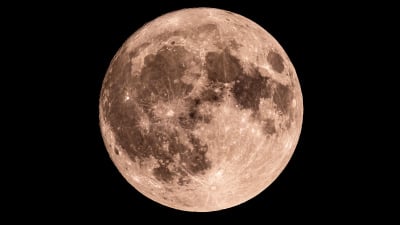

The Moon is nearing its New Moon phase, making it barely visible in the night sky. This occurs due to the roughly 29.5-day lunar cycle during which the Moon orbits Earth, resulting in varying visibility of its sunlit side.
**Current Moon Phase:**
As of Thursday, April 16, the Moon is in the Waning Crescent phase. According to NASA’s Daily Moon Guide, only 2% of the Moon will be visible tonight, offering limited surface detail.
**Upcoming Full Moon:**
The next Full Moon is expected on May 1, marking the first of two in May.
**Understanding Moon Phases:**
NASA explains that the Moon completes its orbit around Earth in about 29.5 days, transitioning through eight phases during this cycle. We always see the same side of the Moon, but the sunlit portion varies, creating the recognizable cycle of full, partial, and crescent shapes. These transformations are known as lunar phases:
– New Moon: The Moon is positioned between Earth and the sun, leaving the side facing Earth dark and invisible.
– Waxing Crescent: A thin sliver of light becomes visible on the right side (in the Northern Hemisphere).
– First Quarter: Half of the Moon is illuminated on the right side, appearing as a half-Moon.
– Waxing Gibbous: More than half of the Moon is lit, but not fully illuminated.
– Full Moon: The entire face of the Moon is lit and visible.
– Waning Gibbous: The Moon starts losing light on the right side (in the Northern Hemisphere).
– Third Quarter (or Last Quarter): Another half-Moon, but the left side is illuminated.
– Waning Crescent: A small sliver of light remains on the left side before the Moon goes dark again.
**About the Author:**
Lois Mackenzie, a freelance reporter at Mashable, specializes in covering various topics, from local news to product reviews. Her work is featured in publications such as Fit&Well, Metro, and Coach magazine. Lois holds a Master’s degree in Digital Journalism from Strathclyde University and a Master of Arts in English Literature from the University of Aberdeen.