
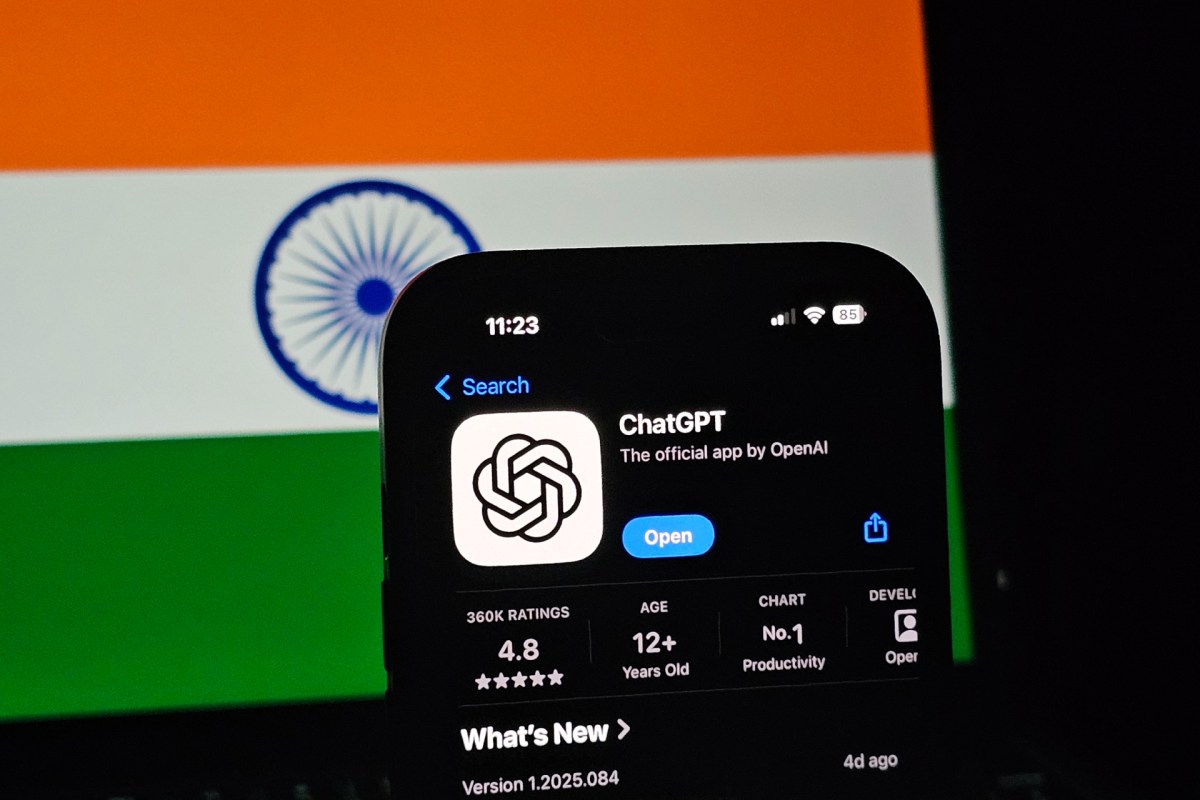

India has become the largest user base for ChatGPT Images 2.0 since its launch last week, OpenAI announced. However, third-party data reviewed by TechCrunch highlights a more measured global response, with limited growth overall, but notable spikes in certain emerging markets.
ChatGPT Images 2.0, OpenAI’s latest upgrade, handles more intricate prompts and creates detailed visuals, including accurate text in various languages. Early patterns show users—especially in India—using it for personal visuals like avatars, stylized portraits, and fantasy-themed images.
Data from Sensor Tower and Similarweb indicates a mixed global response. ChatGPT app downloads rose 11% week-over-week post-launch, but daily active users and sessions increased only by about 1%. Similarweb data reveals a slight 1.6% bump in ChatGPT’s global web traffic in the same period.
Nevertheless, some emerging markets, such as Pakistan, Vietnam, and Indonesia, experienced notable surges in app downloads, with increases of up to 79%.
India remained a significant source of activity during the launch, with about 5 million downloads compared to roughly 2 million in the U.S., though growth was generally modest. Similarweb data shows daily active users in India increased by about 3.4% week-over-week.
In India, ChatGPT Images 2.0 is mainly used for self-expression. Users create studio-style portraits, social media-ready images, and imaginative visuals, according to OpenAI.
The early patterns illustrate how AI image tools are being adopted differently across markets. While India’s large user base drives overall scale, spikes in countries like Pakistan and Indonesia indicate strong new-user demand.
OpenAI’s Images 2.0 launch comes amid fierce competition in AI image generation. Google’s earlier model, Nano Banana, also saw strong traction in India, highlighting the country’s importance in the market.
With ChatGPT Images 2.0, OpenAI enhances rendering of non-Latin text, including Hindi and Bengali, and introduces new “thinking” capabilities for refining outputs and generating multiple variations from a single prompt.
Besides portraits and avatars, early users in India are experimenting with formats like fantasy newspaper covers, tarot visuals, and fashion moodboards. They also use the AI tool for photo restoration and cinematic portrait collages.