

A Filipino man walks through the backyard of his childhood home in rural Hawai’i, his footsteps rustling through the grass. Birds chirp, contributing to the tropical sounds as he approaches a shrine at the base of a starfruit tree. He leans down to inspect a framed black-and-white photograph of a woman with a 1950s hairstyle.
A sudden gust of wind shakes the tree’s branches, knocking over the shrine’s contents. The man steps back, trips on a root, and hits his head. When he awakens, he’s in a dark, misty forest, with a woman wearing a clay mask standing over him, brandishing a sword.
“Who are you who dares to sleep under the sacred tree?” she asks in Ilocano, a language from the Philippines widely spoken in Hawaii’s Filipino community, while holding the sword at his throat. He replies that he’s lost and turns to flee. She chases him, alternating between running and floating through the air. He falls again. She advances, sword raised. He throws a rock at her, shattering the clay mask and revealing half her face.
“Mom?” he asks.
This is the opening of “Murmuray,” a short film by independent filmmaker Brad Tangonan. The film carries the signature of his previous works, from the tactile nature shots to the dreamlike desaturated highlights.
The difference? He made it using AI.
Tangonan was one of 10 filmmakers to participate in Google Flow Sessions, a five-week program that gave creatives access to Google’s AI tools to produce short films, including Gemini, image generator Nano Banana Pro, and film generator Veo.
Each film had a different scope. Hal Watmough’s “You’ve Been Here Before” mixed hyperreal visuals with cartoonish stylization to explore morning routines, while Tabitha Swanson’s “The Antidote to Fear is Curiosity” delved into philosophical conversations about our relationship with AI.
None of these short films, shown at Soho House New York last year, seemed like AI slop. Each filmmaker stated that AI enabled them to tell stories they couldn’t otherwise due to budget or time constraints.
“I see all of these tools, whether it’s a camera or generative AI, as ways for an artist to express what they have in their mind,” Tangonan said after the screenings.
Google’s message that AI is just another tool for creators is clear. As video generation products improve, AI will become more integral to a creator’s toolkit.
In 2025, companies like Google, Runway, OpenAI, Kling, Luma AI, and Higgsfield advanced beyond the uncanny AI creations of the previous year. With substantial venture capital backing, the AI video industry is transitioning from prototype to post-production.
This AI tool abundance, designed to democratize film industry access, also threatens creativity and jobs, buried under low-effort content. The stakes have intensified, dividing creatives: engage with AI and risk being labeled complicit; avoid it and risk obsolescence.
It’s not a question of whether these tools belong; they’re inevitable. The real question is what kind of filmmaking will survive when the industry prioritizes speed over quality? What happens when individual artists use these tools meaningfully?
But is it slop?
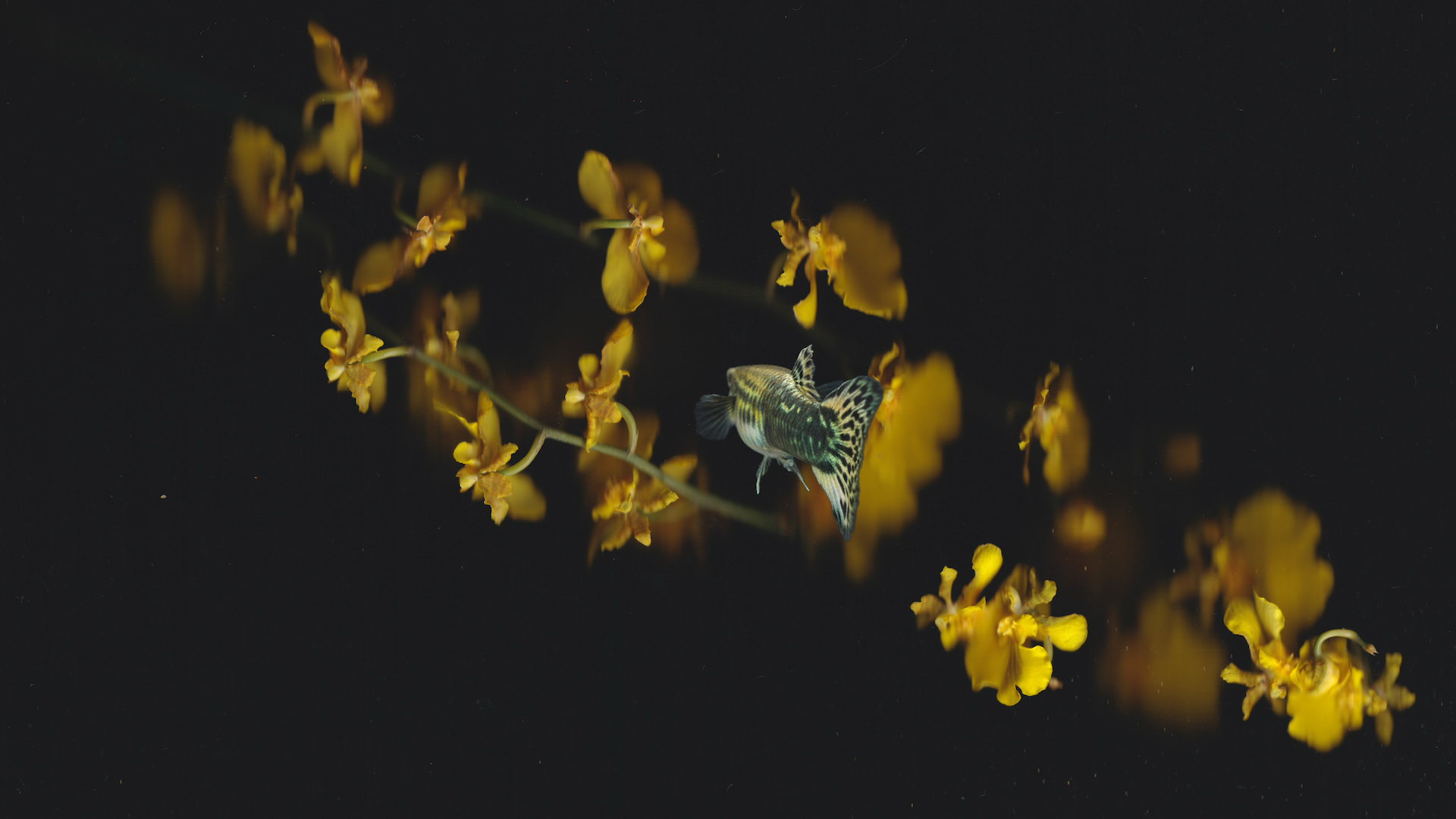
Keenan MacWilliam used AI to animate scans of plants and fish for her short film “Mimesis.”
There are many arguments against AI in filmmaking, even from industry giants.
Filmmaker Guillermo del Toro said he’d rather die than use generative AI to make a film. In a CBS interview, James Cameron called generating actors and emotions “horrifying,” describing AI output as an average of previous human endeavors.
Werner Herzog critiqued AI-created films as soulless, lacking anything beyond a common denominator.
Cameron and Herzog argue that AI removes creation from human hands and cannot reflect human experiences.
“It’s easy to be angry with AI as a concept, but harder when it’s someone making something personal,” Watmough told TechCrunch.
Tangonan describes “Murmuray” as a “family story” and aligns with this view.
“AI is a facilitator,” Tangonan stated. “I’m still making all the creative decisions. AI slop often results from letting AI take control. But if you have a voice, style, and perspective, it’s different.”
Using AI in filmmaking doesn’t mean just generating a film. Tangonan wrote “Murmuray”’s script without AI and curated visual references for a shot list. He used Nano Banana Pro to create images matching his style, a foundation for video generation.
Keenan MacWilliam ensured her short film “Mimesis,” a fictional guided meditation, reflected her visual language rather than blending other artists’ work.
MacWilliam wrote the script and used her voice for the mock meditation, equal parts relaxing and humorous. Over a dark, watery backdrop, psychedelic images of