

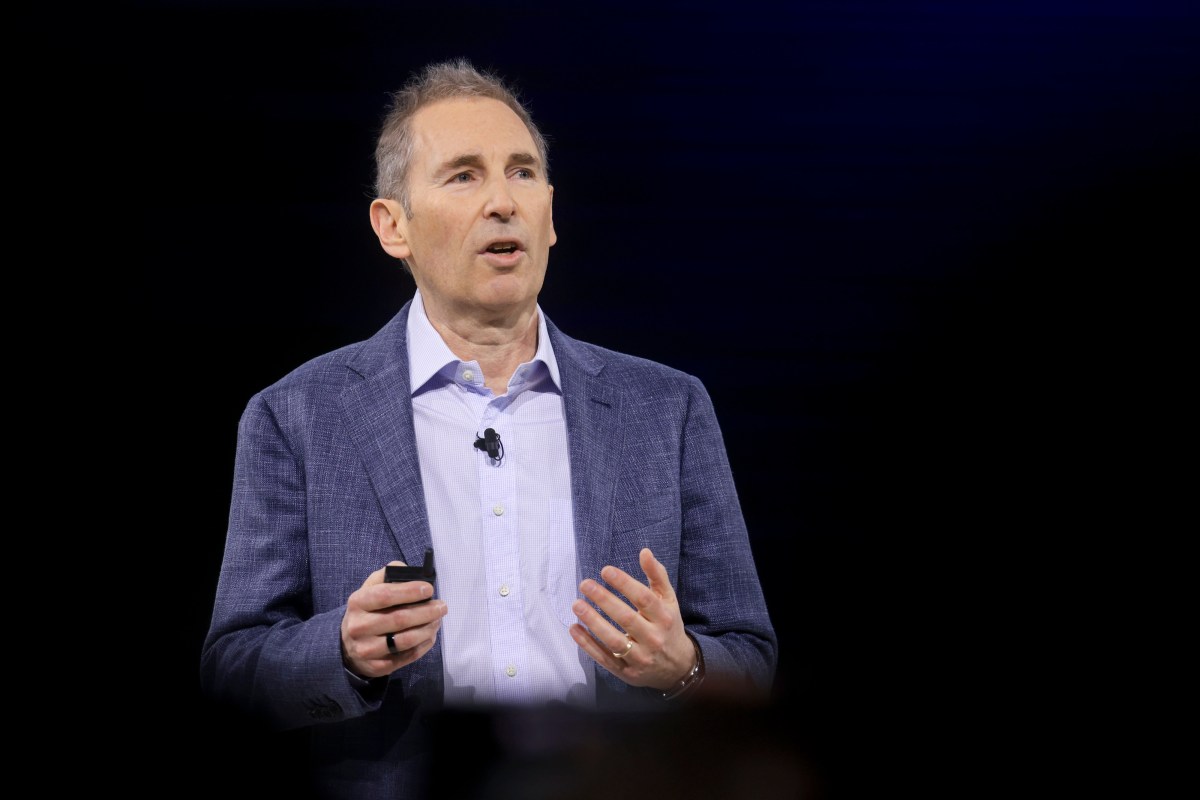
The annual letter to shareholders from Amazon CEO Andy Jassy is reminiscent of a Kendrick Lamar diss track, if Lamar were a CEO using corporate jargon instead of a poet and musician.
It requires knowledge of history to recognize the competitors Jassy targets, mixed with personal anecdotes about his unfulfilled aspiration of being a sportscaster and attending hockey games with his father.
Jassy doesn’t confront directly but opts for subtlety. Regarding Nvidia, he says, “We have a strong partnership with NVIDIA, will always have customers who choose to run NVIDIA” and will support these chips in its cloud.
He notes, however, that “Virtually all AI thus far has been done on NVIDIA chips, but a new shift has started.” AWS customers desire “better price-performance,” referring to Amazon’s Trainium AI chips.
The demand for Trainium is so high that the new Trainium3 is nearly sold out, and remarkably, Trainium4, which is 18 months from release, is also nearly sold out.
Trainium has reached a $20 billion annual revenue run rate. If Amazon were selling these chips to others, it would be at a $50 billion ARR, he suggests.
Nvidia reported $215.9 billion in revenue last year. While Nvidia isn’t alarmed yet, Jassy positions Trainium as a strong challenger.
Techcrunch event
San Francisco, CA
|
October 13-15, 2026
Intel doesn’t escape criticism either. Jassy highlights AWS’s Graviton CPU, challenging Intel’s x86 architecture, stating it’s “used expansively by 98% of the top 1,000 EC2 customers.” Two companies attempted to “buy all of our Graviton instance capacity in 2026,” he reveals (emphasis his), but they had to be refused due to other customer needs, emphasizing the demand.
He announced that Amazon’s Starlink competitor, Amazon Leo, expected to launch in mid-2026, is progressing well. It has secured contracts with Delta Airlines, AT&T, Vodafone, Australia’s NBN, NASA, and others.
Interestingly, Jassy mentioned the potential of selling robotics in the future, utilizing data from Amazon’s 1 million warehouse robots for “robotics solutions” for industrial and consumer purposes. The possibility of an Amazon humanoid was hinted at. He also promoted Amazon’s other ventures like same-day delivery, groceries, and drones.
Primarily, Jassy aims to justify the extensive capital expenditures he’s authorized, having declared a $200 billion spending plan for 2026 with a focus on AWS data center expansion, outstripping other major tech companies’ investments. This is crucial as Amazon’s stock has plummeted below $200 a share and hasn’t rebounded.
“We’re not investing approximately $200 billion in capex in 2026 on a hunch,” he explains, citing a deal with OpenAI committing to $100 billion in AWS spending. Though, there are skeptics who <a rel="nofollow" href="https://www.cnb