
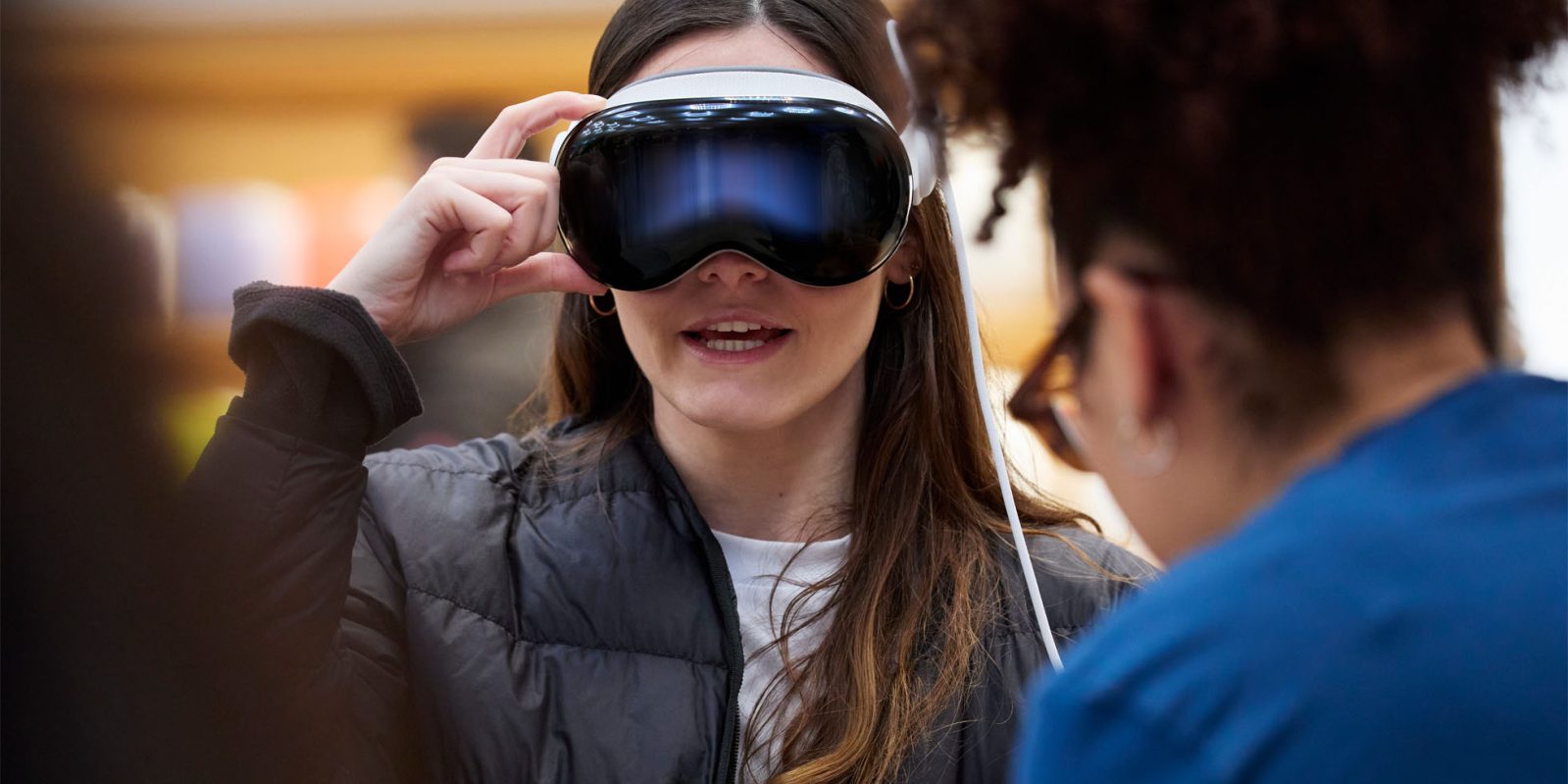

### The Vision Pro Rollout: A Retail Disappointment
A recent article has brought attention to the rollout of Apple’s Vision Pro in its retail locations, describing the occasion as “a disappointment” in numerous places. This rollout not only revealed the obstacles tied to the launch of a new product segment but also highlighted wider concerns arising from shifts in retail staffing patterns over time.
#### The Rollout Plan
Apple’s plan for the Vision Pro rollout seemed sound in theory. The firm arranged comprehensive training workshops in Cupertino, flying hundreds of retail staff for multi-day hands-on sessions with the new device. These employees were anticipated to return to their stores and conduct four-hour workshops for fellow team members, followed by additional rehearsals and demo practice.
Nonetheless, accounts from store staff illustrate a significant gap between the planned training and the actual experience. Employees reportedly had just one hour to practice a complex demonstration and familiarize themselves with a script that covered more than a dozen screens. In numerous instances, personnel had only two chances to rehearse among themselves before conducting their initial demonstrations for customers, and some received even less time than that.
#### Underlying Staffing Challenges
The hurdles encountered during the Vision Pro rollout reflect more profound issues within Apple’s retail staffing framework. A former Apple expert pointed out that while Steve Jobs stressed the necessity of well-staffed stores with thoroughly educated team members, subsequent cost-cutting initiatives have weakened this emphasis.
By the time of the Vision Pro rollout in early 2024, many Apple sales associates had recently transitioned from temporary to full-time roles and were inexperienced with product launches. Kevin Gallagher, a longtime Apple Store employee, noted that many staff members were ill-prepared for the expectations of learning and executing a scripted demonstration.
Understaffing further complicated the scenario, as many employees did not receive the training and rehearsal time that Apple corporate had planned. Sam Hernandez, a seasoned salesperson at a major Apple Store, mentioned that he had limited training, which left him feeling unready for the rollout.
#### Shifts in Customer Interaction
In the past, during Steve Jobs’ leadership, half of the staff were devoted to helping customers through training sessions and individual engagements. However, this ratio has steadily declined over the years. The pandemic resulted in the cessation of one-on-one interactions and small workshops, which were replaced by the less thorough “Today at Apple” sessions, mainly aimed at promoting Apple products instead of offering in-depth training.
#### Conclusion
The erosion of Apple’s foundational staffing principle has been ongoing for more than a decade, creating a demand for not only more retail staff but also additional Apple stores to ease congestion and reduce waiting times for assistance. The difficulties faced during the Vision Pro rollout, especially regarding demonstration sessions, reflect larger systemic challenges within Apple’s retail strategy. As the company progresses, addressing these staffing and training shortfalls will be vital for the success of future product rollouts and customer contentment.