

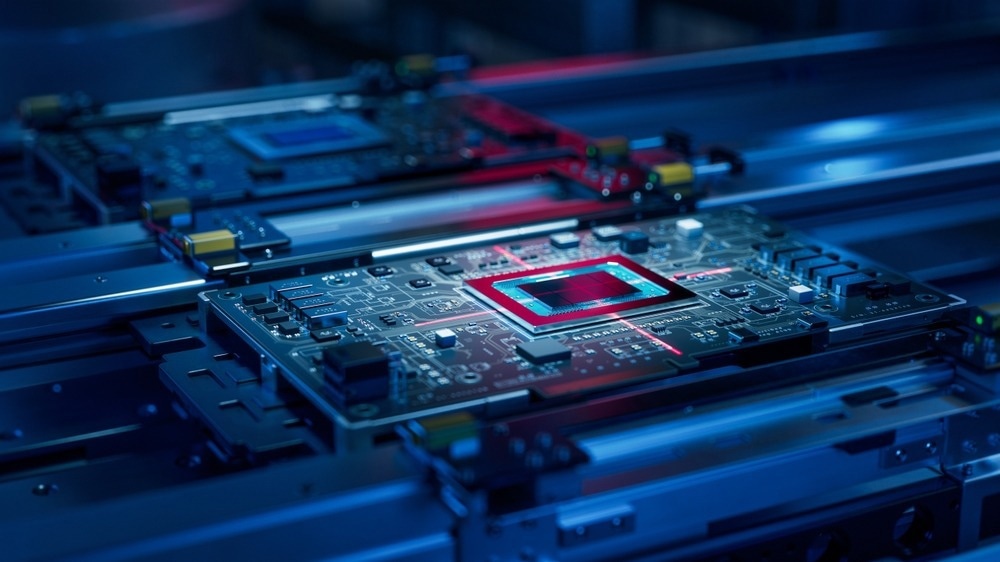
Apple has recently ramped up its manufacturing activities within the United States, with a specific emphasis on producing the Mac mini. This endeavor is an important milestone in Apple’s objective to enhance its domestic manufacturing capabilities, which have faced criticism in recent times. The company has revealed that a portion of its Mac mini production will be shifted to the U.S. later this year, a decision that corresponds with wider trends of reshoring manufacturing to alleviate supply chain weaknesses.
In a comprehensive piece by The Wall Street Journal, journalist Rolfe Winkler delivered an insider’s perspective on Apple’s chipmaking operations in the U.S., showcasing the company’s collaborations with various facilities nationwide. The tour featured significant stops at locations like GlobalWafers America’s newly established facility in Sherman, Texas, TSMC’s chip fabrication site in Arizona, and Foxconn’s assembly operation in Houston, Texas. These sites are vital for creating the chips that power Apple’s products.
At GlobalWafers America, the process starts with purified silicon rocks, primarily obtained from sand in North Carolina. These rocks are exposed to extreme temperatures of 2,500 degrees Fahrenheit to produce silicon crystals, which are subsequently shaped into cylindrical ingots. These ingots are then sliced into 12-inch wafers, crucial for the following phases of chip production. The wafers go through a series of procedures, including polishing and testing, prior to being sent to other facilities for additional manufacturing.
Winkler pointed out that the chip-making process is largely automated, leading to a reduced number of visible workers on the premises. This automation is a tactical decision, as the U.S. seeks to improve its chip manufacturing prowess not solely to create widespread employment but to address national security issues and sustain competitiveness in the international market.
The article underscores the significance of these advancements in the context of global supply chain trends, especially considering recent geopolitical strains. Apple’s push to reshore its chip manufacturing is perceived as a reaction to the vulnerabilities highlighted by the pandemic and international trade challenges.
For those eager to gain a more profound understanding of Apple’s chip operations in the U.S., Winkler’s article offers extensive insights and visuals that illustrate the intricacies of contemporary chip manufacturing. The transition towards domestic production not only signifies Apple’s dedication to innovation and quality but also emphasizes the increasing relevance of local supply chains within the tech sector.