
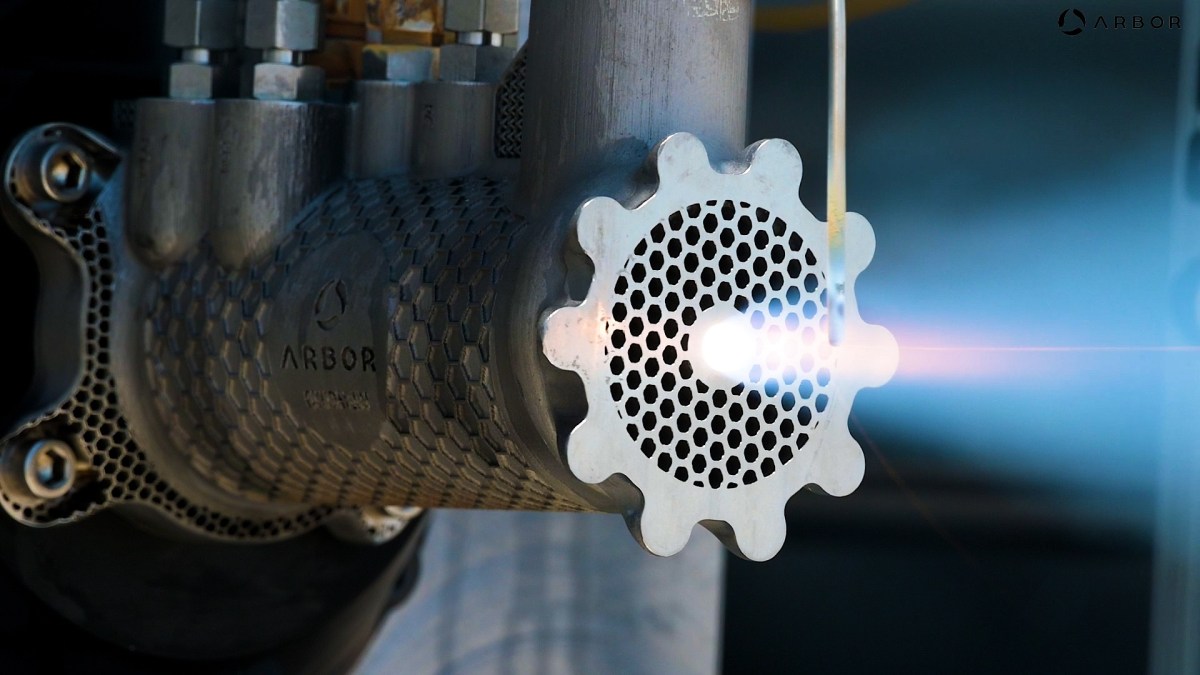

Energy startup Arbor Energy announced on Wednesday that it has agreed to sell up to 5 gigawatts of its modular turbines to GridMarket, a company that facilitates power projects for data centers and industrial users.
“Everyone wants more power. They wanted it yesterday,” said Brad Hartwig, co-founder and CEO of Arbor, to TechCrunch. “The time frames are compressing and the scale is getting larger.”
Arbor’s Halcyon turbines, which are based on rocket turbomachinery—high-performance engine technology originally developed for spaceflight—will be 3D printed for their first commercial models, with each capable of generating 25 megawatts. If GridMarket’s order is fully realized, it would involve 200 units.
The companies did not disclose the exact deal price, but Hartwig noted a “willingness to pay upwards of $100 per megawatt-hour.” A source familiar with the agreement estimated the total in the single-digit billions of dollars.
Arbor plans to connect its first turbine to the grid in 2028, ramping up production through 2030, with a target of over 100 turbines produced annually. According to Hartwig, the ultimate goal is to produce enough turbines to generate 10 gigawatts of new capacity each year.
Initially, Halcyon was designed to operate on renewable biomass, like crop waste and wood scraps, turning these materials into syngas and burning them with pure oxygen to yield pure CO₂, which could be captured and stored. This process would produce carbon-negative power since the biomass would otherwise decay and emit methane and CO₂.
Arbor later adapted Halcyon to also run on natural gas, making it more versatile. Despite this change, the process still allows for CO₂ sequestration. Using natural gas means it wouldn’t be carbon-negative, due to methane leaks throughout the supply chain. However, Arbor is partnering with low-leak natural gas suppliers and sees an economic benefit from sequestering CO₂. Hartwig noted a long-term aim of reducing CO₂ emissions to less than 10 grams per kilowatt-hour, significantly lower than typical natural gas plants without carbon capture, which emit about 400 grams per kilowatt-hour.
Arbor is still pursuing biomass projects and the GridMarket sale isn’t restricted to one fuel type. Other biomass projects are smaller compared to the deal with GridMarket.
Arbor has benefited from the data center boom, which caught traditional gas turbine manufacturers off-guard. Due to past market volatility, these manufacturers have been reluctant to scale, and their supply chains are often bottlenecked by the production of specialized parts. Hartwig stated that if ordered today, traditional turbines wouldn’t be ready until 2032.
Arbor believes its use of machined and 3D printed parts will expedite market entry. “People want power in the next few years and they want a lot of it,” Hartwig said.