
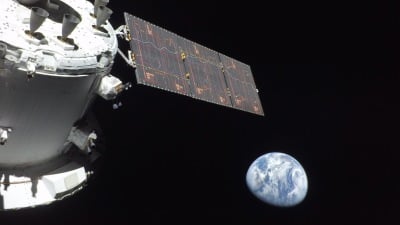

NASA’s crew is preparing for a late-night operation involving liquid hydrogen. The Artemis II astronauts will quickly learn that moon missions don’t accommodate regular sleep patterns. The historic human spaceflight, NASA’s first beyond low-Earth orbit in over 50 years, launched from Cape Canaveral, Florida, at 6:35 p.m. ET. After the launch, crew members Reid Wiseman, Victor Glover, Christina Koch, and Jeremy Hansen will get right to work. Initially, the Orion spacecraft will enter a high-Earth orbit, taking about 24 hours to complete. During this time, the crew will conduct tests on life support, communications, and navigation systems close to home.
A crucial task follows: the “perigee raise” burn, categorized as high-risk, happens during the astronauts’ sleep cycle. “Physics cannot be defied,” explains Jeff Radigan, lead flight director, about the timing of these maneuvers. For the crew, their first day is particularly long, beginning at 11:30 a.m. ET, several hours prior to launch. Once in space, Wiseman and Glover will engage in a manual spacecraft steering demonstration using the spent upper stage for docking practice. This manual control test is significant for future missions requiring such maneuvers. After this exercise, Orion will perform an engine burn to separate from the upper stage, which will later splash into the Pacific Ocean. Eight and a half hours into the flight, the astronauts can finally rest, but only for four hours before resuming duties.
The perigee-raise engine burn is a make-or-break moment for the mission, crucial for reshaping Orion’s orbit ahead of the moon-bound engine firing the next day. This maneuver, dictated by orbital physics, overrides convenient scheduling. Glover humorously referred to their brief rest as a nap, emphasizing it wasn’t a typical bedtime. After completion, the crew can enjoy a 4.5-hour rest in their sleeping bags.