
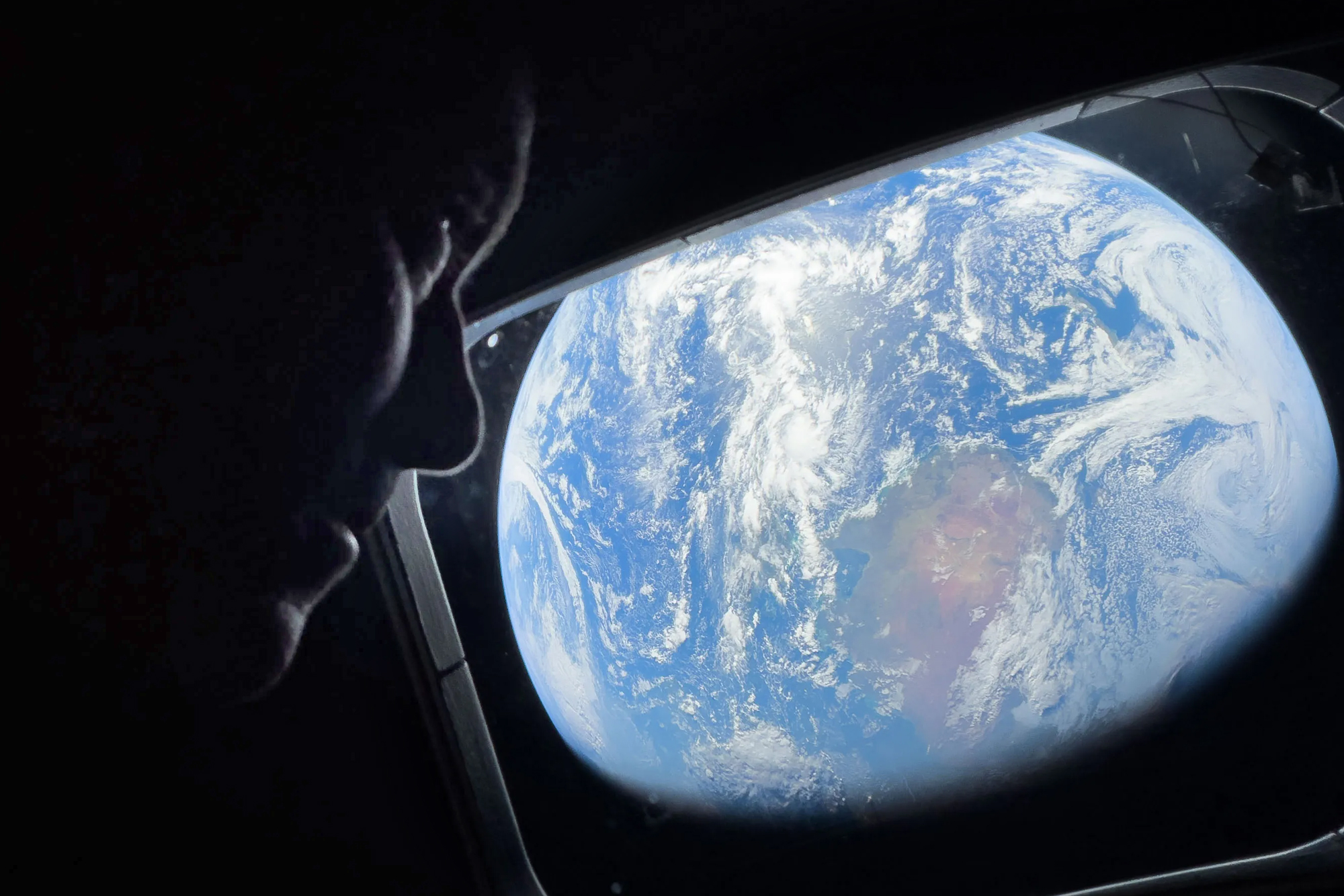

As the Orion spacecraft journeys around the Moon, the Artemis II crew will surpass the record set by Apollo 13 in 1970. On April 15th, 1970, Jim Lovell, Fred Haise, and Jack Swigert set a distance record when Apollo 13 reached 248,655 miles from Earth. Nearly 56 years later, Artemis II is expected to break that record by several thousand miles, reaching a maximum distance of 252,757 miles from Earth today as it completes its flight around the Moon’s far side.
NASA’s coverage of the lunar flyby starts at 1PM ET, with the astronauts expected to set the new distance record from Earth at 1:56PM ET. The journey around the Moon will last about six hours and includes observations of unseen lunar surfaces and surveys for future landing sites.
The Artemis II crew will lose communication with Earth for about 40 minutes, from 6:44PM ET to 7:25PM ET, as Orion moves behind the Moon. Notable events in the itinerary include:
– 1:56PM ET: New distance record set.
– 2:15PM ET: Spacecraft cabin reconfiguration.
– 2:45PM ET: Lunar observation begins.
– 6:44PM ET: Communication loss as Orion moves behind the Moon.
– 7:02PM ET: Closest approach to the Moon at 4,070 miles.
– 7:07PM ET: Maximum distance from Earth at 252,757 miles.
– 7:25PM ET: Communication resumes as Orion reemerges.
– 8:25–9:32PM ET: Solar eclipse experienced.
– 9:20PM ET: Lunar observations conclude.
Besides the laser-based Orion Artemis II Optical Communications System, traditional radio systems like the Near Space Network and the Deep Space Network will also maintain communication. The astronauts aim to replicate the iconic “Earthrise” photo from Apollo 8 in 1968.
After a correction burn to refine Orion’s trajectory, the mission entered the Moon’s “sphere of influence” early this morning, making lunar gravity the dominant force. Following the lunar trip, the Orion capsule will return to Earth over four days, with a targeted Pacific Ocean splashdown near San Diego on April 10th.