author

Four Crucial Amazon Fire TV Add-ons to Improve Your Watching Experience

BGR strongly advocates for these accessories to enhance your experience with its additional microUSB port. Regardless, there are numerous accessories capable of elevating your viewing experience with an Amazon Fire TV, such as a proprietary soundbar, an Ethernet adapter, or even LED strips that synchronize with your TV, creating the illusion of a larger display than you truly have.

Ultimately, with an abundance of TV shows and movies available across various streaming platforms, it’s completely understandable that you’d desire a larger display with a smoother response compared to your computer’s screen or your phone’s for watching the latest season of your beloved series, or catching up on that Oscar-winning film that has just debuted.

Amazon Fire TV Soundbar

Incorporating a soundbar into your TV setup can significantly enhance your viewing experience, as quality audio can make every television scene appear much more lifelike. The Amazon Fire TV Soundbar has been specifically created for Amazon Fire TV, with Amazon asserting that its dual speaker system offers richer sound with deep bass and crisp dialogue. 

Moreover, with a design measuring 24 inches and a height of 2.5 inches, it’s simple to integrate the soundbar into your TV setup. Just connect the HDMI cable to the eARC/ARC port of your TV, and you can begin to relish this enhanced audio experience. The Amazon Fire TV Soundbar supports DTS Virtual:X and Dolby Audio standards, allowing users to also stream their favorite music, podcasts, and other content via Bluetooth.

However, it’s crucial to mention that the soundbar lacks Alexa compatibility and does not support Alexa Home Theater. This

SpaceX Falcon 9 Rocket’s Quick Re-launch Turnaround Duration

Falcon 9 has gained significant recognition for its reusability, but what you may not realize is the speed at which the company can prepare and launch a booster after it has previously been utilized in another mission. Remarkably, that turnaround interval is less than two weeks.

It’s important to highlight that this isn’t usually a major issue. SpaceX owns several Falcon 9 boosters, so it rarely needs to expedite the turnaround for a second launch within a tight timeframe, despite the numerous launches it conducts annually. Nevertheless, this has not prevented the Musk-led firm from establishing impressive records with its rocket boosters.

Although determining an average turnaround time from online information can be challenging, reports have managed to determine that the two best records stand at 13 days, 12 hours, 44 minutes, and 20 seconds for one instance, and merely nine days between launches of a single booster for the fastest turnaround.

The record-holding booster

“Sherlock Holmes Movie Showcasing First Entirely CGI Character Now Accessible on Paramount+”

Jeff Bridges’ lauded “Hell or High Water.”

How the CGI knight was developed

The initial live action film to utilize CGI was “Westworld” in 1973, more than ten years prior to the knight’s appearance. The CGI figure in “Young Sherlock Holmes” had to be realistic, even as a hallucination. Therefore, executive producer Steven Spielberg partnered with Industrial Light & Magic for this task, the same company established by George Lucas in the 1970s to actualize his “Star Wars” dream. ILM teamed up with Pixar to create the knight, and the groups spent six months bringing it to the

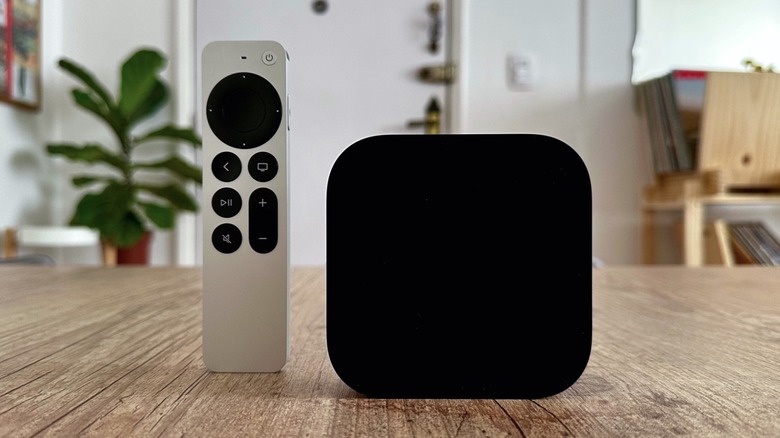
Assessing the Worth of the 3rd-Gen Apple TV 4K in 2026: Crucial Factors

Launched in late 2022, the 3rd-gen Apple TV 4K remains the most recent streaming device offered by Apple. Its standout characteristics include the A15 Bionic chip, which also powers the iPhone 13 Pro, support for HDR10+, increased storage, and various new software enhancements. Even after nearly four years, the third-generation Apple TV 4K delivers a dependable experience, but with persistent speculation regarding an upcoming model, it ultimately depends on your desire for an Apple TV 4K or if you prefer to hold off for a few more months for the newest version.

In practice, the third-generation Apple TV 4K in 2026 continues to perform admirably. Moreover, tvOS 26 is still designed for this model, indicating that there is no software functionality on the Apple TV that the latest version can’t also provide. Still, with speculation suggesting the inclusion of Apple Intelligence support, a new processor, and additional features, it prompts the question of whether it may be better to wait a bit longer for a more compelling product to enjoy for years ahead or to upgrade now.

What it’s like using the Apple TV 4K in 2026, and why I still do

Meta Reportedly Plans to Lay Off Up to 20% of Staff

According to Reuters, Meta is looking to offset spending on AI and data centers with a massive round of layoffs. Sources familiar with the matter say the company could lay off as much as 20 percent of its staff, eliminating roughly 15,800 positions. That would be the largest series of layoffs at the company since […]

The Explanation of the Purpose of Cameras on Coca-Cola Machines

The Small Cameras On Coca-Cola Machines Aren’t Intended For Dispensing Beverages

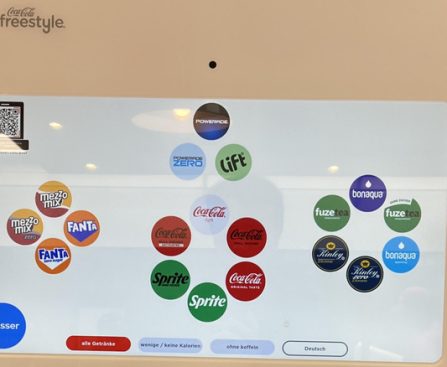
It’s undeniable that the Coke machines with a touchscreen, referred to as Coca-Cola Freestyle, are impressive since they enable you to blend and choose from over 100 beverages. Coke even offers the capability to dispense your creation touch-free through an application. However, if you take a closer look, right above that touchscreen is a small opening, and inside is a miniature camera lens.

As mentioned by Fortune, these cameras are equipped with “future capabilities for motion sensing and facial recognition,” yet they don’t seem to be utilized at present. Cameras have become ubiquitous these days, including at Costco gas stations to deter card skimmers. But what purpose would a soda dispenser serve with a camera? Based on patent filings by former staff of the beverage giant, it’s reasonable to infer that it’s primarily focused on customer sentiment analysis.

This corresponds with a project Coke previously engaged in with the MIT Senseable City Lab, aimed at analyzing the vast quantities of data gathered by the over 15,000 Coca-Cola Freestyle machines across the United States. Although the cameras were not employed for this purpose, data such as time, location, and user preferences were collected to supply thorough insights into consumer behavior.

Utilizing Coke Freestyle machines for data collection

As of this moment, there are no indications that these Coca-Cola Freestyle machine cameras are operational. The majority of the data gathered by these machines seems to pertain to user interactions, such as what beverages consumers are selecting, when they are making their purchases, and what combinations are being created. Thus, while there is no evidence that Coke is applying these cameras for facial recognition, it remains unsettling to think about machines quietly observing and tracking us.

Similar to the new AI capable of monitoring you in surveillance footage without ever seeing your face and the “WhoFi” system that can follow your body using Wi-Fi. Although the Freestyle cameras are inactive, it is still uncertain what precisely Coca-Cola plans to do with all that data — apart from identifying new popular flavor combinations, such as Orange Vanilla Coke. The company reportedly invested over $1 billion in the development of its Freestyle machines, but it is likely that this expense will eventually be offset through the collection, management, and sale of data.

The MacBook Neo: An Possible Substitute for Chromebooks

For many years, Chromebooks have been the leading choice in the budget laptop category. Nevertheless, with the introduction of the MacBook Neo, Apple establishes a new standard for computers priced below $599, offering exceptional built quality, a high-performance processor, and several additional features such as a quality webcam and a complete operating system, unlike Chromebooks which operate solely with Google Chrome. While budget shoppers looking for a $150 option may not be swayed by the MacBook Neo, those inclined to invest around $500 may find it challenging to resist upgrading to a Mac, since even pricier Chromebooks don’t compare to Apple’s design.

For instance, a Samsung Galaxy Chromebook may provide an aluminum finish, or you might opt for a 2-in-1 model from Lenovo or Acer, enabling you to use your Chromebook as a tablet as well. However, these options could exceed the $600 threshold, risk delivering subpar performance, lackluster finishes, or potentially come with a poor webcam. Additionally, a more significant distinction between a MacBook and a Chromebook is the operating systems: macOS versus ChromeOS.

Even if the MacBook Neo didn’t boast aesthetic appeal, it would still run macOS. Chromebooks are designed primarily for online use, relying heavily on cloud services like Google Docs. Thus, if you need to work offline, they won’t perform as effectively as a comprehensive operating system like macOS. Moreover, the range of apps on ChromeOS is more restricted. For instance, Adobe Photoshop or advanced editing tools aren’t as readily accessible compared to their availability on macOS. Initial reviews suggest that the MacBook Neo performs admirably in photo and video editing tasks, surpassing what most Chromebooks can handle.

Apple also claims that for local AI tasks and web browsing, the MacBook Neo’s A18 Pro vastly outperforms the latest Intel Core Ultra 5, which is a much better processor than what most Chromebooks possess. Given that Apple manages both the hardware and software for its MacBook Neo, it’s evident why this laptop delivers superior performance relative to Chromebooks and other Windows laptops in a similar price bracket.

Naturally, although shoppers can find certain Chromebook models offering up to 16GB of RAM, superior OLED displays, and additional features, the price can reach a point where purchasing a refurbished MacBook Air or an M2 or M3 model may be a more sensible option than acquiring these ChromeOS devices.

What makes the MacBook Neo particularly appealing is Apple’s focus on the educational sector, a realm that Chromebooks have previously dominated. With a $499 educational price point, students receive a device featuring an aluminum finish, quality keyboards and trackpads (though it lacks the Force Touch found in other Apple MacBooks), a powerful processor that is even more capable than the M1, a decent webcam, and complete macOS compatibility. For an additional $100, users can also upgrade to 512GB of storage instead of the standard 256GB, along with Touch ID support.

Early reviews indicate that the speakers are surprisingly impressive, even though they are side-firing. The 13-inch LCD display from Apple has also received positive feedback, despite not supporting P3 Gamut, which would enhance color vibrancy. Nevertheless, the general consensus appears to be that if you are searching for a laptop to accompany you in the coming years—whether you are starting college or seeking a reliable daily device—the MacBook Neo is the top choice for non-technical users who prefer a laptop that won’t underperform after just a couple of years.