Samsung and Google have unveiled an innovative feature for the Galaxy S26 series, enabling Gemini to automate tasks across different applications. This new screen automation functionality allows users to easily order food, book rides, and navigate through apps. Initially launched in the U.S. and Korea, the feature empowers Gemini to execute multi-step actions, such as ordering groceries or hailing a cab, by managing apps within a virtual window. Users have the option to intervene at any time to halt or manually steer the process. Presently compatible with apps like Lyft, Uber, Grubhub, and Starbucks, Google intends to broaden this feature to Pixel 10 devices shortly, ensuring a broader rollout to improve user convenience and efficiency.


App Launches MacBook Neo and iMac Accent Hues for Every Mac Device
### Activating Device-Specific Accent Colors on macOS
macOS has historically provided users with the capability to tailor their interface, and with the launch of the new MacBook Neo, Apple has introduced accent color choices tied to specific devices. These hues improve the visual experience, personalizing the interface further. Interestingly, any Mac can access these exclusive color options via a third-party application known as Accents.
#### What is Accents?
Accents is a complimentary application created by Mahdi Bchatnia, available for download on [his website](https://mahdi.jp/apps/accents). This tool enables users to unveil the distinctive accent colors usually reserved for specific devices such as the iMac and MacBook Neo. For those who enjoy a vibrant interface, this app offers an exciting means to elevate their macOS experience.
#### The Attraction of Multicolor
While users might have their inclinations regarding accent colors, the multicolor option is particularly favored by many. It infuses a lively and dynamic ambiance into the desktop setting, making it more visually enticing. The capability to unlock Apple’s device-specific shades provides an additional layer of customization that numerous users will value.
#### New Wallpapers with macOS 26.4
Alongside the accent colors, the MacBook Neo debuts a fresh collection of color-coordinated wallpapers that enhance the device’s aesthetic. Thankfully, these wallpapers will be accessible to all Macs with the impending macOS 26.4 software update. This update not only augments the visual allure of the operating system but also guarantees that users can enjoy a unified appearance across their devices.
#### Additional Resources
For individuals keen on discovering more about the MacBook Neo, which retails for $599, a comprehensive review is available on [9to5Mac](https://9to5mac.com/2026/03/10/macbook-neo-review/). The review offers insights into the device’s attributes, performance, and overall worth.
#### Conclusion
The launch of the Accents app and the forthcoming macOS 26.4 update reinforces Apple’s dedication to user customization and aesthetic charm. By activating device-specific accent colors and providing new wallpapers, Apple empowers users to craft a more personalized and enjoyable computing atmosphere. Whether one favors a classic appearance or a vibrant multicolor design, there are now greater options than ever to customize your Mac to your preferences.

Ex-Microsoft Executive Evaluates the MacBook Neo: Highlights the Significance of Upholding Elevated Standards
### The MacBook Neo Could Be Microsoft’s Unchosen Path
Steven Sinofsky, the former President of Microsoft’s Windows Division, has recently shared a contemplative review of the MacBook Neo, examining its significance and contrasting it with Microsoft’s historical endeavors in the lightweight ARM-based PC domain. Sinofsky, who was part of Microsoft from 1989 until 2012, has since created a blog, Learning by Shipping, where he shares insights regarding technology management and strategies.
In his article titled “Mac Neo and my afternoon of reflection and melancholy,” Sinofsky recognizes the broad praise for the MacBook Neo, while also reflecting on the errors Microsoft made during its own efforts to innovate in this arena. He reminisces about the introduction of Windows 8 and the Surface tablet, suggesting that Microsoft possessed the essential elements for success yet failed to adapt the ecosystem to a new app model swiftly enough. This postponement, he contends, resulted in a lack of adoption and ultimately stifled the potential of ARM-based devices.
Sinofsky indicates that although Microsoft sought to develop a unique ARM ecosystem, the company’s dedication to backward compatibility constrained its capacity for innovation. In contrast, Apple has devoted years to guiding developers toward new APIs and frameworks, facilitating a smoother transition to ARM for Macs, thereby rendering the MacBook Neo a practical product.
He stresses that the MacBook Neo doesn’t necessarily require enhancements; it merely needs to uphold its quality. He foresees that in five years, the Neo will surpass many rival devices while likely maintaining its price point, owing to the continuous progression of technology.
To explore Sinofsky’s insights and the full context of his reflections, you can read his complete post [here](https://hardcoresoftware.learningbyshipping.com/p/239-mac-neo-and-my-afternoon-of-reflection).

Disclosure Day Trailer: Steven Spielberg and Aliens—A Perfect Match
Josh O’Connor and Emily Blunt star in Steven Spielberg’s sci-fi film “Disclosure Day,” out June 12.

Three Features Made Possible by the Emergence of 6G Technology
It seems like 5G was just launched yesterday, yet we’re already turning our attention towards 6G. Here’s all you need to know about it.
Following an extensive rollout of 5G, we have reached a stage where flagship devices and networks no longer have to promote the current cellular technology as a selling point — it has become the norm. Consequently, we’re witnessing improvements in 5G coverage across the country, and new devices such as smartwatches are beginning to access the network as well. While you may have just adapted to using 5G over 4G LTE, I’m here to inform you that 6G is much nearer than you realize.
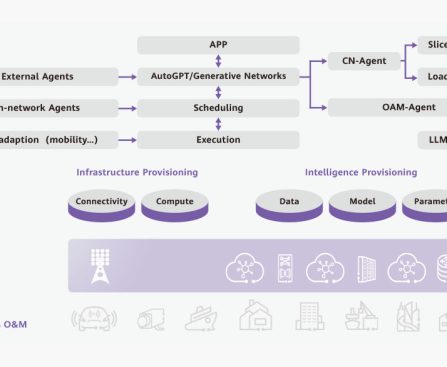
At MWC 2026, top industry figures like Qualcomm and Nvidia presented their insights into the forthcoming 6G mobile network, alongside a myriad of business collaborators. For the typical consumer, the development of 6G infrastructure and the cooperation of companies may not seem thrilling. What you want to understand is what capabilities 6G will bring. We now have that information, and it’s genuinely thrilling. Here are three innovative types of experiences the 6G mobile network will offer, along with their implications for you.
6G will enable low-latency connected AI experiences
These days, everything revolves around artificial intelligence, and 6G is no different. However, there are indications that the AI-driven world we are creating will require more from our mobile networks, which is where 6G comes into play. Specifically, global wide area network (WAN) traffic is anticipated to surge by three to seven times by 2034 in comparison to traffic data from 2023. AI is projected to comprise about 30% of all network traffic.
The AI revolution will necessitate quicker, low-latency connections — thus the push for deploying 6G — but it encompasses more than mere traffic increases. Industry experts envision a future where AI agents take center stage within mobile ecosystems. Currently, your phone stands at the core of your tech network, linking with earbuds, smartwatches, tablets, laptops, and more. In future scenarios, AI agents could manage these hardware categories, interconnecting them all with streamlined software.
That seems rather clever, but if AI agents are interacting with multiple wireless devices simultaneously, they will require rapid connections. This is why 6G is being designed to meet these traffic and speed requirements. We anticipate that 6G will provide five times the traffic capacity of 5G, along with a 50% enhancement in spectral efficiency for both uplink and downlink connectivity.
In straightforward terms, this implies that your AI devices will be able to connect with one another and with cloud servers faster than ever before. 6G will facilitate connected experiences that are currently limited by latency issues.
6G will popularize XR and spatial computing
In terms of connected experiences, 6G will significantly contribute to making mixed-reality XR experiences widespread. Right now, gadgets like Meta Ray-Ban Display or Samsung Galaxy XR are hindered by the amount of data that can be transferred to provide top-quality video, AI processing, and gaming performance. Once it arrives, 6G will enhance these experiences by enabling higher uplink speeds that can support multiple 4K or 8K video streams.
As most XR glasses and headsets depend heavily on streaming, tethering, or cloud processing for functionality, a swift and low-latency mobile network such as 6G could transform use cases like game streaming or remote desktop control into practical applications. It’s all about minimizing the wait time for your devices to communicate with your phone and the cloud for a response. Therefore, when you gaze at something and pose a question while donning camera-equipped smart glasses, the answer will feel almost instantaneous upon the arrival of 6G.
6G will enhance public infrastructure over the next decade
6G will also foster a sensory network capable of employing RF signals and drones to map environments, leading to new types of infrastructure, such as networks for self-driving cars. As self-driving car technologies like Waymo gain traction, a rapid, low-latency network will be essential to link vehicles to control stations. You’ll also need to process data from sensors, including cameras, radar, or LiDAR, almost instantly, and 6G will facilitate that.
Robotics represents another emerging technology that’s on the horizon, with firms like Tesla fully investing in humanoid robots that can be operated remotely. Similar to self-driving cars, robots will require a quick and effective network to function correctly. The most significant offering of 6G may lie in its capacity upgrade, as new applications for mobile networks like AI, self-driving vehicles, and robotics will lead to increased congestion. 5G lacks the speed and capacity necessary to handle the projected traffic surges.
6G aims to address both of these challenges, and you can look forward to advancements in autonomous vehicles, robotics, AI, and spatial computing coinciding with the enhanced mobile network.
Overlooked Espionage Game Competes with GoldenEye 007 in Quality
Unseen Diplomacy 2 is the sequel I never anticipated, yet it’s the one you definitely have to experience. As I descended the elevator with my wirecutters, screwdriver, blowgun, and various other tools at the ready, I eagerly looked forward to what my upcoming mission would entail. Would I confront AI-driven robots that were bound to compromise my disguise? Perhaps dismantle several fields of laser traps? Intercept the security cameras to collect my intel in that manner? The options appeared limitless, and the most exciting part was that I seldom knew what would come next.
It was this element of exploration and thrill that was most surprising in Unseen Diplomacy 2, the unexpected follow-up to an exceedingly niche VR tech demonstration from the original HTC Vive’s 2016 launch. I remember being captivated by the physical movement needed to enjoy the original game, showcasing it to countless visitors who came over. Nonetheless, that title was merely a well-executed, distinct idea that lacked substantial gameplay depth.
The sequel is, to be honest, one of the finest VR experiences I’ve encountered. The graphics are not only incredibly stylish and align perfectly with the atmosphere—think back to the 2003 pseudo-spy game XIII with its graphic novel aesthetics—but the concept is thoroughly developed and takes advantage of all the Meta Quest 3’s most remarkable and unique hardware capabilities. Complete wireless freedom, the option to map out your entire home and transform it into a playable virtual arena, and the exhilarating potential that comes with moving your body like a genuine spy would, all without any of the potentially lethal consequences at the end of the day.
Time to gear up, agent
Like its predecessor, Unseen Diplomacy 2 is crafted around the notion that your home can morph into a virtual play area that feels and looks entirely distinct. This isn’t a mixed reality game, although it does incorporate mixed reality missions for those who enjoy that aspect. This remains very much a VR game that transports you to new locations, but the difference is that this edition not only accommodates the full spectrum of physical human movement but also acknowledges that not everyone has the space or the physical capacity to maneuver like a spy.
When you start, I suggest two things immediately. First, if you’re engaging in full roomscale mode—meaning you’ll be walking around your environment and depending on full physical movements—ensure the floor plan it presents before gameplay is accurate. My setup worked optimally when I cleared the area and outlined a lengthy rectangle in my living room to utilize for play.
Secondly, complete the tutorial first. This is not the initial game, which means there’s significantly more complexity at play. You’ll need to get acquainted with all the gadgets in your inventory (and there are plenty). Otherwise, you’ll reach a puzzle and find yourself entirely perplexed during the actual game.
Once you’re underway, prepare to dedicate serious time to this. You can engage for as long or as short as you prefer, but I found the gameplay loop to be exceptionally captivating. Each day begins at a sort of game board that vaguely resembles a blend of Risk and Catan. Daily, pawns shift around the board, indicating where spies are situated globally. Choosing a spy will provide you with a variety of actions, including additional movement, investigation, and task execution.
You have 17 days to avert “doomsday” from happening, so gathering intelligence and fulfilling missions is critical to this objective. Each task occurs in a different location based on intel, and as you may anticipate, missions have specific objectives. Sometimes you’ll need to gather more intel and relay it back to HQ, while at other times you’ll be disarming missiles, infiltrating server farms or mansion basements, and combating numerous police bots along the way.
The optimal way to engage with the game is through roomscale movement, as the rooms and hallways are fully tailored to fit within the actual confines of your residence. But don’t fret, these rooms don’t function like “typical” rooms do. Doors transport you to new areas through a clever blend of procedural generation and exceptional programming, necessitating that you physically walk through them and enter a new space, even if you’ve merely walked in a circle in your living room.
It’s enough to truly perplex you during the first few hours of gameplay, and the experience will continue to astonish you throughout the entirety of the game. Not to mention all the physical puzzles such as cutting wires and rewiring panels, ducking under and navigating around lasers, crawling through vents, etc., that you’ll encounter, along with a variety of hacking minigames, climbing up and down ropes, ladders, unmarked walls with McGuyver-style climbing gear, etc.
The campaign encompasses multiple nations and continents, features three distinct save slots, and offers half a dozen different difficulty levels, even including a dedicated fitness mode that

India Set to Launch Fresh Manufacturing Incentives as Apple Escalates iPhone Production Transition
As India’s existing phone manufacturing incentive program approaches its conclusion, the nation is set to implement new incentives to ensure production continues to thrive. Here are the specifics.
## India intensifies focus on recent manufacturing growth
While Apple has gradually moved its production away from China in recent years, its initiatives escalated last year when President Trump initiated his global tariff battle.
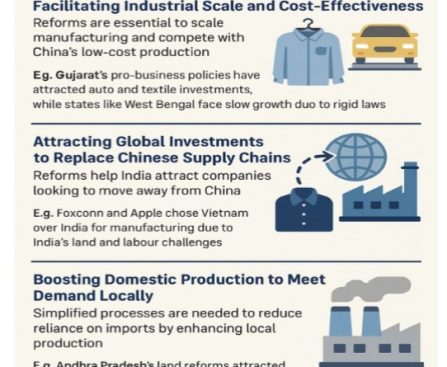
Consequently, India became one of Apple’s emerging manufacturing centers, achieving the landmark of assembling approximately 25% of the company’s iPhones, according to a report released earlier this week.
A significant factor in this successful transition was India’s Production-Linked Incentive (PLI) Scheme, which provides monetary incentives to firms that produce smartphones domestically.
Now, as reported by *Reuters*, India is preparing new incentives that are set to begin once the current PLI scheme expires at the end of this month.
As part of the new initiative, the Indian government is reportedly exploring the idea of connecting incentives to export achievements. This could serve as an effective strategy to motivate companies to designate the country as their global manufacturing center, rather than solely focusing on domestic markets.
The timing is significant: Apple is said to be planning to shift approximately 50% of its iPhone production to India within the next year, despite a U.S. court ruling that nullified Trump’s fentanyl-related tariff on China, potentially diminishing India’s bargaining power.
Nonetheless, *Reuters* indicates that India “produced nearly $60 billion worth of mobiles in the 2024-25 fiscal year, a 28-fold increase over a decade,” adding that as part of “Prime Minister Narendra Modi’s mission to strengthen domestic manufacturing,” the nation “is working towards expanding its electronics manufacturing to $500 billion by the fiscal year 2030.”
The report further states that the country’s Ministry of Electronics and Information Technology has engaged with industry representatives to devise the scheme, but declined to provide comments when approached.
DIRECTV App Launches Sports Central Functionality for iPhone and iPad Customers
**DIRECTV Improves Sports Central Functionality on iOS Devices**
DIRECTV has broadened the accessibility of its Sports Central feature beyond the conventional TV platform, now available on iPhone and iPad following a recent app update. This improvement enables users to manage and discover live sports with greater ease on their mobile devices.
In a blog announcement, DIRECTV revealed that Sports Central is now integrated into its iOS app, allowing users to enjoy a comprehensive hub for live sports right from their smartphones and tablets. To utilize the new features, users just need to update the app through the App Store.
### Main Features of Sports Central on iOS
The enhanced app presents six key features aimed at improving the sports viewing experience:
1. **Live Game Locator**: Users can effortlessly find live games currently broadcast on DIRECTV channels.
2. **Future Schedules**: The app offers a timetable of forthcoming games, ensuring users remain updated on what’s coming up.
3. **In-Depth Game Details**: Users can access league, matchup, and team pages for further insights and information regarding the games.
4. **Game Recording Feature**: Subscribers can record games shown on DIRECTV channels, enabling them to catch up on specific events or follow their preferred teams.
5. **Favorite Teams Selection**: Users can designate their favorite teams, ensuring their games and related updates are prioritized and easily reachable.
6. **Streaming Options**: The app permits users to view games from different streaming platforms, such as YouTube, Prime Video, ESPN Select, and Peacock, in addition to DIRECTV channels, although separate subscriptions may be required.
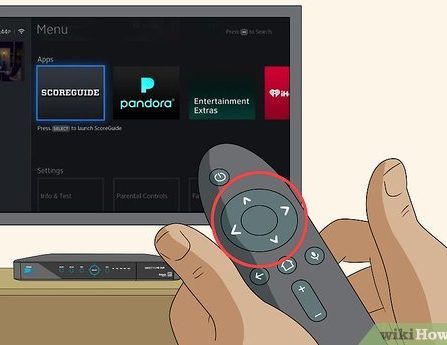
To access Sports Central, users should tap the “Sports” icon in the navigation bar after updating to the latest version of the DIRECTV app.
### Additional Features and Special Offers
Alongside the app update, DIRECTV has launched new multiview settings for March Madness, enabling viewers to simultaneously watch multiple games on one screen.
Additionally, the company is offering a promotional deal until April 23, which includes a complimentary month of its Sports Pack with the CHOICE package, priced at $59.99 per month.
For those wanting to elevate their sports viewing experience, the latest version of the DIRECTV iOS app can be downloaded from the App Store.
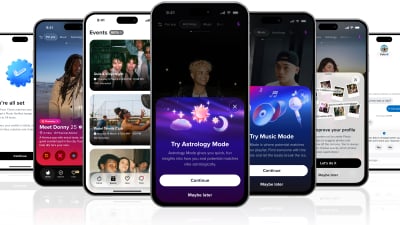
Tinder Introduces Multiple Updates, Including AI to Combat Dating Fatigue
Tinder announces several features and product updates, including the Chemistry AI feature and Events.
The Function of the Stripes on Solar Panels Clarified
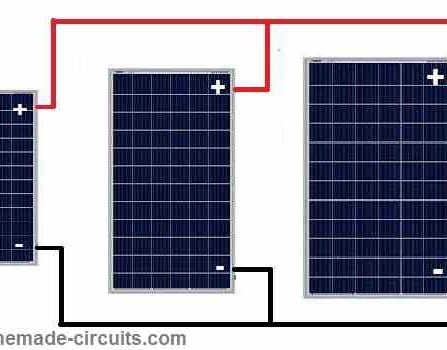
solar panels, which can be critical for saving lives by converting sunlight into usable energy. If you are considering the installation of solar panels for your residence, you may be curious about the significance of the visible white grid lines present on those panels. The brief answer is, they have a purpose.
A solar panel is formed by connecting various solar cells, each typically composed of thin silicon sheets that contain boron and phosphorus sandwiched between conductor panels. On the exterior of these cells, there exist two types of solar cell grid lines, which vary in thickness. Known as fingers and busbars, they play a crucial role in any solar panel and facilitate the transfer of energy from the panel into your home.
The function of solar panel fingers and busbars