Jimmy Kimmel has responded to Jake Paul saying he’d be interested in politics during his interview with Donald Trump.


Gamma Introduces AI Image Generation Tools to Challenge Canva and Adobe
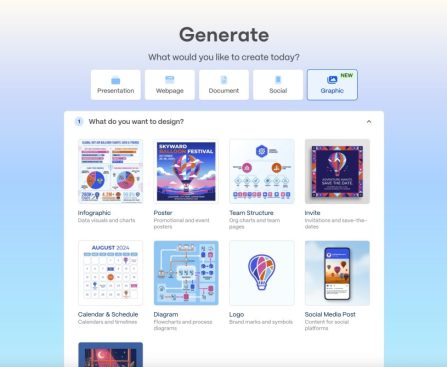
The company’s new product, called Gamma Imagine, will let users employ text prompts to create brand-specific assets like interactive charts and visualizations, marketing collateral, social graphics, and infographics.
H&M Plans to Use Startup’s Technology to Create Clothing from CO2
Rubi has developed an enzymatic process to turn carbon dioxide into cellulose that’s ready to be spun into lyocell or viscose.

Niv-AI Emerges from Stealth to Enhance GPU Power Performance
The company raised $12 million in seed funding to measure and manage GPU power surges.

MacBook Neo, AirPods Max 2, iPhone 17e, and more: Apple’s Announcements This Month
From a new iPhone to a budget-friendly MacBook, Apple announced a series of new products this week.

POCO X8 Pro Iron Man Edition Smartphone Specifications
POCO has collaborated once more with Marvel to unveil a limited-edition phone, continuing the legacy of last year’s acclaimed model. The newest partnership introduces the POCO X8 Pro Iron Man Edition, an eye-catching device that distinguishes itself with its distinctive design and features.
The POCO X8 Pro Iron Man Edition belongs to the fresh X8 series, which comprises the X8 Pro and X8 Pro Max. These smartphones are currently available in major markets, including the U.K. and India. The X8 Pro starts at £289 ($385) in the U.K. and ₹33,999 ($367) in India for the 8GB/256GB variant. In contrast, the Iron Man edition is retailing at $399 and is offered in a 12GB/512GB configuration, priced at ₹43,999 ($476) in India.
This year’s Iron Man edition showcases a striking appearance featuring Iron Man clad in black-and-gold armor alongside the Stark Industries logo. The gold detailing imparts a level of sophistication, making the device a showstopper. It is presented in a special box accompanied by Marvel-themed accessories, such as a custom case, enhancing the unboxing experience.
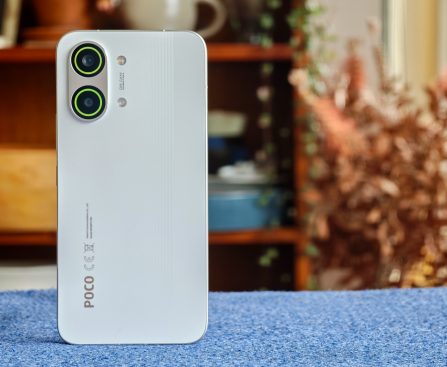
The POCO X8 Pro Iron Man Edition features a compact 6.59-inch display, providing a more comfortable grip in comparison to its predecessor. The rear of the phone presents a smooth texture, with the camera housing being designed with minimalism in mind, ensuring the Iron Man theme remains the focal point. Additionally, the device includes a metal mid-frame, contributing to a premium feel.
On the inside, the phone is equipped with the Dimensity 8500 Ultra chipset, delivering strong performance for a mid-range smartphone. The robust 6,500mAh battery guarantees all-day use, and the phone supports 100W fast charging via USB PD, facilitating rapid charging with compatible chargers.
The POCO X8 Pro Iron Man Edition also features customized icons and software effects, further enhancing its distinctive charm. Although the camera setup does not match that of flagship models, it still provides satisfactory performance within its category.
In summary, the POCO X8 Pro Iron Man Edition represents an appealing choice for Marvel fans and individuals in search of a unique smartphone. With its striking design and solid performance, it presents an enticing option for consumers within the mid-range market.

Poco’s First Pro Max Phone Justifies its Name with an 8,500mAh Battery
Xiaomi subsidiary Poco has launched the X8 Pro and X8 Pro Max phones, both of which feature large silicon-carbon batteries, powerful chipsets, and 256GB of storage as standard, with stronger specs on paper than the recent Pixel 10A despite costing less. Both Poco phones also feature a surprisingly subtle take on RGB lighting, with small […]
Causes of the Worldwide Lack of Success of Solar Roadway Initiatives
Solar Roadways — and China would ultimately realize.
A primary factor for the usage of asphalt in road construction is its affordability and minimal upkeep. In contrast, solar panels do not meet those criteria when utilized as substitutes for road materials. This is before taking into account that these panels entail higher upfront and installation expenses, demand a significant amount of energy and resources for their production, resulting in a net negative impact initially, and alter the very design of roads — vehicles are not built to navigate on glass, and tires have little grip. Additionally, it is exceedingly improbable that the panel technologies could endure the traffic from commercial trucks, heavy machinery, buses, and other sizable vehicles.
For these reasons, the majority of initiatives focused on solar roadways have not succeeded, despite conventional solar panels contributing positively to various aspects of life.
Is there ever a chance for solar roadways to succeed?

The Dependability Assessment of Wired versus Wireless Accessories

Kej84/Shutterstock
There’s an enduring belief that wired accessories are more dependable, precise, or offer superior performance compared to their wireless alternatives. This rule has persisted because, at one point, it was an absolute truth. In 2003, tech reviewers discussed wireless computer mice and their attempts to match the polling rate capabilities of wired USB connections. There were ongoing worries about signal reliability, and a genuine threat existed that the wireless link could fail at critical moments.
It’s broadly accepted that wired headphones provide enhanced audio quality and that wired video game controllers ensure reduced input lag. However, just how significant is the difference in today’s technology landscape? Is it accurate to claim that wireless accessories are still less reliable?
Today, the distinction between various wired and wireless accessories is increasingly minimal. This difference is pertinent for high-end professionals who seek every possible advantage. The convenience of being untethered often gives wireless options an edge. For most users, wireless accessories prove to be entirely dependable.
How wireless accessories evolved to be more dependable


11 Major Tech Companies, Not Including Apple, Participate in Anti-Scam Initiative
### Industry Agreement Countering Online Scams & Fraud: A Joint Initiative by Tech Leaders
In a decisive action to address the growing menace of online scams, eleven leading tech firms and retailers have come together under the Industry Agreement Countering Online Scams & Fraud. This initiative is launched just before a global fraud summit hosted by the United Nations, underscoring the pressing need for collective measures against increasingly advanced scams, especially those utilizing artificial intelligence.
#### Signatories and Their Pledge
The agreement has received backing from prominent enterprises, including Google, Microsoft, LinkedIn, Meta, Amazon, OpenAI, Adobe, Pinterest, Target, Levi’s Strauss & Co., and Match Group, which operates well-known dating apps like Tinder and Hinge. Karen Courington, vice president of consumer trust experiences at Google, highlighted the significance of partnership, saying, “We can’t tackle this issue alone. We require collaboration throughout the industry to address scams more effectively.”
#### Objectives of the Initiative
The Industry Agreement sets forth four main objectives aimed at confronting the challenges posed by online scams:
1. **Prevention**: The initiative emphasizes creating proactive strategies to avert scams. This entails establishing strong security protocols, AI-driven detection systems, and transparent usage guidelines to protect consumers.
2. **Collaboration and Shared Learning**: The agreement encourages enhanced collaboration and appropriate information exchange between industry stakeholders and law enforcement agencies. This teamwork is designed to detect financial fraud, especially from international criminal groups, safeguard consumers, and improve the comprehension of scams and emerging threats.
3. **Resilience**: The initiative aims to foster secure digital transformation by introducing protective tools, including AI-enabled solutions, and facilitating prompt reactions to new scam occurrences.
4. **Public Education**: An essential element of the agreement is the dedication to informing the public about scams and digital literacy. This goal highlights the necessity of educating citizens on protective strategies against manipulation and deceit from scammers.
#### The Economic Consequences of Scams
The increasing frequency of online scams is a critical concern, with estimates suggesting that consumers incur losses of around $442 billion each year due to fraudulent actions. The agreement’s focus on information sharing among tech companies and retailers is regarded as a crucial step in tackling this growing issue.
#### Noteworthy Absence of Apple
Although the initiative has garnered notable involvement, it is significant that Apple has not endorsed the agreement. Speculations indicate that Apple’s security measures may not yet be adequately advanced to be exploited by scammers, contributing to its exclusion from this joint initiative.
### Conclusion
The Industry Agreement Countering Online Scams & Fraud signifies a vital move towards a united approach against digital fraud. By harnessing the combined resources and knowledge of leading tech firms and retailers, the initiative aims to foster a safer online space for consumers and reduce the economic repercussions of scams. As the digital realm continuously transforms, the value of such partnerships cannot be overstated.