author

“Shrinking Co-Creator Shares Perspectives on Future Developments Ahead of Season Finale”

**Contracting: Anticipating the Season Conclusion and Future Paths**

*Contracting* is among Apple TV’s top series, engaging viewers with its distinct mix of comedy and sincere storytelling. As the show nears the end of its third season, fans are excited to discover how the plot develops and what is in store.

### Season Conclusion Insights

The third season of *Contracting* has been an emotional ride, with the latest episode leading many to mistakenly think it was the season conclusion. Nevertheless, fans can eagerly await the actual finale, which is set to broadcast shortly. Originally intended for twelve episodes, the season was modified to eleven, with the premiere showcasing a special double episode.

The concluding episode is set to tie up the ongoing storyline, representing a crucial turning point for the series. Bill Lawrence, one of the show’s creators, has shared that this finale will finish the current narrative thread, clearing the path for new advancements in the forthcoming season.

### Anticipating Season Four

Excitingly, *Contracting* has already received a renewal for a fourth season. Lawrence has hinted that this new season will bring forth a “fresh story” and a new phase for the characters. This aligns with the show’s foundational concept, which was designed around a three-season narrative: delving into themes of loss, reconciliation, and progression.

While the main cast is anticipated to return, the particulars regarding character continuity are still uncertain until the finale airs. Lawrence’s remarks imply that while recognizable faces will come back, the dynamics and plots may shift considerably.

### Themes and Character Arc Development

Throughout its duration, *Contracting* has addressed significant themes, resonating profoundly with audiences. The first season examined loss, the second delved into reconciliation, and the third has concentrated on the journey of progression. This thematic evolution has enabled rich character arcs and emotional complexity, rendering the series relatable and impactful.

### Viewer Engagement and Forecasts

As the season finale draws near, viewers are abuzz with forecasts and hopes for both the concluding episode and the series’ future. The community is actively engaging in discussions about possible outcomes and character journeys, eager to see how the creators will resolve ongoing plots and unveil new ones.

### Conclusion

*Contracting* has effectively established its place on Apple TV, fusing comedy with meaningful storytelling. As the third season concludes, viewers are filled with anticipation for the finale and enthusiasm for what season four will offer. With its dedication to evolving narratives and character development, *Contracting* remains a series that captivates audiences.

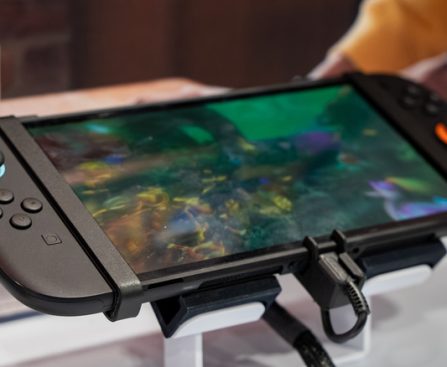
Function of the Small Opening on the Upper Right of the Nintendo Switch 2

diverse environments or at varying volumes. Furthermore, the built-in microphone on the Switch 2 provides a user-friendly option for quick communication without the hassle of additional equipment.

Ultimately, the introduction of this internal microphone addresses a major concern voiced by players with the previous console: the absence of direct communication features. In contrast to competitors like Xbox Series X|S and PlayStation 5, which facilitate seamless voice chat, the original Switch fell short by lacking an integrated solution. Hence, the Switch 2 features GameChat in tandem with its microphone to enhance the gaming experience.

The Switch 2’s integrated microphone allows for chat without a headset

Players who enjoyed the original Nintendo Switch will recall how the absence of built-in voice communication significantly limited the enjoyment of various games. Take “Animal Crossing: New Horizons” as an example; to communicate via voice chat, players had no choice but to depend on the cumbersome Nintendo Switch Online app on their smartphones. Given the impractical nature of this official method—especially when the app initially demanded that the phone screen be active at all times—many opted to use third-party voice chat applications instead.

With the launch of the Nintendo Switch 2, the process has become noticeably more straightforward, as GameChat is now integrated directly into the console. Talking to friends while enjoying games like “Splatoon 3” is as easy as pressing the C button on the right Joy-Con to initiate a call for up to 12 participants. While you still have the option to utilize your own microphone, it is no longer a necessity.

Although its audio quality may not rival that of an external microphone, Nintendo’s built-in microphone offers commendable performance. It adapts to varying voice levels and environments, ensuring that your gaming experience remains unaffected by audio settings, regardless of play conditions.

Common Household Items That Could Interfere with Bluetooth Connections

In the last twenty years, Bluetooth has evolved into a crucial element of our everyday existence, effortlessly managing tasks from device connections to file sharing. However, you may occasionally observe frequent connection drops or inadequate signal strength, alongside other [common Bluetooth issues](https://www.bgr.com/2077672/how-to-fix-most-common-bluetooth-problems/). These problems may stem from various objects and appliances within your home interfering with Bluetooth connections.

In addition to concrete and wooden barriers, typical gadgets like Wi-Fi routers, microwave ovens, certain smart home devices, and even USB 3.0 ports can disrupt Bluetooth signals. Bluetooth usually functions within the 2.4 GHz frequency band, which is also utilized by numerous Wi-Fi routers and other domestic devices.

The challenge is that the cause of these interferences isn’t always apparent, leading many to overlook the solution to Bluetooth disturbances. Frequent connection drops are often mistaken for low battery issues or hardware failures, though a device close by may actually be the culprit. Thus, when experiencing Bluetooth connectivity troubles, it’s essential to survey your home for appliances that might be interrupting the signals.

### Wi-Fi routers

A prevalent source of Bluetooth interference in households is the Wi-Fi router. Many older models operate exclusively within the 2.4 GHz spectrum, while newer ones support both 5 GHz and 2.4 GHz frequencies, which coincide with Bluetooth’s band. With numerous devices linked to the Wi-Fi, a scenario can arise where signals continuously clash, resulting in frequent disconnections.

The interference becomes more evident when a Bluetooth device is situated near a Wi-Fi router. For example, if your Bluetooth-enabled speakers or headphones are located at your workspace alongside the router, connectivity issues may arise.

As more appliances in homes demand stable and speedy internet, avoiding Bluetooth interference can be challenging. Nevertheless, by strategically placing devices and routers—keeping Bluetooth gadgets at least three feet from the Wi-Fi router and switching your router to the 5 GHz band—you can significantly reduce signal disruptions. Additionally, if your [router only functions on the 2.4 GHz band, an upgrade may be necessary](https://www.bgr.com/2055815/why-2-4-ghz-router-upgrade-necessary/) to eliminate signal interference.

### Microwave ovens

Microwave ovens are a familiar household item associated with Bluetooth interference. You may have experienced frequent connectivity drops when using Bluetooth gadgets like headphones close to a microwave. This occurs because microwaves emit electromagnetic radiation in the 2.4 GHz spectrum. Although they are designed to contain this radiation, some waves inevitably escape, [causing Wi-Fi interference](https://www.bgr.com/2040999/home-wifi-interference-tech-features/) as well. This issue tends to be more apparent in smaller kitchens where waves are trapped in a confined area, while larger kitchens may not exhibit as much disruption.

The solution is straightforward. First, avoid operating Bluetooth devices like headphones near microwaves, particularly when they are in use. For stationary items such as speakers, try to position them further away from the microwave. Simply putting a few feet of distance between them will likely resolve the issue for most users. If neither option is feasible, consider upgrading to Bluetooth 5.0 or newer devices, as these provide enhanced connectivity.

### Smart home devices

Today’s homes are packed with smart technology, including security cameras, voice assistants, baby monitors, and smart plugs and lighting, most of which operate on the same 2.4 GHz band as Bluetooth. Consequently, an excess of these devices can lead to Bluetooth connectivity problems. Even older fluorescent lights might emit waves that disrupt Bluetooth signals, although this effect is generally less significant.

To reduce Bluetooth interference from smart devices, switch compatible devices to the 5 GHz band on your router, alleviating congestion on the 2.4 GHz band. Additionally, try to keep devices spaced apart when feasible. Lastly, power down devices that are not in use. For example, consider turning off fluorescent lights during the day. If you have a baby monitor, switching it off when the child isn’t present will minimize disruptions, prolong the device’s life, and also help lower your electricity bill.

### Large aquariums or water tanks

It may be surprising, but Bluetooth signals have difficulty penetrating water and tend to be absorbed. Thus, if there is a large water feature or aquarium near a Bluetooth device, you are likely to encounter some degree of interference. The human body, which is significantly comprised of water, can also impact connectivity. You may have noticed that merely standing between two Bluetooth devices can weaken the connection. Water is the underlying factor behind this. Even an

Suno Faces Challenges with Music Copyright

AI music platform Suno’s policy is that it does not permit the use of copyrighted material. You can upload your own tracks to remix or set your original lyrics to AI-generated music. But, it’s supposed to recognize and stop you from using other people’s songs and lyrics. Now, no system is perfect, but it turns […]

Steps to Power Up Your Tesla with Solar Panels

smart home devices that you may have set up in your outdoor spaces utilize solar energy for charging, such as speakers, cameras, lights, and more. However, does this imply that you can also charge larger devices like a Tesla or another electric vehicle? You certainly can, but it’s not simply a matter of plugging it in. There are a few preliminary steps you’ll need to take.

For example, you can’t just connect cables directly from solar panels to your EV’s battery or charging system. Additionally, solar energy availability varies due to several factors, and a stable energy source is required to charge your Tesla’s battery. The proper method involves using a battery backup solution, which the panels will first charge before connecting that to your EV. An excellent illustration of this is Tesla’s Powerwall. The Powerwall contains lithium-ion battery packs for energy storage, along with a built-in inverter. Thus, if you choose to create your own system, a similar setup would be necessary. An inverter transforms the direct current (DC) generated by solar panels into alternating current (AC) suitable for an EV. While it is indeed feasible to establish your own solar backup system, you will require multiple components, such as a charge controller, a compatible battery, an inverter, and, of course, solar panels. In conclusion, charging your Tesla or EV using solar power is achievable, even if it may not be as simple as it initially appears.

How many solar panels are required to charge an EV?

Gadget Converts Vintage Apple Watch Into Operational iPod

Before smartphones evolved into multifunctional music devices, entertainment streamers, and gaming consoles, we depended on portable MP3 players to enjoy music on the move. After the digital music revolution of the late ’90s, MP3 players started gaining popularity, but it was Apple’s iPod — alongside iTunes — in 2001 that transformed the music (and portable music) industry forever.

Apple’s iPod and its various iterations, like the Nano, Classic, and Mini, ruled the ’00s, selling approximately 400 million iPods from 2001 to 2014. However, after the debut of the first iPhone in 2007, sales of portable MP3 players and iPods began to steadily decline. In 2022, Apple officially phased out the iPod. Nevertheless, in recent years, the vintage iPod has experienced a revival in popularity, particularly among Gen Z.

You don’t have to search the web for iPod substitutes or used models to join the iPod resurgence. The RePod Ultra is a Kickstarter invention that seeks to transform your Apple Watch with a mechanical redesign that evokes iPod-like nostalgia — and it has already met its funding target.

What is the RePod Ultra?

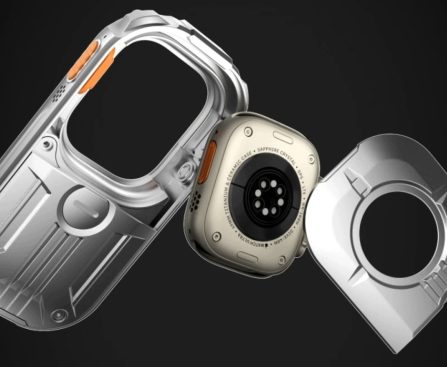
As per its Kickstarter campaign page, the RePod Ultra is “a mechanical redesign that reintegrates Apple Watch Ultra into everyday use.” The device features a steampunk-inspired titanium frame that attaches to your old Apple Watch Ultra, presenting an impressive appearance while also providing additional protection.

Visually, this device resembles something you might take into outer space, but it incorporates some retro elements that, while updated, will surely evoke nostalgia if you’ve ever owned an iPod. The RePod Ultra includes a metal rotary dial that enables you to control volume, scroll, play games, and navigate the watch’s interface, reminiscent of the iPod experience. WGP characterizes it as a “steering wheel for your sound.”

The RePod Ultra does not alter the functioning of your Apple Watch Ultra; you will continue to have access to podcasts, calls, payments, music, and its other functionalities. The rotary dial is designed to offer a more precise and tactile experience compared to a touchscreen — although the touchscreen remains usable. Additionally, the design of the casing allows for magnetic charging of your Apple Watch, audio from its speakers, and access to its side buttons, without needing to detach the device from your watch. Essentially, the RePod Ultra seems to merge iconic features of the iPod with modern Apple device functionality, all encased in a visually striking design.

This proposition was sufficient for WGP to achieve its Kickstarter funding target of HK$10,000 on March 7, with the first units expected to ship in April 2026. Three color options are available: Natural Titanium, Ultra Silver, and Black Titanium. If you’re looking to acquire a RePod Ultra for yourself, complete with a lanyard and manual, it will require a pledge of $89 (the standard MSRP is $159).