Hints and answers to today’s Hurdle all in one place.

Wordle Solutions and Clues for March 24, 2026
Here’s the answer for “Wordle” #1739 on March 24 as well as a few hints, tips, and clues to help you solve it yourself.

NYT Strands Clues and Solutions for March 24, 2026
The NYT Strands hints and answers you need to make the most of your puzzling experience.

Hints and Answers for NYT Connections: March 24, 2026
Connections is a New York Times word game that’s all about finding the “common threads between words.” How to solve the puzzle.

How to Build a Mobile Offline Survival Library
In the current digital age, the prospect of the internet suddenly becoming unavailable resembles a moment out of a post-apocalyptic film. Nonetheless, this situation is not merely a figment of imagination; it is a reality in certain regions and a possible threat everywhere. Security expert Robert Siciliano cautions that an internet disruption is not a matter of “if” but “when,” implying that everyone ought to ready themselves for such an occurrence.
One approach to getting ready is by assembling an offline “survival library” of digital materials. This library can be created using a Raspberry Pi or a similar device, enabling you to access crucial information without needing an internet connection. You can obtain maps, Wikipedia entries, e-books from Project Gutenberg, user guides, and even YouTube videos for offline viewing. Furthermore, possessing fully charged portable chargers and keeping content on various devices can guarantee access during disruptions.
Alternatively, you could acquire an “Internet-in-a-Box” gadget like PrepperDisk, which offers offline availability to a large collection of content. These devices, offered in different storage sizes, provide a practical yet pricier solution.
Whether you decide to construct your own library or purchase a ready-made device, preparing for internet outages can bring reassurance and ensure access to essential information when necessary.

9to5Mac Daily: March 23, 2026 – Examination of iPhone Air Trend and Recent iPad Speculations
**9to5Mac Daily: Your Go-To for Daily Apple News and Insights**
In the rapidly evolving tech landscape, keeping abreast of the newest developments is essential, particularly for Apple fans. The 9to5Mac Daily podcast acts as a trustworthy hub for daily summaries of the most critical stories concerning Apple and its ecosystem.
**What is 9to5Mac Daily?**
9to5Mac Daily is a podcast that offers listeners a brief overview of the leading Apple-related news every weekday. The program is created for those who wish to remain updated without having to comb through numerous articles. Each episode includes conversations about the latest product launches, software enhancements, and market trends, making it a vital listen for Apple supporters.
**Where to Listen**
Listeners can conveniently find the 9to5Mac Daily podcast on several platforms, including:
– [iTunes and Apple’s Podcasts app](https://podcasts.apple.com/us/podcast/9to5mac-daily/id1331816080)
– [Stitcher](https://www.stitcher.com/podcast/9to5mac-daily)
– [TuneIn](https://tunein.com/radio/9to5Mac-Daily-p1089524/)
– [Google Play](https://play.google.com/music/m/I5d4dzs7dauazmfxvvrynyiuram?t=9to5Mac_Daily)
– [RSS feed for Overcast and other podcast players](https://feedpress.me/9to5macdaily)
**Subscription Benefits**
By subscribing to 9to5Mac Daily, listeners can guarantee they receive new episodes immediately upon release. Moreover, there is an opportunity to support the podcast through 9to5Mac Daily Plus, which provides:
– Ad-free access to every episode
– Exclusive bonus content
**Engagement and Feedback**
The team behind 9to5Mac Daily welcomes listener interaction. Fans can send their feedback via email at [[email protected]](mailto:[email protected]) and are encouraged to rate the podcast on platforms such as Apple Podcasts and Overcast to help broaden its audience.
**Conclusion**
For anyone keen on Apple news, 9to5Mac Daily is an indispensable resource that merges convenience with top-notch content. With new episodes launched every weekday, it’s a superb way to stay informed about the latest developments in the Apple ecosystem.

Uncover 5 Spotify Functions to Improve Your Playlists
one of the most sought-after music streaming platforms available, and there’s a solid reason for it. Whether you’re engaging with the web player or the application, the experience is fluid and consistent (especially if you’re on the premium plan), enhanced by the extensive array of tracks and numerous useful features that elevate your music sessions.
A lot of these Spotify functionalities are designed to assist you in crafting the ideal playlist for any mood you’re in. There’s Smart Shuffle that introduces tracks that Spotify believes you may enjoy, Mix sections that provide personalized song playlists based on your listening habits, and even Spotify’s latest Smart Reorder feature that ensures smoother song transitions.
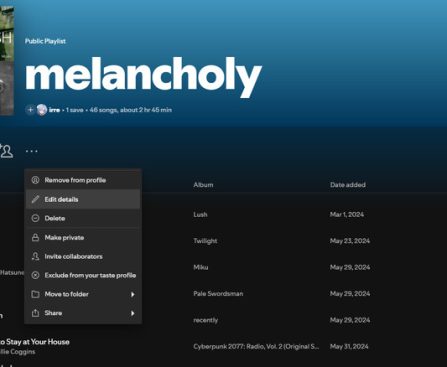
Nonetheless, there are also several lesser-known Spotify curation tools that are unfamiliar to many, yet they can enhance your playlists. These encompass additional avenues for receiving tailored playlists and song suggestions from Spotify, personalized album artwork to make your playlists stand out even more, and even a dedicated AI-supported DJ solely focused on curating your playlists.
1. Personalized cover art
Paratrooper Creates Award-Winning Solution for Drone Challenges in Military Innovation Contest
The U.S. military is perpetually seeking methods to outpace technological advancements, especially as drones, robotics, and artificial intelligence disrupt warfare with remarkable velocity. A recent advancement stems from a military challenge that resembles a trendy reality television program rather than a conventional government request for proposal (RFP). Conceived by Secretary of the Army Daniel Driscoll, Dragon’s Lair is an annual event where soldiers present solutions to typical battlefield issues to a panel of judges, akin to “Shark Tank.” Launched by the U.S. Army and made accessible to all U.S. military branches and units in 2021, the panel features both civilian and military specialists.
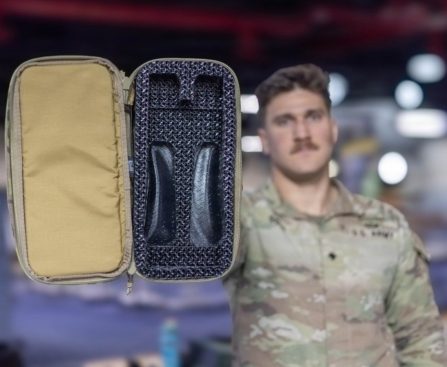
Dragon’s Lair provided the U.S. Army with a method for transporting its rapid deployment Unmanned Armed Vehicles (UAVs). Known as the Modular Drone Case, this product is a lightweight and robust container crafted to carry various drones for air and land operations. Created by Spc. Alexander Soto and Sgt. Talen Valerio from the 82nd Airborne Division, the case secured second place at Dragon’s Lair XI, the June 2025 edition of the Army’s “Shark Tank”-inspired competition.
The case illustrates the production cycle fundamental to the Army’s Transformation Initiative. In an open letter, Driscoll stated that the effort aims to redefine how the military will “fight, train, organize, and procure equipment.” Initiated in May 2025, the Army intends to “provide essential warfighting capabilities, enhance our force structure, and eradicate waste and outdated programs.” Although not groundbreaking at first glance, the Modular Drone Case exemplifies the initiative’s fostering of innovation driven by soldiers. So far, the Army has not disclosed whether the case will be deployed at the DOD’s new drone testing facility in the near future.
From pitch to production
The concept for the modular drone case was inspired by Spc. Alexander Soto’s observations of drones being damaged during deployment. As a paratrooper, Soto recognized that drones frequently sustained damage during airborne drops or field training. He discovered a need for soldiers to have a secure way to transport sensitive equipment in a sturdy, mobile case small enough to fit in a backpack. According to an announcement praising Soto and Valerio’s proposal, the case facilitates rapid deployment during ground, vehicular, and airborne missions, serving as a “versatile, field-adapted solution” designed for “optimal payload efficiency and field mobility.”
After winning second place at the June 2025 conference, the design team worked alongside Staff Sgt. Larry Dockins from the Airborne Innovation Lab to create the prototype for the carrying case. The outcome was a lightweight, resilient product compatible with multiple UAVs. Dockins noted that the case could significantly impact the military’s drone operations. “Any solution that enhances a warfighter’s lethality counts as a successful solution for us,” Dockins mentioned in the U.S. Army press release announcing the case’s production. “Developing a device that reduces weight could determine victory or defeat on the battlefield.”
The competition’s winners, U.S. Army SFC Jesus Naranjo and 1LT William Rambin, presented an 81mm Mortar Quick Emplacement Mount that enables soldiers to store and deploy mortars from Infantry Squad Vehicles. Previously, infantry troops primarily depended on improvised techniques to quickly deploy mortars in dynamic, high-stakes environments. Another noteworthy innovation introduced at the event was a headset capable of detecting electromagnetic frequencies.
The Army’s innovative forward approach
Despite its battlefield potential being impressive, the true achievement of the Modular Drone Case lies in its expedited development process. More than merely a product of the military’s Shark Tank adaptation, the case stands as a successful pilot initiative of the Joint Innovation Outposts’ accelerated procurement model. Established in January of this year, the JIOP aims to streamline the Pentagon’s procurement practices, offering key partners a quicker timeline leading up to production. Led by Lt. Gen. James Gavin, the JIOP was pivotal in advancing the modular case from concept to production in merely three months.
Such endeavors represent the military’s effort to expedite internal innovation timelines to remain competitive amid unprecedented change. As advancements in artificial intelligence and robotics reshape the battlefield’s scale, scope, and nature, the Pentagon must embrace novel strategies to keep up with diverse challenges. Reforms concerning the Army’s Acquisition Program and the launch of the branch’s “flagship innovation engine,” known as FUZE, further highlight this approach.
How the Modular Drone Case stands against more extravagant drone-centric innovations, such as transforming Apache helicopters into drone-destroying machines, remains to be determined. In its essence, the case demonstrates the Army’s capability to swiftly tackle challenges and signifies the success of Dragon’s Lair. The challenges that might arise in the future are yet to be seen.
Tecno Upgrades Ella AI Assistant with New Automation Capabilities via OpenClaw Collaboration
**EllaClaw: The Upcoming Advancement of AI in Smartphones**
In the swiftly advancing arena of artificial intelligence, Tecno has unveiled a revolutionary project: EllaClaw, a novel mobile AI agent driven by OpenClaw. This signifies the next phase in the progression of Tecno’s AI assistant, Ella, infusing smartphones with sophisticated AI features, especially in developing regions.
**What is EllaClaw?**
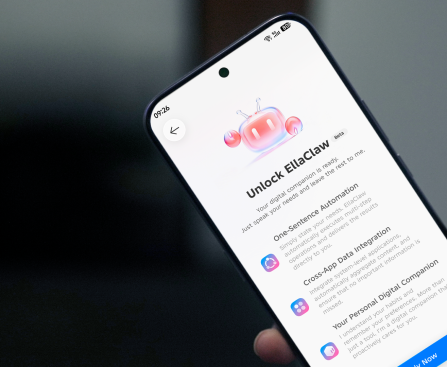
EllaClaw is an AI agent that incorporates OpenClaw’s open-source system into Tecno’s current Ella AI assistant. This incorporation enables EllaClaw to function at the system level on Tecno smartphones, offering users improved capabilities. Unlike conventional AI chatbots, OpenClaw emphasizes automation, executing tasks with minimal user guidance. Thus, EllaClaw becomes a valuable asset for automating multiple smartphone operations.
**Key Features of EllaClaw**
1. **Natural-Language Automation**: EllaClaw is capable of executing multi-step actions from a single command, utilizing natural language processing to comprehend and implement instructions.
2. **Cross-App Data Integration**: The AI agent can handle tasks across various applications, such as messaging, scheduling, and note-taking, fostering a seamless user experience. For instance, it can consolidate information from different sources to create an all-encompassing itinerary.
3. **Proactive Assistance**: Comparable to features like Magic Cue and Now Nudge on other devices, EllaClaw adapts to user behavior over time, presenting pertinent information when required to minimize user effort.
4. **Privacy Safeguards**: Tecno guarantees that user data remains secure, with integrated privacy protections to thwart unauthorized access.
**The Impact of OpenClaw**
OpenClaw, the foundation behind EllaClaw, has attracted considerable attention from major technology firms like Nvidia. Its open-source format permits companies such as Tecno to enhance it, customizing AI solutions to meet their unique requirements. Despite facing some challenges, Tecno is dedicated to ensuring the protection of user data.
**Future Prospects**
Tecno aims to disclose additional information regarding EllaClaw and commence a beta testing phase in the near future. This development positions Tecno as a formidable contender in the AI-enhanced smartphone sector, delivering advanced functionalities at potentially more affordable prices than its rivals.
**Conclusion**
EllaClaw signifies a remarkable advancement in AI technology for smartphones, merging the strength of OpenClaw with Tecno’s creative methodology towards AI. As the company persists in refining and broadening its features, EllaClaw may transform how users engage with their devices, embedding AI as a core element of daily smartphone usage.
Boost Your Language Confidence with Babbel
Get lifetime access to all 14 Babbel languages for $159 and learn practical, real-world conversation skills at your own pace.