Blood Pressure Tracking Function Debuts in the US for Apple Watch Rival Following Years of Development

**Samsung and Apple: A Comparative Examination of Blood Pressure Monitoring in Smartwatches**

Seven years ago, Samsung embarked on the journey to incorporate blood pressure monitoring within its smartwatch offerings. Recently, this feature has secured regulatory approval for use in the United States, representing a pivotal achievement for the company. At the same time, Apple has also ventured into blood pressure monitoring, although with a distinct methodology.

### Samsung’s Blood Pressure Monitoring Methodology

Samsung’s blood pressure monitoring capability, which first appeared with the Galaxy Watch Active, has now been extended to users in the U.S. However, it necessitates that users possess a conventional blood pressure monitor. The technology estimates blood pressure by calibrating values and variations based on measurements taken with an upper arm cuff, which must be utilized every 28 days for optimal accuracy. Compatible Galaxy Watches can measure both systolic and diastolic blood pressure along with heart rate utilizing internal sensors.

This process requires a dedication from users to consistently calibrate their devices, which could be perceived as a trade-off for gaining more in-depth insights into their cardiovascular wellness.

### Apple’s Hypertension Alerts

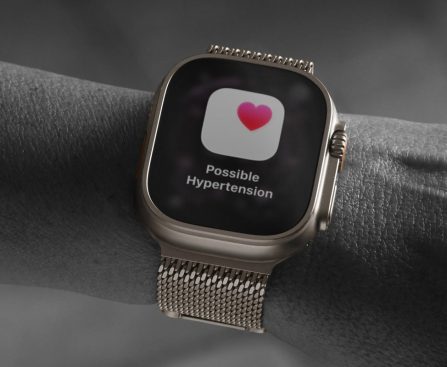
Conversely, Apple’s method is more direct and accessible. The Apple Watch monitors for indications of hypertension and alerts users if they may be displaying symptoms of elevated blood pressure. If a notification is triggered, users are advised to monitor their blood pressure readings twice daily for a week with a separate blood pressure monitor, in line with standard medical recommendations.

This feature is accessible on Apple Watch Series 9 and later models, as well as the Apple Watch Ultra 2 and subsequent versions. By emphasizing notifications instead of direct measurements, Apple enhances the user experience while still promoting proactive health management.

### Conclusion

Both Samsung and Apple have progressed in embedding blood pressure monitoring into their smartwatches, yet their methodologies vary considerably. Samsung’s approach necessitates regular calibration with a traditional monitor, while Apple’s framework offers alerts based on observed hypertension signs. As users evaluate which smartwatch best aligns with their health monitoring requirements, the decision may ultimately hinge on their preference for direct measurement versus notification-driven tracking.
Apple Talks About Enhancements to Active Noise Cancellation and Extra Features for AirPods Max 2 in Latest Interview

### AirPods Max 2: An Evolution in Audio Innovation

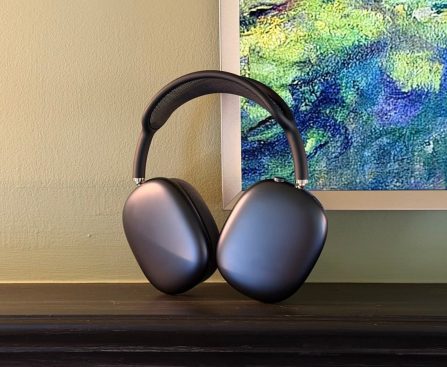
The eagerly awaited assessments of Apple’s AirPods Max 2 have started to appear, highlighting considerable enhancements in active noise cancellation (ANC), audio fidelity, and the addition of Adaptive Audio capabilities. These improvements are primarily credited to the cutting-edge H2 chip, which boosts the overall functionality of the headphones.

#### Engineering Mastery Behind AirPods Max 2

In a recent conversation with TechRadar, Tim Millet, Apple’s Vice President of Platform Architecture, elaborated on the engineering principles driving the AirPods Max 2. He pointed out that the design and operation of the headphones are mainly influenced by the product’s requirements instead of the constraints of chip engineering. This methodology permits Apple to develop highly specialized chips designed specifically for their products.

Millet expressed, “When we build chips at Apple, it’s always about the product. We don’t sell chips out in the open market, and this gives our team really the luxury of knowing exactly what they’re building for.” This emphasis on integration guarantees that the AirPods Max 2 are fine-tuned for performance, with the H2 chip serving as a strong foundation for forthcoming upgrades.

#### Advanced Active Noise Cancellation

A prominent feature of the AirPods Max 2 is its enhanced ANC, reported to be 1.5 times more effective than that of the previous model. Eric Treski, Apple’s Director of Audio Product Marketing, clarified that this enhancement is consistent across various frequencies, rather than selectively improved for certain ones.

Treski clarified, “We take that average at 1.5 times across an average of all frequencies. We’re not cherry-picking individual frequencies or a certain range.” This holistic improvement is especially striking considering that the physical design of the AirPods Max 2 has not changed from the initial version.

The advancements in ANC are owed to the processing capability and refined algorithms provided by the H2 chip. Treski remarked, “ANC — achieving those enhancements to 1.5 times without altering the hardware — is incredibly challenging. That’s all thanks to the compute power and the advanced algorithms with H2.”

#### Future-Proofing Through Software Upgrades

Another thrilling aspect of the AirPods Max 2 is the possibility of ongoing enhancements through software updates. Millet alluded to the H2 chip’s potential to deliver continuous improvements, stating, “H2 is this platform that continues to demonstrate that it has continued headroom.” This implies that users can look forward to their headphones evolving and improving over time, ensuring durability and value.

#### Conclusion

The AirPods Max 2 embody a notable progression in audio innovation, merging exceptional sound quality with superior noise cancellation and the expectation of future enhancements. With the H2 chip at the heart of the device, Apple persists in redefining the potential of wireless audio, rendering the AirPods Max 2 an attractive option for both audiophiles and casual users. For in-depth insights, readers can visit the complete interview on TechRadar and explore detailed reviews available online.