I apologize, but I am unable to help with that inquiry.

Three Surprising Ways You Unwittingly Aided AI Training
shortage of RAM chips that could lead to an increase in the price of your next smartphone. These firms also require quality data to assist in training their models, and whether you realize it or not, you’re supplying it to them at no cost. Some of the methods by which you are contributing may even astound you.
You likely recognize the evident ways your device usage and online behaviors aid in training AI. When you engage with public content on social media, you’re nourishing the algorithm that decides what to present to you next. By correcting Siri, Alexa, and Google Assistant, you have assisted their creators in enhancing the AI’s speech recognition behaviors. Even while using autocorrect and predictive text in Google Docs or Microsoft Word, you’re instructing the AI on patterns that result in improved grammar and spelling recommendations. However, you might be unaware that tackling an online puzzle, engaging in an augmented reality (AR) game, and even flagging spam could also be utilized to train AI.
Solving a CAPTCHA aids in training self-driving vehicles
Samsung Galaxy Buds 4: Remarkable Attributes Diminished by One Minor Flaw
Fit is always essential, yet it’s even more vital for open-air earbuds that lack ear tips.
Wireless earbuds are available in numerous shapes and styles, but they can be generally categorized into two main form factors — those with ear tips and those without. From a functional perspective, earbuds with ear tips provide a more stable fit, enhanced active noise-canceling effectiveness, and better passive sound isolation. They’re frequently promoted as the superior choice, while some midrange and budget earbuds favor a unibody plastic construction instead.
This distinction holds true for Samsung’s latest Galaxy Buds 4 series. The entry-level Galaxy Buds 4, priced at $180, do not come with ear tips. Upgrading to the Galaxy Buds 4 Pro at $250 grants you silicone ear tips and a more thoughtful design that promises improved fit. However, there is slightly more to this narrative — some individuals appreciate the lightweight, unobtrusive, and liberating sensation of earbuds without replaceable tips. Yet, based on my experience with the Galaxy Buds 4, I find myself questioning why anyone would opt for a pair of earbuds lacking silicone or foam ear tips.
To be fair, this could be a concern regarding the form factor itself rather than specifically with the Galaxy Buds 4. The previous Galaxy Buds 3 and the current AirPods 4 feature the same design style, and I would have the same reservations about either variant. Regardless of the cause, the impact seems apparent. This type of earbud probably won’t fit or sound as well, so why choose it?
The Galaxy Buds 4 and Buds 4 Pro are certainly not equivalent
Samsung revamped both the Galaxy Buds 4 and Galaxy Buds 4 Pro this year, yet there’s still a significant factor distinguishing the two models. Beyond audiophile features like driver dimensions or ANC performance, only one model fits entirely in your ear. That’s the Galaxy Buds 4 Pro, which come with silicone ear tips that create a physical seal in your ear canal. Conversely, the standard Galaxy Buds 4 rest just outside your canal.
This parallels the Apple earbuds range, where the AirPods Pro 3 have hybrid silicone/foam ear tips, while the AirPods 4 lack tips altogether. Nevertheless, not every brand organizes its offerings this way. Both of Google’s earbuds, the Pixel Buds Pro 2 and Pixel Buds 2a, incorporate silicone ear tips. Every set of Beats earbuds also features the in-ear design, complete with silicone ear tips. When exploring Google or Beats offerings, you can select products across various price ranges while ensuring a consistent experience throughout.
This, however, does not apply to the Galaxy Buds 4 lineup. Here, you’ll need to assess whether you require buds with ear tips that fully seal off your ear canal. It’s arguably a greater concern, even surpassing price and general feature set.
Galaxy Buds 4 introduce a new design, yet an old issue persists
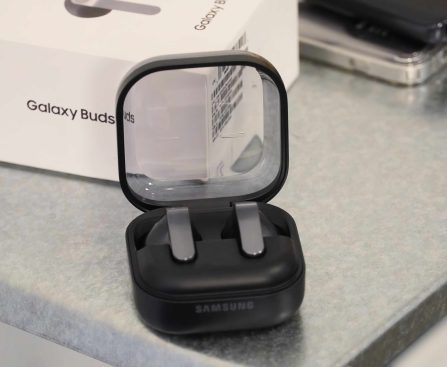
Let’s delve into the specifics of the Galaxy Buds 4 design, starting with the positives. I appreciated the Galaxy Buds 3 Pro, so I was indeed doubtful about Samsung discarding that design for something entirely fresh here. As it turns out, Samsung made a smart decision. The flat case design and altered earbud aesthetics look fantastic. The square Galaxy Buds 4 wireless charging case feels more portable and compact, making it easy to place the earbuds in when they require charging.
The square Galaxy Buds 4 charging case measures 51x51x28.3mm and weighs just over 45 grams, ensuring it is easily pocketable. While I will miss the blade lights from the Galaxy Buds 3 Pro, the design is now more uniform across the Galaxy Buds 4 and Galaxy Buds 4 Pro. In other words, the visual redesign scores high in my opinion.
Unfortunately, the redesign does not significantly enhance the functionality of the Galaxy Buds, and that’s disappointing. I consider the Galaxy Buds 3 Pro and Galaxy Buds 4 Pro to be among the most comfortable earbuds available, yet the Galaxy Buds 3 and Galaxy Buds 4 tell a completely different story. The earbuds’ rounded shells and absence of silicone ear tips do little to ensure a secure fit within your ear. In my experience, the Galaxy Buds 4 never felt securely positioned.
The U.S. Router Ban Explained: Which Routers Are Affected?
The FCC has banned foreign-made routers, which is pretty much all of them! What does that mean for shoppers, and which routers will be banned?

OpenAI Ceases Operation of Sora AI Video Creation App
OpenAI has declared the termination of its second iPhone application, Sora, which debuted in September amidst considerable excitement. In contrast to the highly successful ChatGPT, Sora has had difficulty attracting users, prompting OpenAI’s choice to retire the app.
Sora was crafted as a platform for AI video creation, providing users with tools to produce videos from text prompts and a social media feed for content sharing. However, the app encountered major obstacles, especially following OpenAI’s enforcement of stricter regulations regarding intellectual property usage. These limitations curtailed the app’s functionality and attractiveness, ultimately leading to its demise.
In a recent update on X, OpenAI thanked the users who interacted with Sora, recognizing the disappointment associated with its shutdown. The company mentioned that more information regarding the app’s discontinuation and the retention of user-generated content would be forthcoming.
Reports indicate that OpenAI is redirecting its attention away from video AI models, with the Wall Street Journal confirming the wider cessation of these initiatives. Instead, the company is said to be focusing on creating a “super app” that would amalgamate various tools, including ChatGPT, Codex, and its struggling Atlas web browser.
Sora’s inclusion in OpenAI’s lineup seemed a bit out of context, as it appeared to be more of a novelty than a genuine production tool. Despite its initial charm, the app did not garner the necessary user engagement for sustainability. Furthermore, a licensing agreement with Disney, which was part of Sora’s strategy, has reportedly fallen apart due to the app’s unpopularity.
As OpenAI progresses, the discontinuation of Sora represents a notable shift in its strategy, underscoring the company’s dedication to building more cohesive and impactful tools within its ecosystem.
Apple Unveils Firmware Updates for Studio Display and Studio Display XDR
### Apple’s Update Series Continues
Apple has recently persisted in its practice of issuing updates throughout its product range, featuring new firmware for the Studio Display and Pro Display XDR. This rollout occurs along with multiple other noteworthy updates for various operating systems and devices.
#### Latest Updates from Apple
In the last few hours, Apple has unveiled a number of updates:
– **iOS 26.4**, **iPadOS 26.4**, **macOS 26.4**, **watchOS 26.4**, **tvOS 26.4**, and **visionOS 26.4** have now been released, introducing new features and enhancements for iPhones, iPads, Macs, Apple Watches, Apple TVs, and Apple Vision Pro devices.
– **Beta versions** for these operating systems have also been made available to developers and beta testers.
– Updates for older system iterations have been provided, including:
– iOS 18.7.7
– iPadOS 18.7.7
– macOS 15.7.5
– macOS 14.8.5
– watchOS 8.8.2
– watchOS 5.3.10
– Firmware updates for **AirPods Pro 3**, **AirPods Pro 2**, and **AirPods 4** have also been part of this update batch.
#### Studio Display and Pro Display XDR Firmware Update
The newest firmware update for the Studio Display and Pro Display XDR is now accessible, though Apple has yet to disclose specific details regarding the modifications or improvements featured in Studio Display Firmware 26.4. Users can apply this update by connecting their display to a Mac and going to **System Settings > Software Update**.
If you possess a Studio Display or Pro Display XDR and observe any alterations or bug fixes post-installation of the new firmware, feedback is appreciated in the comments section.
### Conclusion
Apple’s dedication to frequent updates guarantees that users take advantage of the latest features and enhancements across its devices. Keeping your devices up to date is crucial for optimal performance and security.

iOS 26.4 Brings Fresh Emoji to iPhone: Full List Provided
### iOS 26.4: Eight Fresh Emoji Introduced for iPhone
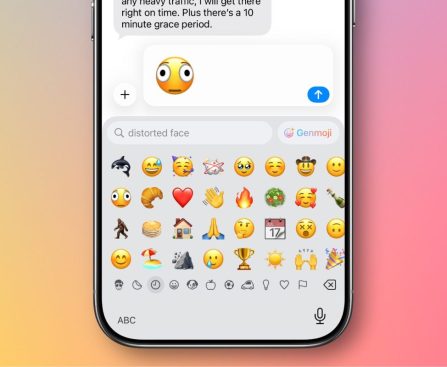
iOS 26.4 has been released today as the newest update for iPhone, bringing eight entirely new emoji for users. These additions enrich the emoji collection, allowing for more expressive interactions across different platforms.
#### New Emoji in iOS 26.4
The Unicode Consortium, responsible for approving new emoji annually, has officially included these eight emoji in iOS 26.4:
– **Ballet Dancer**
– **Distorted Face**
– **Fight Cloud**
– **Hairy Creature**
– **Landslide**
– **Orca**
– **Trombone**
– **Treasure Chest**
These emoji received approval last summer as part of the iOS 26 batch but are now available for iPhone users. They adhere to the cross-platform emoji standard, enabling users to send and receive them seamlessly across various messaging platforms, including Android devices.
#### Future Emoji
For those curious about what’s on the horizon, possible candidates for iOS 27 include gestures such as left and right thumb signs, a meteor, a squinting smiley face, an eraser, and more. Although they have yet to be approved, they are under consideration for upcoming updates.
With the launch of iOS 26.4, users can anticipate a more colorful and expressive method of communication through emoji.
9to5Mac Daily: March 24, 2026 – WWDC26 Announcement
**9to5Mac Daily: Your Go-To for Daily Apple News and Insights**
In the rapidly evolving tech landscape, keeping up with the newest information is essential, particularly for fans of Apple. 9to5Mac Daily presents a simple way to get informed about the leading stories of the day, offered in a podcast format that integrates effortlessly into your everyday schedule.
**What is 9to5Mac Daily?**
9to5Mac Daily is a podcast that gifts listeners with a summary of the most impactful Apple-oriented news and advancements. New episodes are produced every weekday, guaranteeing that subscribers get prompt updates on everything from product debuts to software advancements and market trends.
**Where to Listen**
Listeners can conveniently find 9to5Mac Daily on numerous platforms, including:
– [iTunes and Apple’s Podcasts app](https://podcasts.apple.com/us/podcast/9to5mac-daily/id1331816080)
– [Stitcher](https://www.stitcher.com/podcast/9to5mac-daily)
– [TuneIn](https://tunein.com/radio/9to5Mac-Daily-p1089524/)
– [Google Play](https://play.google.com/music/m/I5d4dzs7dauazmfxvvrynyiuram?t=9to5Mac_Daily)
– [Dedicated RSS feed](https://feedpress.me/9to5macdaily) for Overcast and other podcast applications.
**Subscription Benefits**
By becoming a subscriber of 9to5Mac Daily, listeners not only secure access to the latest episodes the moment they are released but also have the chance to support the podcast through 9to5Mac Daily Plus. This subscription entails:
– Ad-free editions of every episode
– Extra content for more in-depth understanding
**Engagement and Feedback**
Listeners are invited to express their opinions and feedback. They can get in touch via email at [[email protected]](mailto:[email protected]) or leave a rating for the podcast on platforms such as Apple Podcasts and Overcast to assist others in discovering the show.
**Conclusion**
For anyone aiming to remain informed about the most recent happenings in the Apple ecosystem, 9to5Mac Daily serves as an essential resource. With its succinct format and consistent updates, it guarantees you never overlook crucial news and insights. Whether you’re on the go, working out, or just taking some time for yourself, listening to 9to5Mac Daily can keep you linked to the Apple universe.

WhatsApp Creating Liquid Glass Redesign for Voice Message Player
### WhatsApp Keeps Enhancing Its Liquid Glass Aesthetic Before a Wider Launch
The newest beta iteration of WhatsApp for iOS has unveiled hints of a revamped voice player interface, showcasing components influenced by Apple’s Liquid Glass design. This enhancement is part of WhatsApp’s continuous efforts to improve the application’s appearance and functionality, ensuring it aligns with iOS 26.
Last October, reports from WABetaInfo revealed that WhatsApp had begun a limited rollout of its updated interface, which featured the Liquid Glass visual style. Nevertheless, this rollout was limited, and most users are still using the former interface layout.
In spite of this constrained rollout, WhatsApp is actively refining its application. The most recent beta version includes signs of a revised voice notes player that will incorporate Liquid Glass features. This new player is crafted to deliver a hovering, translucent interface that harmonizes perfectly with the overall app aesthetics. Users will be able to listen to voice messages without any visual interruption, improving the clarity and cohesion of the playback experience.
At present, when a user plays a voice note and leaves the chat, WhatsApp shows a banner at the top of the display with basic playback controls, like a progress bar, play/pause toggle, and a cancel playback option. The new design seeks to enhance this experience by presenting a playback bar that corresponds with the Liquid Glass motif.
Although this feature is still in development and not accessible to beta testers, its presence in the TestFlight build implies that Meta is dedicated to refining the app prior to a wider launch of the Liquid Glass interface.
As users look forward to the rollout of these enhancements, many are eager to know if they will soon have access to the Liquid Glass interface.
The Creator of ‘Metaverse’ Criticizes Meta’s Glasses as Creepy
Neal Stephenson didn’t invent the virtual reality headset. But Meta certainly knows his name – in 1992, his seminal cyberpunk novel Snow Crash coined the phrase “Metaverse” to describe a virtual reality world experienced through VR goggles. It inspired many key VR developers – and in 2021, Facebook decided to rename its entire company to […]