See the best e-readers we’ve tested, with options from Kindle, Kobo, and the tablet world. Grab an e-reader and hit your reading goals.

The best air purifier deals to shop in Amazon’s Big Spring Sale — save on Dyson, Sharp, and more
Early Amazon Big Spring Sale air purifier deals include Sharp and Dyson picks for cleaner air at lower prices.

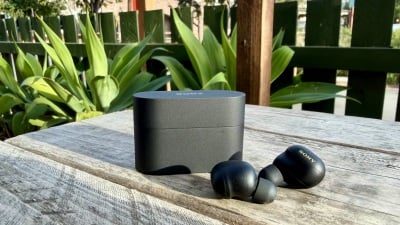
Sony’s Latest Earbuds Rock — and They’re at Their Lowest Price Ever for Amazon’s Big Spring Sale
Our headphones expert says the Sony WF-1000XM6 earbuds have the potential to be the best buds of 2026, and they’re on sale for a limited time during Amazon’s Big Spring Sale.
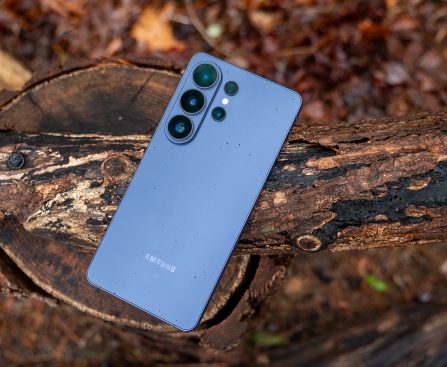
Three Ultra Phones the Galaxy S26 Ultra’s Successor Ought to Imitate
It’s time for Samsung to showcase its strength and transform the Galaxy S Ultra model.
Do you recall the inaugural Ultra phone? It is commonly acknowledged as the Galaxy S20 Ultra, featuring numerous groundbreaking elements for Samsung’s mobile experience portfolio. It set a benchmark for the industry and heralded a new age, much like how the original Galaxy Note initiated the era of large screens that is now commonplace.
The Galaxy S20 Ultra presents a wealth of new features that demonstrate Samsung’s capacity for smartphone innovation. These include a 108MP primary camera, dual telephoto cameras — featuring a 48MP periscope telephoto lens with “100x Space Zoom” capability — and a substantial 5,000 mAh battery. Additional highlights include 8K video recording, a 40MP front-facing camera, and up to 16GB RAM.
In essence, Samsung established the Ultra category. However, precisely six years later, the landscape for Ultra devices has intensified. While the initial Galaxy S20 Ultra was a photographic powerhouse, the new Galaxy S26 Ultra faces tougher competition with superior pro-photography features. Having tested several and observed leaks of others, here are the three additional Ultra phone attributes that the forthcoming Galaxy S26 Ultra should emulate and the reasons behind it.
A refreshed camera system with a photography kit
The Galaxy S26 Ultra boasts a commendable all-around camera, yet it pales in comparison to some features offered by its three main current and upcoming rival Ultra models.
All three primary competitors — the Xiaomi 17 Ultra, Vivo X300 Ultra, and Oppo Find X9 Ultra — either currently provide or are anticipated to provide an optional photography kit. Xiaomi deserves recognition for initiating this trend, with others following closely behind. Although the Vivo and Oppo Ultra models have yet to be officially introduced, we’ve already witnessed the former at <a data-analytics-id="
This Team Password Manager Adds Essential Business Features and Costs $1.50 Per User

Somewhere in your company right now, someone is sharing a login credential through Slack, a sticky note, or a spreadsheet named âpasswords_final_v3.â You know it. They know it. And eventually, an attacker will know it too. This article contains affiliate links. If you make a purchase through these links, we may earn a commission at […]
This story continues at The Next Web

NYT Connections Sports Edition Today: Clues and Solutions for March 25, 2026
Connections: Sports Edition is a New York Times word game about finding common sports threads between words. How to solve the day’s puzzle.

NYT Pips Clues and Solutions for March 25, 2026
The New York Times’ latest game, Pips, brings domino fun to your desktop. How to play Pips as well as hints in case you get stuck.

LooperRobotics Insight 9 AI Camera Features D-Robotics RDK X5 SoC, Supports ROS 2 (Crowdfunding)
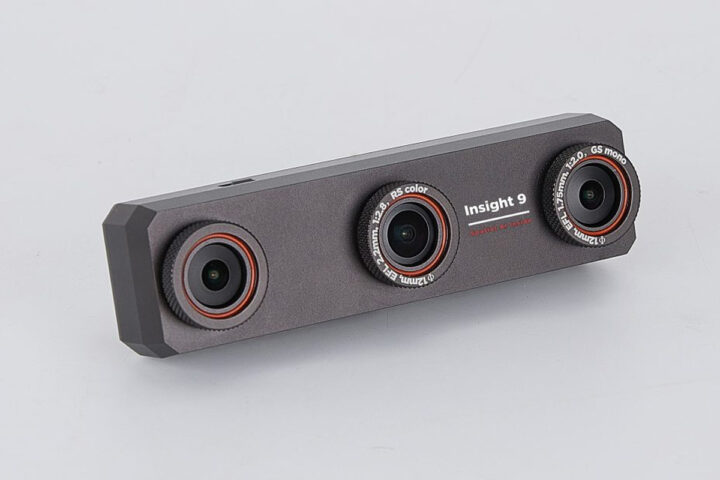
LooperRobotics Insight 9 is an autonomous plug-and-play spatial AI camera designed for embodied intelligence, quadruped robots, and dynamic mobile platforms. Compared to typical USB depth cameras like Intel RealSense D435i or Luxonis OAK-D, which rely on a host PC for processing, the Insight 9 integrates a D-Robotics RDK X5 octa-core Cortex-A55 processor with a 10 TOPS AI accelerator, allowing it to run Visual SLAM (V-SLAM) and depth mapping entirely on-device. The camera features a “Tri-Eye Perception Matrix,” which includes an 8.4MP Sony Starvis IMX415 RGB sensor with an ultra-wide 188° field of view, and two SmartSens SG0132 global shutter sensors for stereoscopic depth. Encased in a passively cooled CNC aluminum chassis, it is also equipped with an automotive-grade Bosch BMI088 IMU capable of 24g high-G tracking, making it suitable for the heavy vibrations of legged locomotion. LooperRobotics Insight 9 specifications: SoC â D-Robotics RDK X5 octa-core Arm Cortex-A55 processor @ 1.5 GHz; […]
The post LooperRobotics Insight 9 standalone spatial AI camera features D-Robotics RDK X5 SoC, supports ROS 2 (Crowdfunding) appeared first on CNX Software – Embedded Systems News.
Hurdle Tips and Solutions for March 25, 2026
Hints and answers to today’s Hurdle all in one place.

Rokid’s AI Eyewear Design: Budget-Friendly Meta Ray-Ban Rival Now on Sale
Rokid’s newest AI eyewear, the Rokid AI Glasses Style, is now priced at a reduced $279, down from the previous $299. These glasses are presented as a viable competitor to the Meta Ray-Ban, delivering comparable features at a more accessible price point. The AI Glasses Style is equipped with a camera and a variety of AI capabilities, making them a compelling choice for individuals wanting cutting-edge eyewear technology without the steep cost.
Weighing marginally less than Meta’s offerings, the Rokid AI Glasses Style are recognized for their comfort and prolonged battery performance. They come with customizable lenses, including options for prescriptions, and are straightforward to set up and operate via Rokid’s mobile application. The eyewear boasts a 12MP camera for high-quality images and videos, and the built-in sound quality is impressive.
A key highlight of the Rokid AI Glasses Style is the integration of their AI assistant, which enables users to engage with Gemini, execute real-time translations, and make use of AI-enhanced object recognition and transcription during meetings. Although some initial challenges with these features have been addressed through updates, the glasses are continually enhancing their AI ecosystem.
Despite certain limitations, such as a shiny finish that attracts dust and an absence of charging functionality in the case, the Rokid AI Glasses Style presents an attractive option for anyone seeking an economical alternative to the Meta Ray-Ban. With their AI features and attractive pricing, these glasses stand out as a formidable option in the smart eyewear industry.