
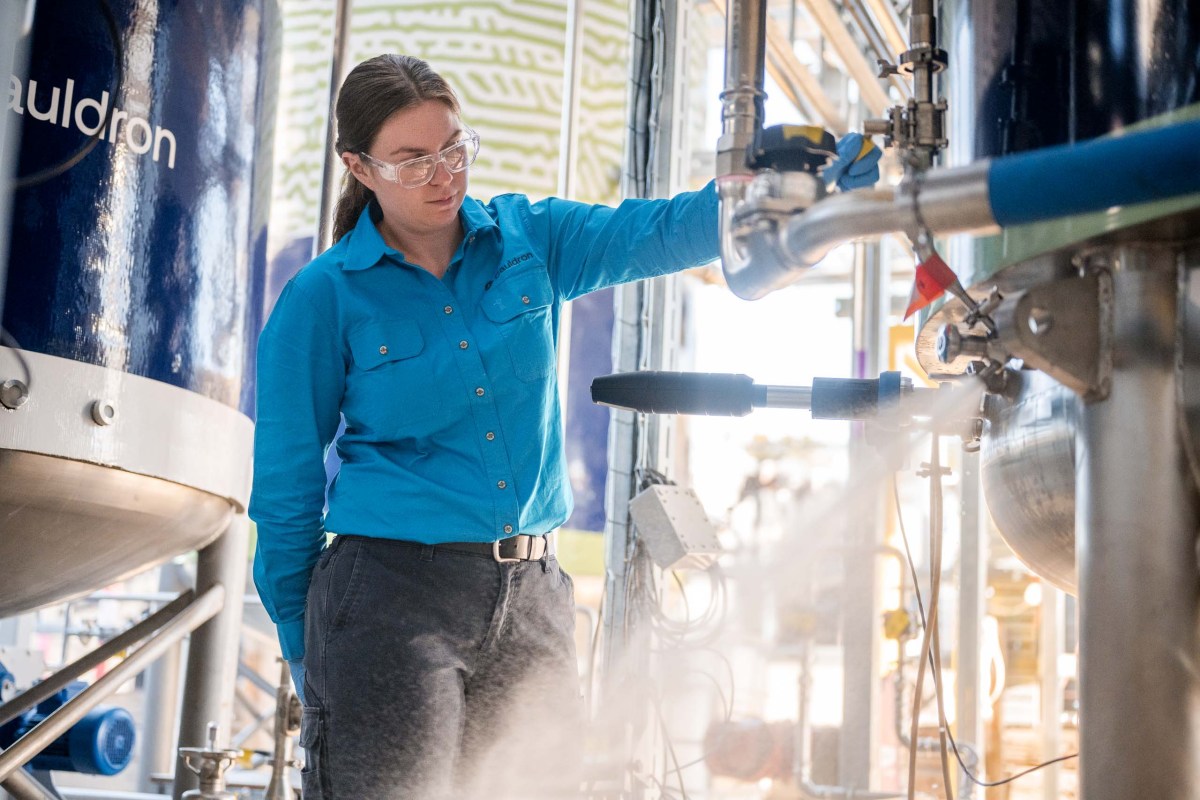

Cauldron Ferm has a story that goes back to the 1960s or 1970s, though its exact beginnings are unclear. David and Polly McLennan aimed to produce protein from microbes to help feed the world.
The initial method was costly and slow, similar to brewing or winemaking, where fermentation occurs in batches. This method works for alcohol, which is priced high, but is unsuitable for food which needs to be more affordable.
Despite the challenges, the McLennans pursued their vision, refining their process over 40 years into continuous fermentation, turning microbes into non-stop producers.
“We didn’t know what we had,” said Michele Stansfield, co-founder and CEO of Cauldron Ferm, who joined the company in 2012. Stansfield realized the greater potential in their technology. “We didn’t understand the challenge of continuous fermentation for synthetic biology,” she added. After coming to grips with it, she transitioned the company from a small operation to a nimble startup, raising a seed round to acquire key assets.
Cauldron recently raised $13.25 million in a Series A2 round led by Main Sequence Ventures, with participation from Horizons Ventures, NGS Super, and SOSV. Previously, they had raised $6.5 million in 2024. This funding will help “increase the technology moat,” according to Stansfield.
The company’s “hyper fermentation” technology maintains microbes at peak productivity and can be integrated into existing batch fermenters with some modifications. Customers supply their own microbes, while Cauldron adjusts their growth conditions.
Currently, Cauldron focuses on producing fats and proteins, like whey protein, which easily fits into supply chains. The company has plans for diversifying further. “Sixty percent of all inputs to the global economy can be produced from biology,” Stansfield said. “Food was where we started, but now we’re starting to really diversify.”