
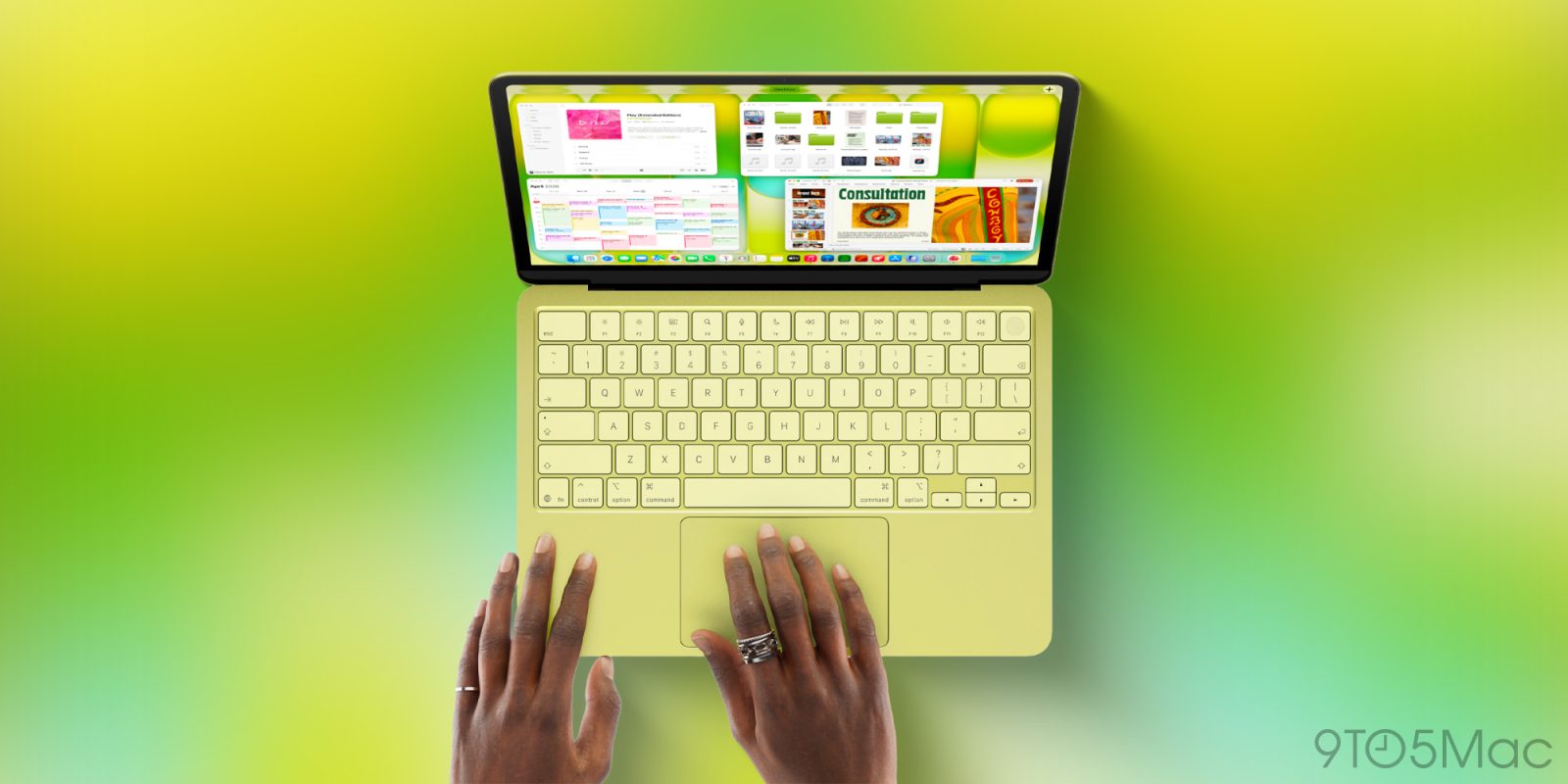

The United States has historically been an exception regarding Apple’s keyboards, employing text labels for keys such as tab, return, and delete. Conversely, the company has employed glyphs for its keyboards in other countries. Recently, Apple has implemented a notable update by moving from text to glyphs in the latest US editions of the MacBook Air and MacBook Pro, along with the new MacBook Neo.
### Changes to the MacBook Keyboard
Dan Moren pointed out this alteration in his review of the MacBook Air at *Six Colors*. He observed that numerous keys’ text labels have been substituted with glyphs, which are the same symbols that have been consistently used for keyboard shortcuts in drop-down menus. This change has caused confusion for many outside the US, as glyph usage has been customary in other regions for a long time.
### Notable Exceptions
While many keys have shifted from text to glyphs, some have maintained their text labels in a shortened form. The keys that have entirely transitioned to glyphs include:
– Tab
– Caps lock
– Return
– Shift
– Delete
Nonetheless, two keys continue to have their text labels, and the other modifier keys now feature both glyphs and text labels:
– Control ⌃
– Option ⌥
– Command ⌘
### The Possible Reasoning
John Gruber’s proposed rationale for this modification seems to hold merit. He suggests that documentation, including Apple’s own, frequently refers to these keys by name (e.g., Option-Shift-Command-K) rather than glyphs (⌥⇧⌘K). It has only been in recent years that Apple began to incorporate glyphs for Control (⌃) and Option (⌥), as those keys were previously denoted solely by name.
Furthermore, text labels might be essential for effectively conveying key functions to non-technical users. In the absence of these labels, it may be difficult for someone who is not familiar with the keyboard to grasp instructions such as “Command-R.” In contrast, more recognizable keys like Shift or Tab are less likely to create misunderstandings.
In conclusion, Apple’s shift to glyphs for key labels in the US brings its keyboards in line with global standards while still ensuring user comprehension and clarity in communication.