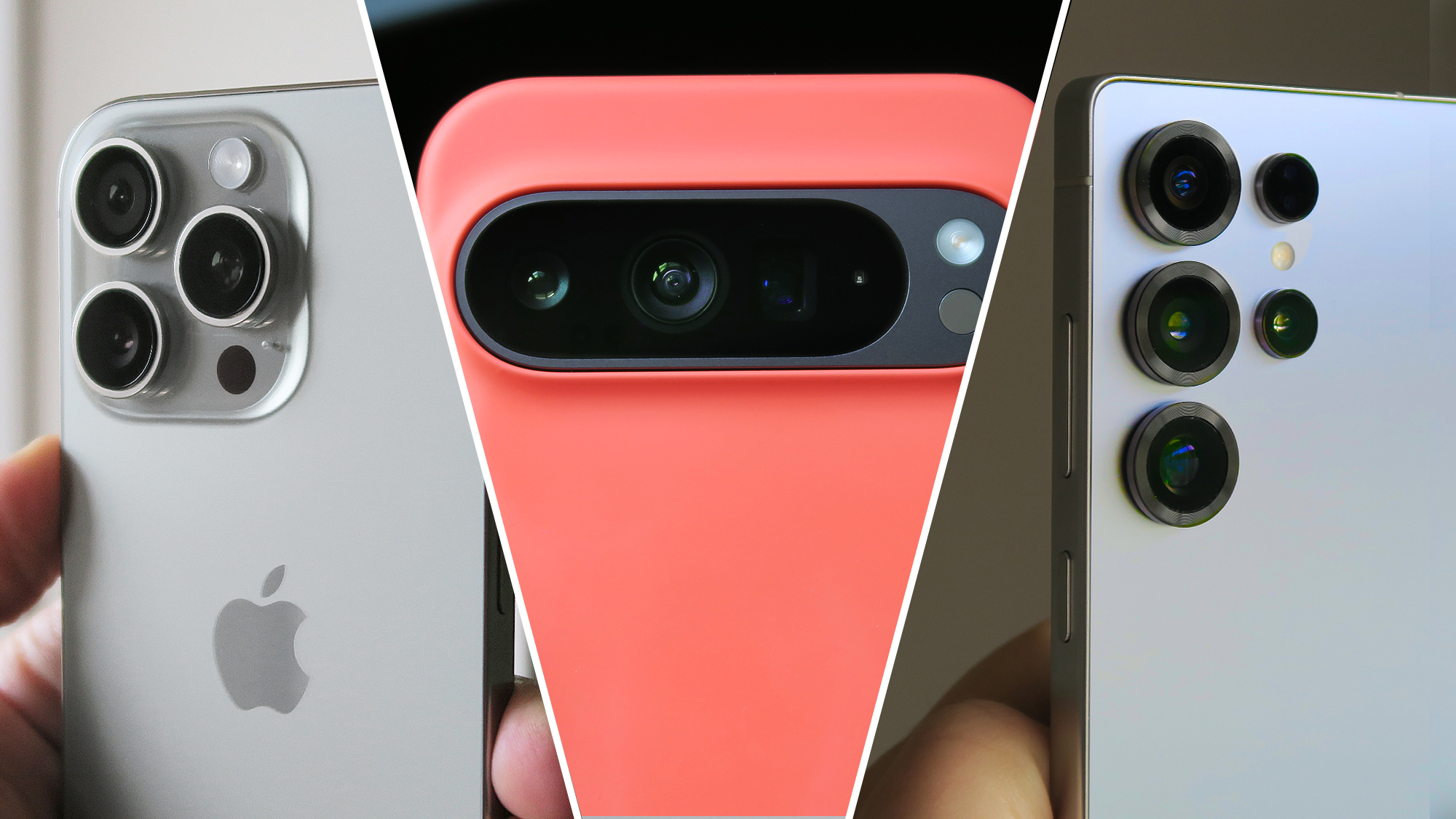
Here’s how Samsung’s upcoming midsize flagship will stack up against Google’s premier model.
The Samsung Galaxy S26 Plus aims to elevate its predecessor with Qualcomm’s Snapdragon 8 Elite Gen 5 at its core. Anticipated features include a silicon-carbon battery, Qi2 support, and enhancements to the camera. However, design modifications are not expected.
Pros:
– Qualcomm Snapdragon 8 Elite Gen 5 serves as a robust gaming and overall performance engine
– Integrated magnets for Qi2 and MagSafe compatibility
– High-capacity silicon-carbon battery
– Ships with One UI 8.5 pre-installed
Cons:
– Charging speed remains relatively slow
– Design closely resembles previous Galaxy iterations
– Potentially insufficient camera upgrades
The Google Pixel 10 Pro XL is packed with impressive AI functionalities, notably Gemini and Camera Coach. Powered by the Tensor G5 chip, it offers 16GB of RAM and storage options reaching 1TB. Coupled with an excellent camera system and display, the Pixel 10 Pro XL ranks among the leading Android flagships available.
Pros:
– Convenient charging via MagSafe and Qi2 compatibility
– At the heart is Gemini alongside Nano and unique features like Camera Coach
– Commitment to seven years of Android OS updates
– Rear triple-camera setup with a 5x telephoto lens
Cons:
– Necessary battery and performance limits after 200 cycles
– Qualcomm outperforms Tensor in gaming and raw processing
– Bulkier and heavier compared to Galaxy S26 Plus
The Google Pixel 10 Pro XL marked a significant enhancement, establishing a benchmark for Android flagships in 2025. The device further augmented its AI processing abilities while introducing Qi2 and MagSafe for the first time. Notably, the Pixel 10 Pro XL supports Qi2 25W for rapid wireless charging. It is now incumbent upon Google’s competitors to meet this benchmark, starting with Samsung and the Galaxy S26 Plus.
Although the Samsung Galaxy S26 Plus remains unofficial, speculation and leaks are intensifying in anticipation of an anticipated early 2026 release. The new smartphone is predicted to receive the customary chip advancement, modest camera enhancements, and Qi2 magnets. Nevertheless, the design and fundamental experience are expected to remain the same.
So, how will the Samsung Galaxy S26 Plus measure up against the Google Pixel 10 Pro XL? Let’s examine everything we know thus far in this anticipatory comparison.
Samsung Galaxy S26 Plus vs. Google Pixel 10 Pro XL: Pricing and availability
Rumors and leaks indicate uncertainty from Samsung as the launch of the Galaxy S26 series approaches. Initial reports suggested a shift in the lineup with a Galaxy S26 Pro replacing the base model and a Galaxy S26 Edge taking the place of the midsize variant. However, it appears Samsung will adhere to tradition with the Galaxy S26, Galaxy S26 Plus, and Galaxy S26 Ultra — at least initially.
Samsung typically unveils its devices in January each year, but an October leak indicated a delay for the Galaxy S26 lineup until March. More recently, rumors have found a middle ground, with expectations now leaning towards a late February 2026 debut for the Galaxy S26 Plus. It will likely retain the same starting price of $999, with configurations available for 256GB or 512GB of storage.
In contrast, the Google Pixel 10 Pro XL is presently available as the brand’s foremost non-folding flagship. Priced at $1,199 for the base model featuring 256GB of storage, it can be upgraded to a maximum of 1TB. Color options include Moonstone, Jade, Porcelain, and Obsidian.
Samsung Galaxy S26 Plus vs. Google Pixel 10 Pro XL: Design and display
We anticipate minor design alterations for the Samsung Galaxy S26 Plus, but the speculated adjustments primarily align the smartphone with the design aesthetics of models like the Galaxy S25 Edge and Galaxy Z Fold 7. Rather than having separate rear camera lenses as seen in the Galaxy S25 Plus, the Galaxy S26 Plus will adopt a pill-shaped camera module where the three cameras will be positioned. This represents the most significant, yet relatively subtle, design transformation for the Galaxy S26 Plus.
Overall, the Galaxy S26 Plus will maintain a rectangular and angular body with flat aluminum side edges. It continues to be a glass sandwich, protected by Corning’s Gorilla Glass Victus 2 on the front and back. For enhanced durability, Samsung is expected to complete the package with IP68 certification against dust and water ingress, a standard feature for some time.
Phone manufacturers typically upgrade the display of their devices each year, whether through size increases, smaller bezels, or enhanced brightness. However, for all necessary considerations, Samsung’s Galaxy S26 Plus will likely showcase a similar or identical display to that found within the
