
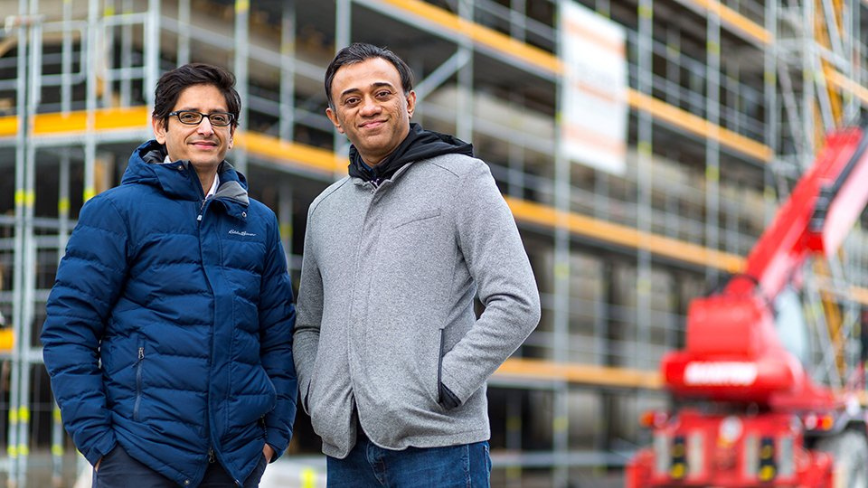

Conxai, a Munich-based construction AI startup, has raised €5 million in new funding. This follows the €2.7 million pre-seed round closed in January 2022, led by Earlybird UNI-X fund and Pi Labs, with participation from noa (formerly A/O PropTech) and Argonautic Ventures. Zacua Ventures, a construction tech VC listing Conxai in its portfolio, has also invested.
Founded in 2020 by CEO Sharique Husain and Muralikrishna Sridhar, Conxai develops a vertical AI platform tailored for the architecture, engineering, and construction sector. Unlike general-purpose models adapted for construction, their system is trained specifically on construction workflows, data structures, and processes. The platform automates reporting, document processing, and project control workflows by extracting information from unstructured sources like photographs, videos, sensor readings, documents, and CAD files.
A module called SiteLens offers real-time visibility into site conditions, labor, and equipment utilization. The core technology, described as a Neuro-Agentic Reasoning Architecture, combines user knowledge with multi-modal AI analysis to deliver auditable and explainable automation for cognitive workflows that adapt to context rather than following fixed rules.
With a no-code interface, the platform allows project teams to configure use cases without needing engineering resources. The construction industry remains one of the least digitized major sectors, facing inefficiencies estimated to cause losses in the trillions globally, with about 30% of data typically lost at the end of projects.
The new funding comes as investor interest in construction AI rises. A ConTech Investor Survey 2026 by Zacua Ventures, based on inputs from 140 global investors, indicates that 84% plan to maintain or increase investment in the sector, with artificial intelligence being the top priority and agentic AI solutions highlighted as a key focus area.
Conxai aims to reduce manual overhead in complex projects by designing agents that autonomously execute workflows, thus eliminating significant time spent on tasks currently handled manually.