
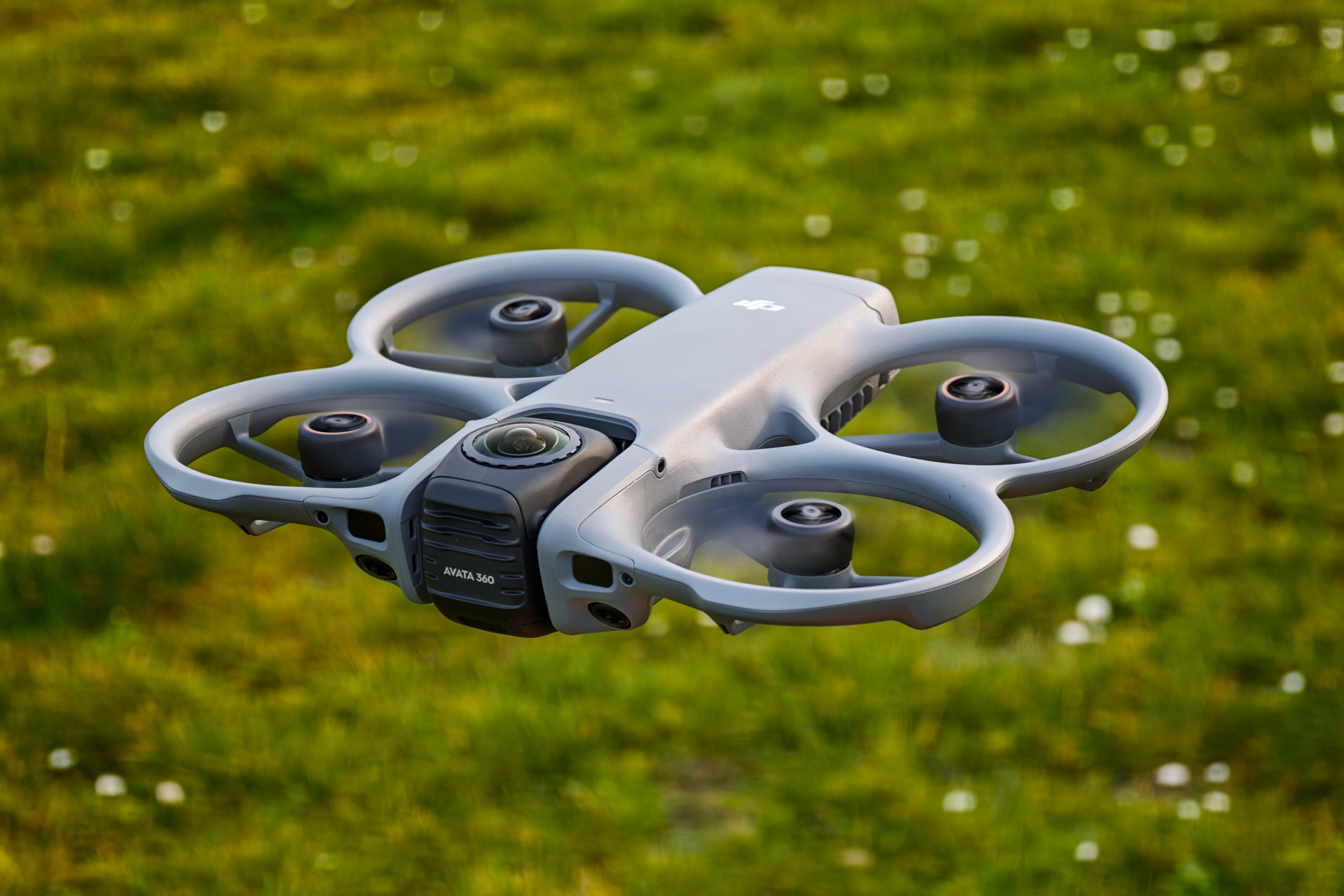

I tested DJI’s first 360 drone against the Antigravity A1, but only one of them is for sale in the US.
DJI’s Avata 360 arrives at a challenging time for the company. It was outpaced by Antigravity’s A1, which became the first 360-degree drone last December, leaving DJI catching up and filing lawsuits. The Avata 360 might be the last DJI drone legally available in the US due to the FCC’s de facto ban, and it won’t see an official US release.
In the US, the Antigravity A1 is the best option for a 360-degree camera drone. However, the Avata 360 makes a strong case globally: it’s faster, serves as both a 360 and traditional FPV drone, and offers versatile controls. Its user-replaceable lenses might make it preferable to Antigravity’s offering.
The Avata 360 is available in China and will ship elsewhere by April. It starts at £409 / €459 ($540) for the drone only, much cheaper than the $1,599 Antigravity bundle. DJI’s Motion Fly More Combo is similar but cheaper at £829 / €939 ($1,100), although adding DJI’s Goggles 3 might increase the cost.
In the US, DJI won’t officially offer the Avata 360, despite FCC clearance in December. It can still be bought from importers, unlike future DJI models. Similar to Antigravity’s debut drone, the Avata 360 is compact, with two lenses merging for 8K, 360-degree views, and app editing for traditional formats.
Flying both drones together showed differences. The Avata 360 is heavier at 455g, crossing the 250g regulation line, but it’s sturdier with built-in propeller guards, a higher max range of 20km, and faster speeds. Both drones offer similar battery life.
DJI has a slight advantage in video quality, with larger sensors and 8K at 60fps recording. The Swivel function makes it suitable for both 360-degree and FPV filming, contrasting Antigravity’s fixed lenses.
The Avata 360 supports various controls: phone app, official controller, or goggle and motion setup. Beginners will find the immersive experience enjoyable, but DJI offers more advanced twin-stick control, unlike Antigravity.
The Avata 360 also features easily replaceable lenses, enhancing repairability with a simple kit. However, DJI’s app remains flawed on Android compared to Antigravity’s more polished app.
Outside the US, DJI has the edge unless a smaller drone is crucial. Despite Antigravity’s better app and headset, DJI’s drone offers more functionality and flexibility at a lower price. Don’t expect to find it in American stores, though. (Photography by Dominic Preston / The Verge)