
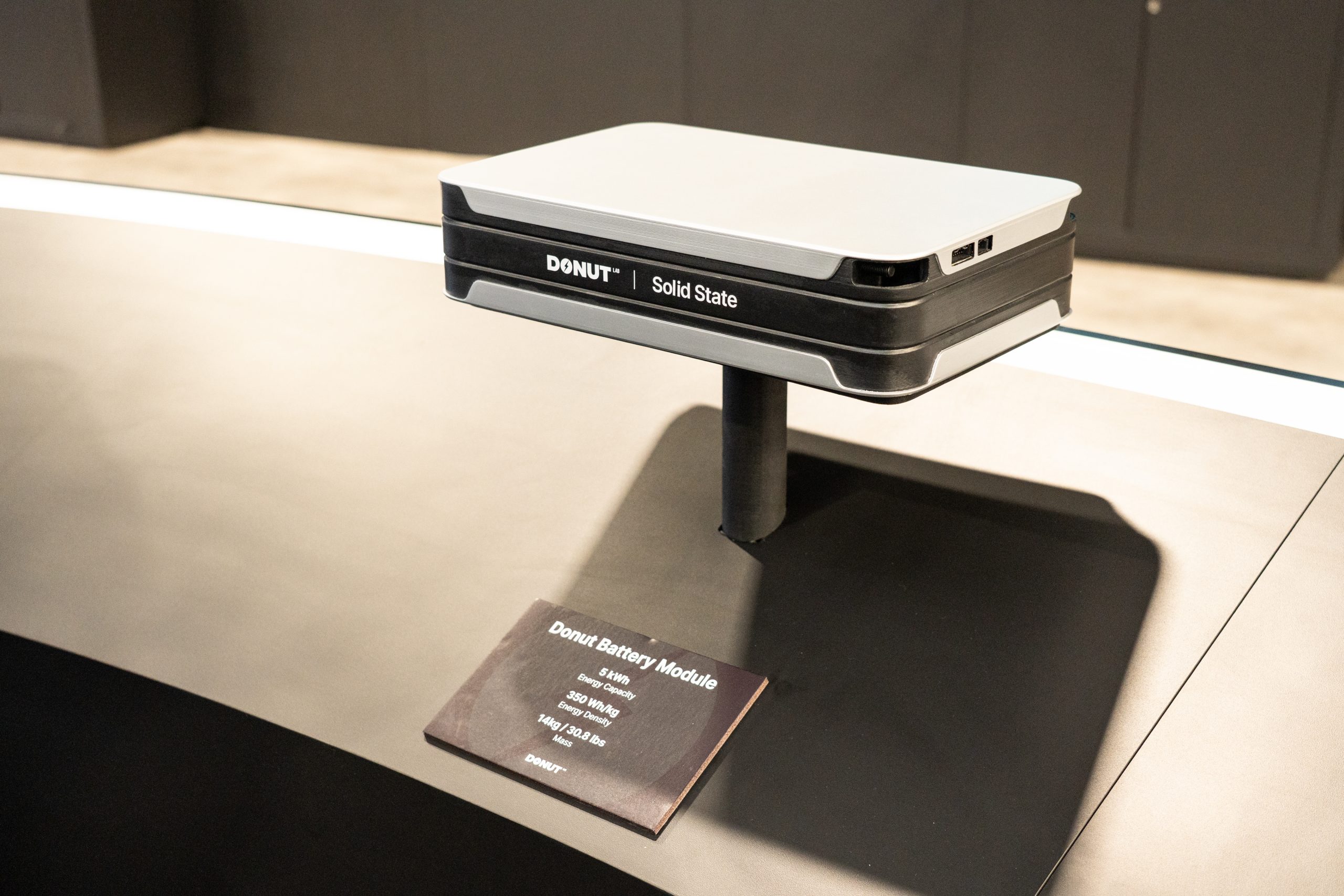

Donut Lab is on a mission to demonstrate its solid-state battery’s capabilities through independent tests. Previous assessments included speed charging, extreme heat, and supercapacitor evaluations. The latest test examined the battery’s response to damage. While it struggled to maintain a charge, it didn’t catch fire, which Donut Lab sees as a positive result.
During past extreme heat tests, the battery’s pouch lost its vacuum seal. Researchers from Finland’s VTT Technical Research Centre, who conducted previous tests, wanted to know if the cell could withstand such conditions. Usually, damage like this could cause fires in conventional lithium-ion batteries. The goal was to see if their battery could avoid this outcome.
Three tests were conducted: a baseline test at 1C for 5 cycles, a high-stress test at 5C for 50 cycles, and a final baseline test to measure degradation. The tests resulted in a 55% drop in energy capacity and a 17% increase in thickness. Despite the damage, the results indicate the battery can avoid the worst outcomes associated with lithium-ion batteries.
“No temperature spikes, no fire risk,” said the company on its website. The battery operates safely at reduced capacity when damaged, posing no danger to users.
However, these tests marked the closest the battery has come to a cycle test under damaged conditions. Donut Lab has yet to show its battery’s long-term performance and safety under accelerated aging tests. Previously, they claimed the battery could last 100,000 cycles, far exceeding the typical lifespan of EV batteries.
Importantly, Donut Lab hasn’t sought independent verification for its claimed energy density of 400 Watt-hours-per-kilogram. The test seems simple and it’s unclear why it hasn’t been requested.
More updates and expert reviews on Donut Lab’s tests will be provided in the coming weeks.