
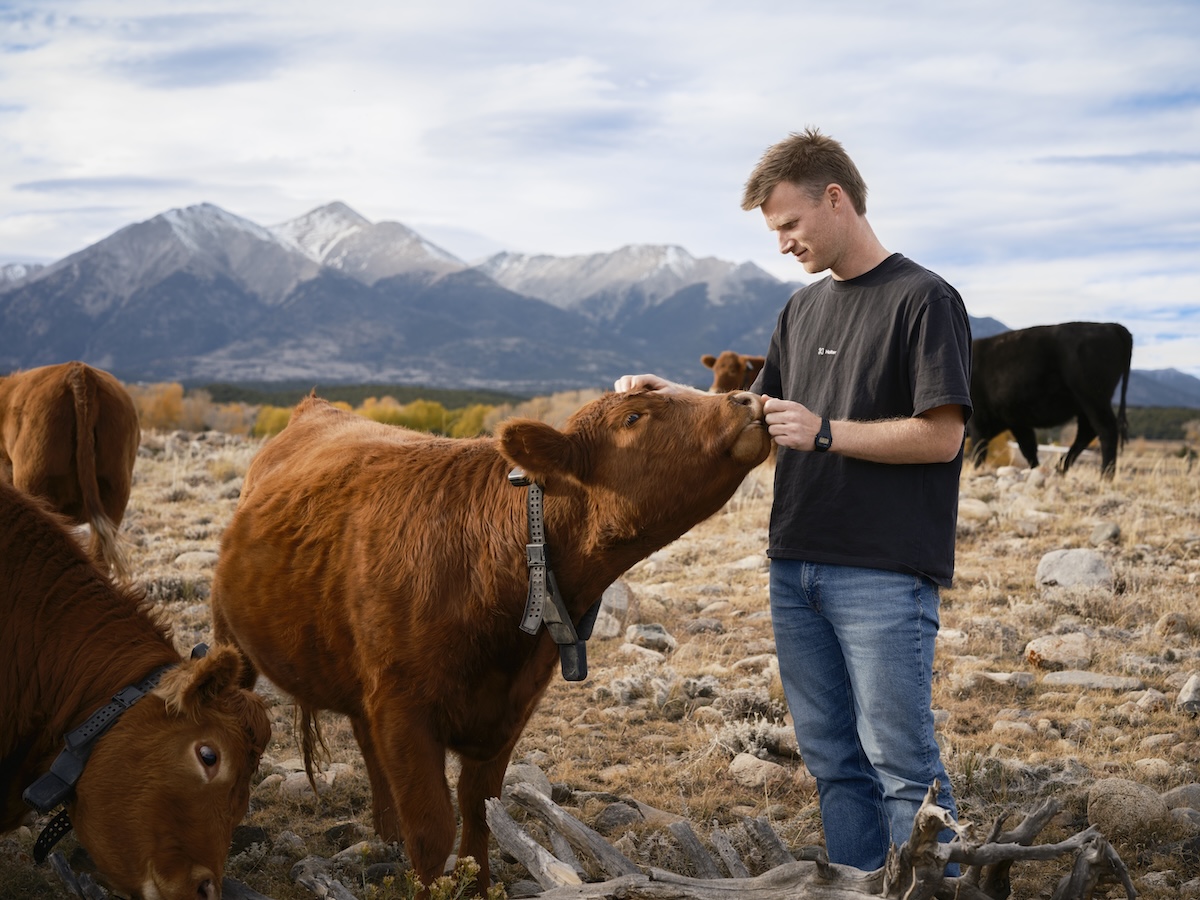

Founders Fund, known for backing groundbreaking companies like Facebook, SpaceX, and Palantir, is now investing in Halter, a New Zealand startup. Halter uses solar-powered smart collars on cows to manage cattle in remote areas without traditional herding methods. The company recently completed a $220 million Series E funding round, valuing it at $2 billion, with Founders Fund leading the round.
CEO Craig Piggott founded Halter nine years ago. The company offers a system that combines solar-powered collars, low-frequency towers, and a smartphone app to create virtual fences, allowing farmers to manage and move herds remotely. This system trains cattle to respond to audio and vibration cues, similar to car parking sensors, enabling efficient grazing management and improving land productivity.
Halter’s collars also monitor animal health, track fertility cycles, and identify sickness using collected behavioral data. This has led to significant advancements in Halter’s products and a substantial dataset on cattle behavior. The company is testing its latest reproduction product with U.S. customers.
Piggott, who grew up on a dairy farm, started Halter at 21 after a brief stint at Rocket Lab. His motivation was to apply startup and tech principles to agriculture. Today, Halter’s collars are used on over a million cattle across 2,000+ farms in New Zealand, Australia, and the U.S., claiming to improve productivity by up to 20%.
Despite competition from firms like Merck’s Vence system and newer drone-based startups, Piggott believes Halter’s collar is a superior format for virtual fencing. The challenge lies not in rival technologies but in persuading farmers to shift from traditional practices.
Halter’s engineering achievements and focus on financial return have helped it stand out in the agtech sector. With nearly $400 million raised, it aims to expand in the U.S., South America, and Europe, focusing on the global agricultural market. Though it has only penetrated less than 10% of its home market, Halter sees vast growth potential with one billion cattle worldwide.