

As the RAM crisis persists, the initial smartphone launches of 2026 are grappling with limited supply and escalating costs of valuable memory. Although high-end devices seem to be managing thus far, I am beginning to feel some apprehension concerning our reliable $500 smartphones — the ones many budget-conscious consumers actually prefer.
It’s odd to express this after several promising, budget-friendly smartphone launches within the last month. The Google Pixel 10a and Nothing Phone 4a Pro demonstrate that excellent phones can be acquired without emptying one’s wallet, with additional competitors in the mix. However, these models were all designed and produced prior to the RAM shortages becoming critical. They might very well be the last of a kind that is poised to become significantly harder to manufacture.
The core of the issue extends well beyond the smartphone sector alone. Memory producers are currently focusing on the thriving AI infrastructure market, where there’s a surge in demand for high-performance DRAM and high-bandwidth memory. Data center equipment can yield much higher profits than consumer electronics, leading smartphone manufacturers to be relegated to less important customers for memory suppliers. As production pivots toward server-grade memory, the availability of phone-grade memory tightens — and costs rise.
“Flagship brands have eliminated less lucrative SKUs, but what can mid-range devices do?”
Examining the broader mobile phone arena, flagship brands have already begun to alter their launch approaches to address the RAM profitability dilemma. Samsung has phased out 128GB storage variants from the Galaxy S26 series, as these models are known for yielding the lowest margins and will thus be most affected by increased component prices. While this is arguably a timely adjustment for smartphones that are becoming increasingly media intensive, it also enables Samsung to effectively raise its entry price without directly announcing a price increase.
Meanwhile, Samsung has maintained the standard at 12GB of RAM (aside from its 1TB Ultra) despite a widespread industry move toward AI functionalities that benefit from larger memory pools. Xiaomi seems to be pursuing a similar path: where the Xiaomi 15 Ultra featured a 12GB RAM / 256GB storage combination, the Xiaomi 17 Ultra now kicks off at 16GB and 512GB — accompanied by a staggering €1,499 price point to align with its premium hardware configuration.
Thus far, flagship devices have absorbed most of these changes due to their significantly higher margins. Mid-range smartphones, however, do not enjoy the same privilege.
Affordability vs specs
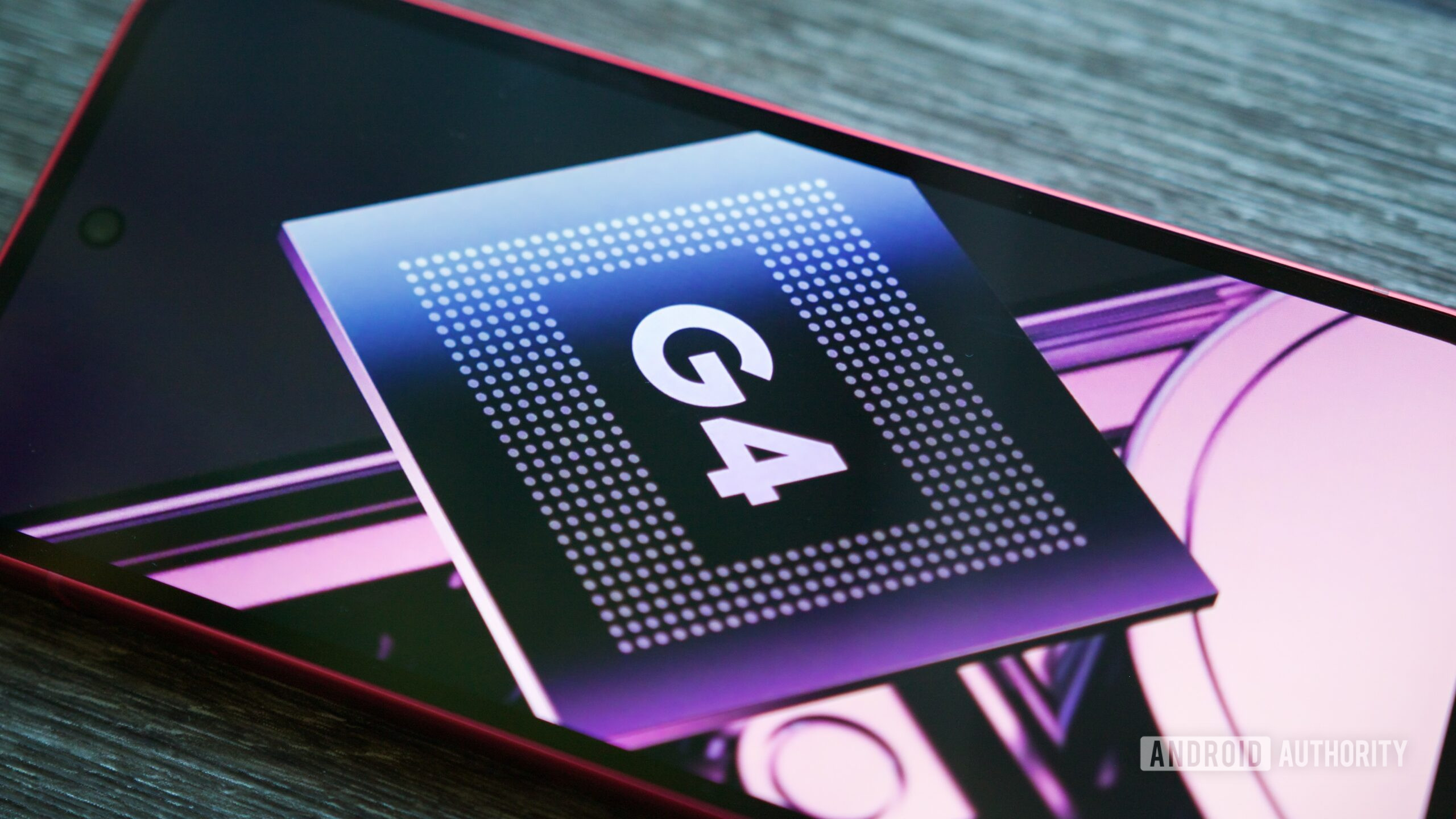
One might question whether Google’s choice to retain last year’s Tensor G4 chip in the Pixel 10a (and maintain its RAM at 8GB) was driven more by the need to protect that essential $499 price point than by product strategy. Google may aspire for its devices to feature ambitious on-device AI capabilities, but those aspirations clash head-on with the realities of the mid-range market, which simply cannot afford the necessary memory for effective on-device AI.
Apple has opted for a slightly different route with the somewhat pricier iPhone 17e. It again doubles its base storage to 256GB (up from 128GB in the 16e), employs a robust A19 processor, and provides quicker wireless charging, all while keeping the same $599 starting price as the previous year. It’s a bold contender. However, it compromises by maintaining the same display and camera, offering primarily a performance enhancement.
“Spec stagnation could be the cost to keep expenses manageable.”
At the lower end, the Nothing Phone 4a adopts a flexible approach to maintain the appeal of its budget phones, offering varying RAM tiers and slightly elevated prices while utilizing cheaper LPDDR4X memory in its base model. Its newer processor is not significantly faster than the previous one, making this strategy the opposite of Apple’s, although the brand has succeeded in achieving notable camera enhancements.
Mid-range smartphones in the $400—$500 price range occupy a narrow segment where consumers anticipate robust specifications while being highly sensitive to price hikes. This creates challenges for manufacturers looking to pass on rising memory costs to us buyers. It feels inevitable that something must give. Either mid-range smartphones will see price increases, or the era of well-equipped $500 smartphones will begin to wane.
So what will become of $500 smartphones?
What are the next steps? The most probable result isn’t the abrupt elimination of the $500 smartphone but rather a continuation of patterns we’ve already observed this year — a gradual shift in what that price truly offers.
The most likely scenario foretells stagnation. RAM capacities in mid-range smartphones may remain stagnant at 8GB for longer than anticipated, even as software and AI features increasingly require additional memory. We might also witness delays in processor, camera, and other enhancements to maintain cost-effectiveness. Manufacturers can stabilize prices this way, but the downside is that hardware advancements slow, and there