
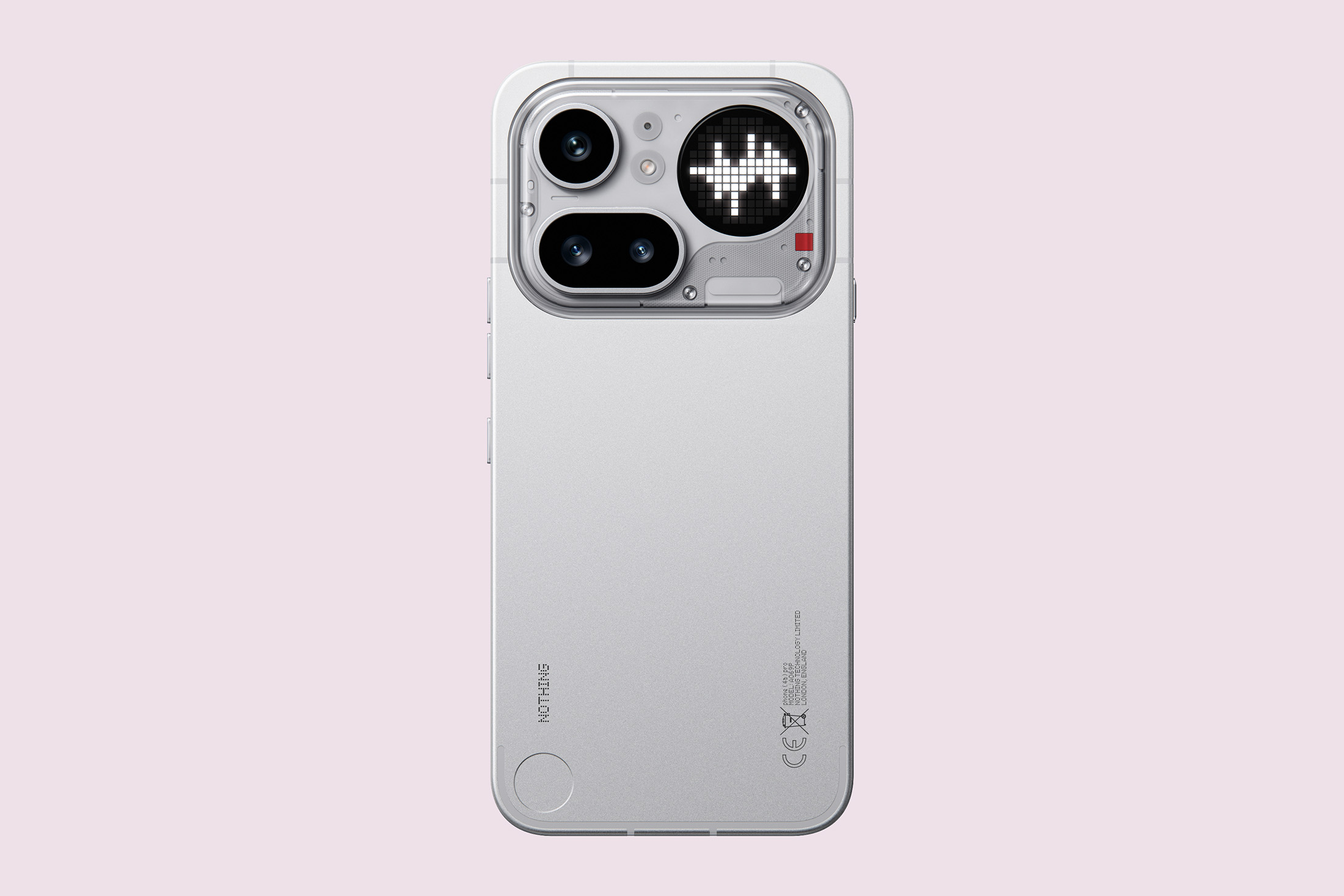

A fresh metal unibody design shifts the iconic Nothing aesthetic to the camera module.
Today, Nothing unveiled the 4A and 4A Pro, its newest midrange smartphones. The two models present remarkably distinct designs and Glyph Light interfaces. The Pro is particularly noteworthy: it’s the first Nothing phone to nearly discard the brand’s signature transparent design.
I’m currently at Nothing’s launch event in London, where I will soon experience the 4A Pro firsthand, so expect hands-on impressions shortly.
The 4A Pro, set to be available in the US later this month, features a metal unibody instead of the typical clear plastic. According to the company’s press release, the phone retains a “refined transparent design,” but this is mainly evident in the camera module, which contains an enlarged version of the Glyph Matrix display introduced in last year’s Phone 3 flagship. The remainder of the phone is cloaked in opaque aluminum, offered in black, silver, or a muted pink.
The change is somewhat surprising from the brand, though after my initial shock, I find the design mostly effective, and perhaps it was anticipated following the minimalist motif of the 3A Lite. Many may lament the loss of Nothing’s retro transparent finish, which suggested, though never fully exposed, the phone’s internals. However, I suspect this design will be more widely accepted than the divisive Phone 3’s awkward, asymmetric style.
Besides, if transparency is your preference, there’s always the 4A. I’ve tested the 4A for about a week, and it resembles and feels similar to Nothing’s past models, aside from the introduction of the new Glyph Bar lighting, a slim column of LEDs for Nothing’s typical range of custom notifications, alerts, and interactive features. The 4A is also available in a wide range of colors, with the traditional white and black now joined by an impressive pink (outdoing both the Pro’s and the recent iPhone 17E’s) and my personal favorite, a vibrant blue.
However, choosing this means compromising on some specs. The 4A Pro’s screen is slightly larger, brighter, and faster than the 4A’s, and the metal design helps make the phone thinner. Its Snapdragon 7 Gen 4 outperforms the 4A’s 7s Gen 4, with slightly better waterproofing (IP65 rating) and an enhanced main camera, although the telephoto, ultrawide, and selfie cameras remain the same. (Well, almost: only the Pro can perform “140x ultra zoom,” but since both use identical telephoto hardware, this may be a software restriction or a limitation of the 4A’s chipset). Both models feature a 5,080mAh battery (increased to 5,400mAh in models sold in India) and will receive three Android OS updates and six years of security patches.
Depending on your location, you might not have a choice. While both 4A models launch in the UK, Europe, and India, only the Pro version will be available in the US. The regular 4A is priced at £349 / €349 ($400-450), with preorders starting today ahead of release on March 13th. The Pro costs $499 / £499 / €479, with preorders from March 13th before its full release on the 27th.
The phone releases are accompanied by the Headphone A, an over-ear follow-up to last year’s Headphone 1, which reduces the price by $100 mostly by compromising call quality and omitting the carrying case. It also mirrors the 4A Pro in shifting towards a more opaque look, suggesting Nothing might be ready to move away from transparency.
It could be a while before we see if this approach extends to Nothing’s flagship models. The company has confirmed it will not release a flagship Phone 4 this year, indicating that the 4A Pro is likely to be its most advanced phone hardware in 2026.