
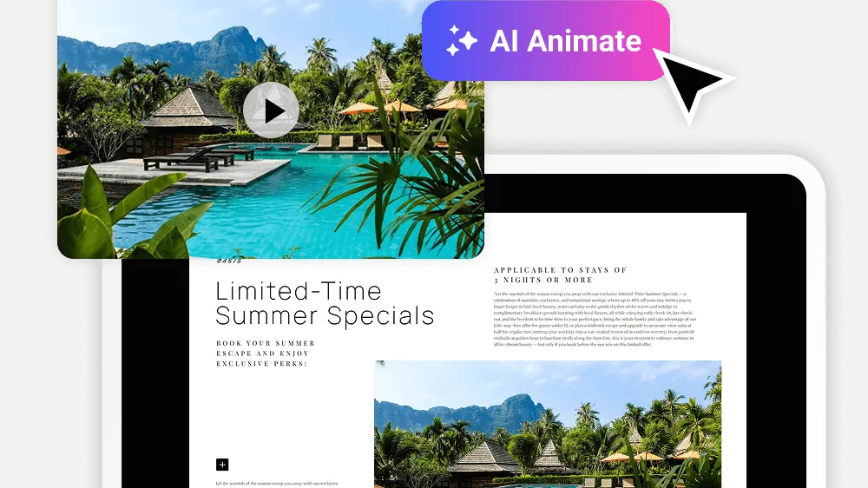

Interactive content now produces 52.6% higher engagement than static formats, with users spending more time interacting with dynamic media and showing better brand recall. This change has likely altered how digital content is created, especially in commerce and B2B settings, where attention is limited. Flipsnack introduces its Living Visuals to address this demand, integrating AI-driven motion to turn static catalogs into dynamic, engaging flipbooks.
“We are moving from reading business documents to experiencing them,” says Adrian Moza, CEO of Flipsnack. “With Living Visuals, teams can now create immersive catalogs with a cinematic layer inside the document, without needing video production teams or new software.”
Moza notes how audiences are engaging more with moving content, like GIFs and short-form videos, making static imagery compete in an environment where motion captivates more. Living Visuals meets this need by embedding subtle animations directly into digital catalogs, brochures, and sales materials.
“Now that we’ve moved past interactivity, the future is immersion,” says Moza. “We are empowering teams to convert flat, static documents into a competitive advantage.”
Flipsnack integrates motion natively within its platform, allowing users to convert still images into dynamic visuals in a flipbook without extra editing software or expertise. According to Moza, accessibility is key, making motion available to marketing teams and designers within existing content systems. “Living Visuals can go beyond basic aesthetics to make your content unmissable, significantly enhancing key pages’ performance,” Moza says.
Flipsnack’s built-in analytics help businesses track engagement metrics, making motion not just aesthetic but a functional tool for conversion. Industries like retail and real estate benefit most from this evolution as visual storytelling drives outcomes.
The technology is designed with restraint, ensuring animations are subtle and cinematic, guiding attention towards key elements without overwhelming the viewer. “Teams don’t need to rethink their entire workflow,” Moza says. “They can enhance what exists and see immediate impact.”
Flipsnack’s approach lowers barriers to innovation, embedding AI-driven motion into an established platform, facilitating adoption. Moza highlights that dynamic flipbooks have potential, with static images transitioning into lifelike visuals and catalogs subtly guiding viewers across items. Each application enhances engagement.
“Living Visuals is about helping content perform without adding complexity,” Moza emphasizes. He notes how attention spans are decreasing while expectations for digital experiences rise. Platforms that win are those anticipating how users want to consume content.
Living Visuals positions Flipsnack in the anticipatory space where interaction becomes immersion. “Immersive content isn’t a trend; it’s a direction,” Moza shares. “Teams that adapt early will define how business communication evolves.”
Motion, once a differentiator, is becoming a baseline expectation. Flipsnack’s Living Visuals indicates this shift, transforming documents into experiences and content into something that actively engages users.