

Sam Altman, CEO of OpenAI, is resigning as board chair of Helion, a fusion startup he supports, amid discussions between the two entities.
The early-stage deal, reported by Axios, could secure OpenAI 12.5% of Helion’s output—five gigawatts by 2030 and 50 gigawatts by 2035. Microsoft, an OpenAI partner, signed a similar agreement with Helion in 2023 to start buying power in 2028.
If Axios’ reported figures are accurate, Helion plans to swiftly scale its fusion power plant’s production. The startup claims each reactor will produce 50 megawatts, necessitating the construction of 800 reactors by 2030 and an additional 7,200 by 2035.
Helion neither confirmed nor denied ongoing talks with OpenAI. A spokesman informed TechCrunch that no new customer agreements have been announced beyond those with Microsoft and Nucor. However, Helion acknowledged Altman’s departure as board chair, hinting at future collaboration between the companies.
“Sam is leaving Helion’s Board of Directors after over ten years. This choice allows Helion and OpenAI to explore future opportunities to deliver zero-carbon, safe electricity globally,” stated David Kirtley, co-founder and CEO, to TechCrunch. “We look forward to working with him in this new role.”
Helion aims to construct its first commercial-scale reactor by the deadline. Success would give them a competitive edge over others targeting early 2030s for commercial operations.
Last year, the startup raised $425 million from investors, including Altman, along with Mithril, Lightspeed, and SoftBank.
Most fusion startups aim to convert heat from fusion reactions into electricity via steam turbines. Helion is pursuing a unique approach, employing magnets to convert fusion power into electricity.
Techcrunch event
San Francisco, CA
|
October 13-15, 2026
Inside its hourglass-shaped reactor, fusion fuel is turned into plasma at each end and propelled towards each other using magnetic fields. At the collision point, another set of magnets compresses the plasma until fusion occurs, creating a reaction that pushes back on the magnets, directly converting the energy into electricity.
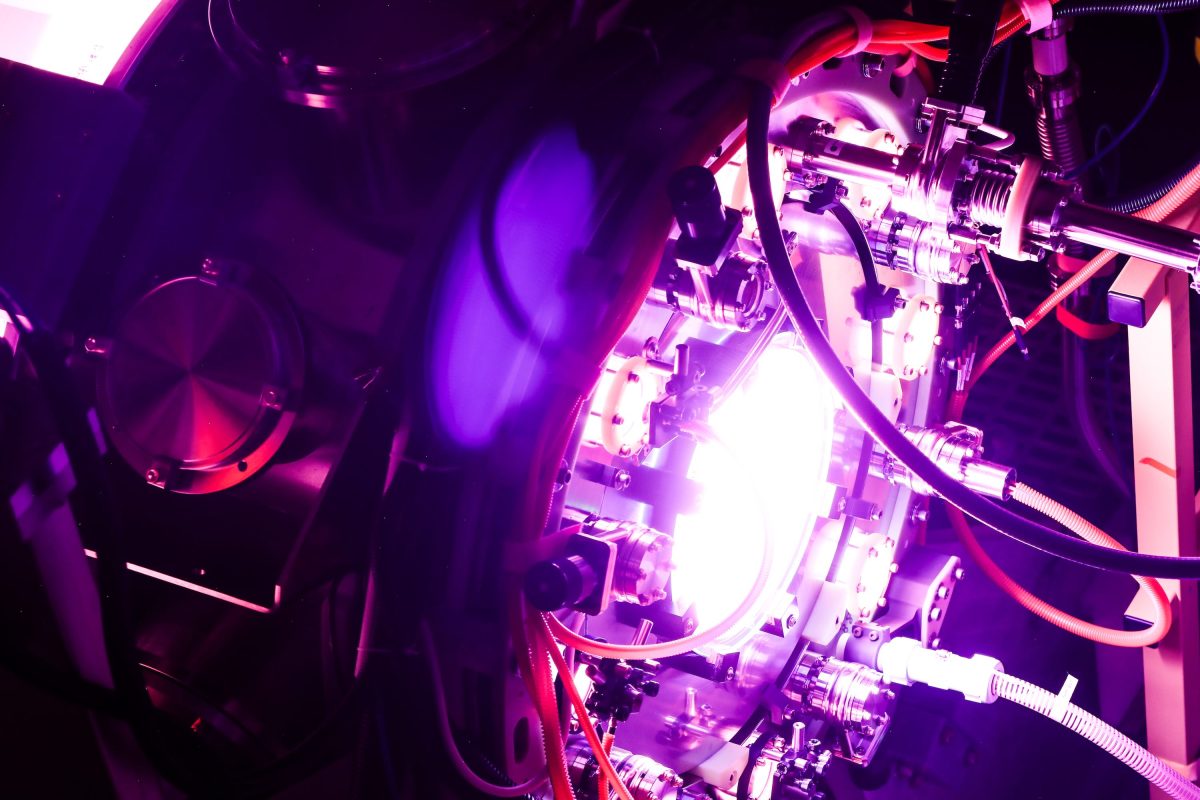
Helion is currently operating its Polaris prototype in preparation for commercial power. In February, the reactor generated plasmas reaching 150 million degrees Celsius, nearing the 200 million degrees Celsius required for commercial operation.
Although Altman resigned as chair of Helion’s board and is reportedly distanced from talks, his influence is apparent.
Last year, Altman resigned as board chair of Oklo, a small modular nuclear reactor startup merged with his acquisition company, AltC. The move was to enable Oklo to consider strategic partnerships with major AI firms, potentially including OpenAI,” stated Caroline Cochran, Oklo’s co-founder and COO, to CNBC.
Update 1:30 pm ET: Added confirmation from Helion about Altman stepping down as board chair.