
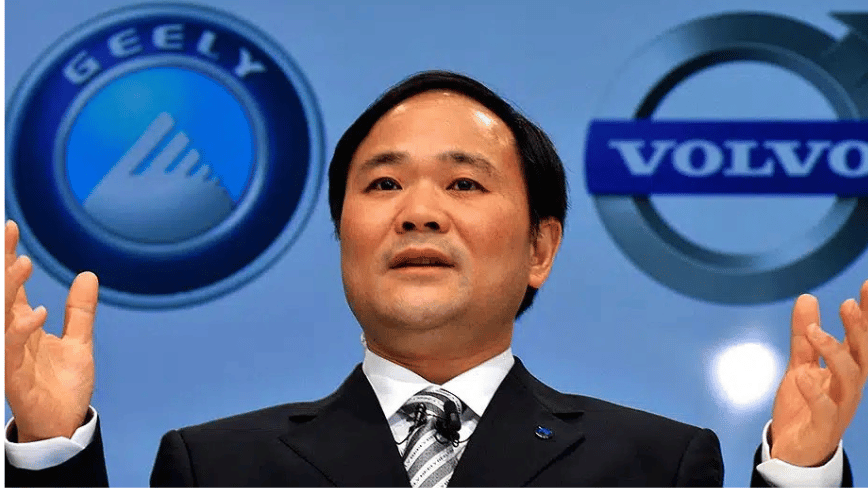

Li Shufu, the billionaire chairman of Geely Holding Group and the man who bought Volvo Cars from Ford for $1.8 billion in 2010, has concluded that the world has too many car factories and building more is a waste of money. Geely will not construct new production facilities worldwide but will use existing plants, especially Volvo Cars’, to manufacture vehicles in overseas markets, as reported by Bloomberg and the South China Morning Post.
This declaration represents a strategy shift for China’s second-largest carmaker. Instead of purchasing land and building new facilities, Geely will focus on partnerships, integration, and existing capacity revitalization. Global automotive production surpluses are estimated at between 5 and 20 million vehicles annually, and China’s domestic demand accounts for about half of its output.
Volvo’s factory network—spanning Sweden, Belgium, China, Malaysia, India, and the United States—becomes central to Geely’s international plans. Li stated that Volvo should produce models of its Chinese sister brands in existing facilities, utilizing underused capacity and gaining access to manufacturing bases in Europe and America without new construction costs. The South Carolina Volvo plant produces the electric EX90 and will add the XC60. The Belgian factory in Ghent began making the EX30 to avoid EU tariffs on Chinese-made vehicles.
The tariffs have made flexibility essential. Trump administration tariffs have cost the global industry over $35 billion since 2025, with European automakers bearing $6 billion in 2025 alone. Volvo faced an SEK 18 billion cost and cash action plan, cutting 3,000 positions globally. Restructuring was completed by autumn 2025, with financial benefits evident from late 2025.
Volvo has responded to tariff pressures by regionalizing production rapidly. It restructured global operations to empower its key regions: the US, China, and Europe. Polestar, also owned by Geely, consolidated Polestar 3 production at Volvo’s South Carolina factory, abandoning plans to build it in China. A new Slovakia factory will produce the Polestar 7 for Europe.
Li’s strategy extends to Geely’s entire brand portfolio, including Lynk & Co and Proton, and involves partnerships beyond the group. Geely is in discussions with Ford about using its European capacity and has partnered with Renault in South Korea and Brazil for vehicle production.
The method challenges predictions that companies like BYD and Geely would follow the Japanese and Korean export-first, build-local-factories model. While some still pursue that path, Li believes global overcapacity and unpredictable tariffs make investing in long-term assets riskier.
Geely aims for 6.5 million vehicle sales and 1 trillion yuan in revenue by 2030. Li invested $200 million in Polestar in June 2025, and Geely plans to enter the US market in two to three years, likely using Volvo-owned factories. Geely will complete its first in-house solid-state battery production this year, offering an edge in range and charging speed if scalable.
The question remains whether Volvo’s partners and shareholders will accept factories being used for Chinese-branded vehicles. Volvo Cars is publicly listed in Stockholm, and minority investors may have concerns. Additionally, European and American regulators have tried to keep Chinese-made vehicles out, which might complicate allowing Chinese-designed vehicles through Volvo plants.
Li Shufu is unworried. Starting his career making refrigerator parts in Zhejiang before establishing China’s first privately owned car company, he has always defied expectations. His strategic shift to using existing factories might be either highly capital-efficient or an indication that the era of Chinese manufacturing expansion has peaked—or both.