

The fashion industry is facing a significant waste problem, with about one garbage truck of textiles discarded every second. The industry also produces more carbon pollution than international flights and maritime shipping combined.
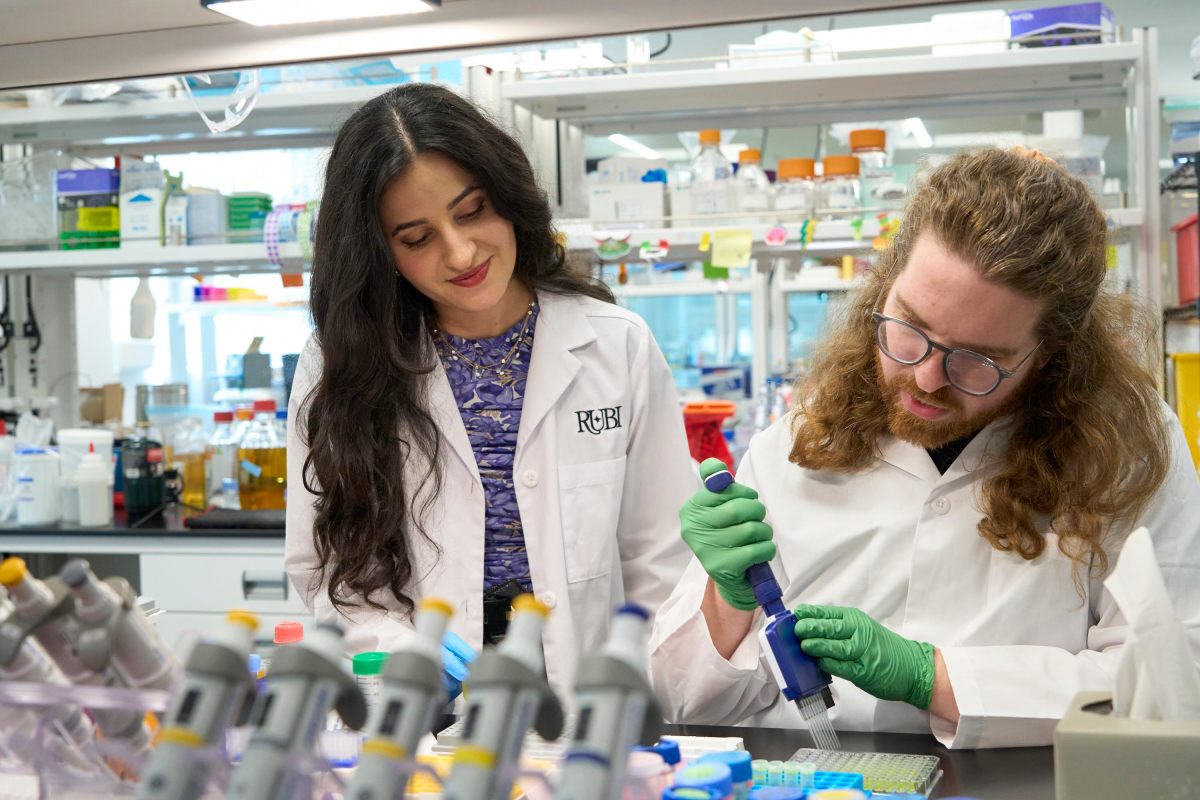
Some companies are exploring innovative methods to recycle textile waste, while others develop new materials that don’t rely on fossil fuels. Startup Rubi is working to take biological processes outside of the cell to create the building blocks for lyocell and viscose, enabling companies using cellulose to utilize captured carbon dioxide, according to co-founder and CEO Neeka Mashouf.
Rubi has secured $7.5 million to develop a demonstration-scale cellulosic production system that produces material using CO2. The funding round, led by AP Ventures and FH One Investments, included CMPC Ventures, H&M Group, Talis Capital, and Understorey Ventures.
The startup has secured over $60 million in non-binding off-take agreements with partners and tested its material with companies like H&M, Patagonia, and Walmart.
To produce cellulose for lyocell or viscose, Rubi employs enzymes, unlike other startups using engineered bacteria or chemical catalysts. Currently, most cellulose is derived from trees, including plantations and rainforests.
Mashouf explained that enzymes became a focus after researching new materials in collaboration with her twin sister Leila, a medical student at Harvard. Enzymes are already widely used in industries like high fructose corn syrup production and wastewater treatment, offering low-cost potential.
Rubi processes carbon dioxide using a cascade of enzymes, enhanced by AI and machine learning for improved enzyme efficacy and stability. The enzymes operate in an aqueous solution where cellulose appears shortly after carbon dioxide is introduced. The reactors are compact, shipping container-sized, and Rubi plans to enable continuous production in the future.
While initially targeting apparel companies, Rubi aims to supply cellulose to any industry needing it. “This really is a platform,” Mashouf said. “We see it as a platform to produce essential chemicals and materials across the economy affordably.”