
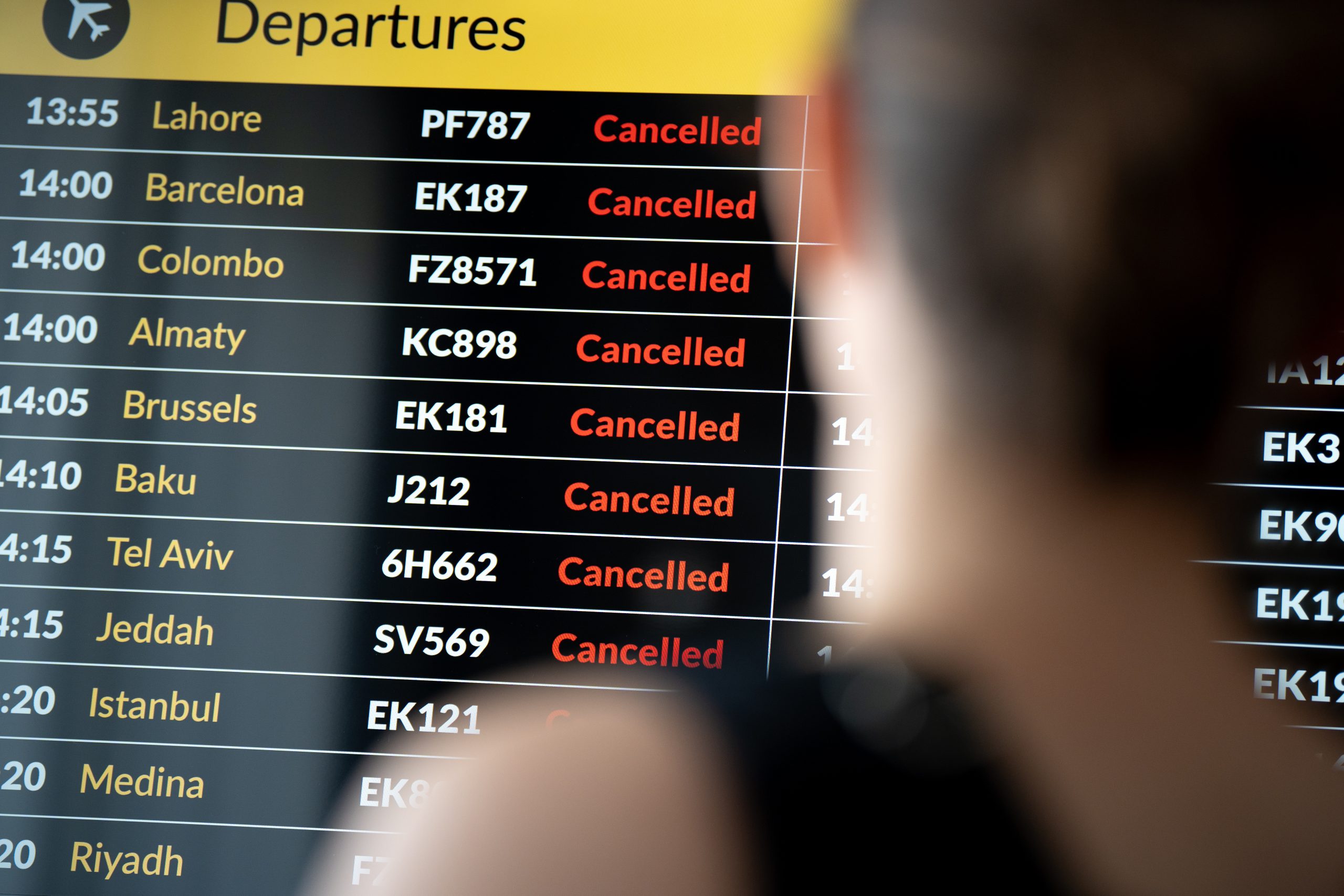

The recent attacks have resulted in the cancellation of thousands of flights, leaving travelers stranded in Dubai and other locations. Samantha Lujano was preparing to board her flight from Dubai to Colombo when the drone attacks began. Despite having checked in and awaiting boarding, she discovered alarming videos on social media about explosions in the region. Her friends informed her of the airspace closure, but it wasn’t until flight statuses turned red that the severity became clear. Dubai became part of a war zone due to Iran’s missile and drone retaliation against a US and Israeli strike. This closed civilian airspace and resulted in over 3,400 flight cancellations, leaving passengers like Lujano stranded without valid visas or accommodations.
The Persian Gulf heavily relies on air travel, with major airports serving as key international hubs. Countries in the region have invested significantly in becoming critical global aviation nodes. The UAE, in particular, has leveraged its location and relaxed regulations to boost its aviation sector, which now surpasses oil in economic contribution. However, the recent conflict has jeopardized these advancements, causing significant flight disruptions and affecting nearly a million people. While some travelers like Natalia Izak and Tomasz Brozio managed to find alternative routes, others, like Lujano, remain in uncertainty.
The conflict has also impacted the Gulf’s status as a tourism and transit hub, with empty hotels and canceled events like Formula 1 races. The duration of the war remains uncertain, but its impact on one of the world’s busiest air corridors is profound and ongoing.