
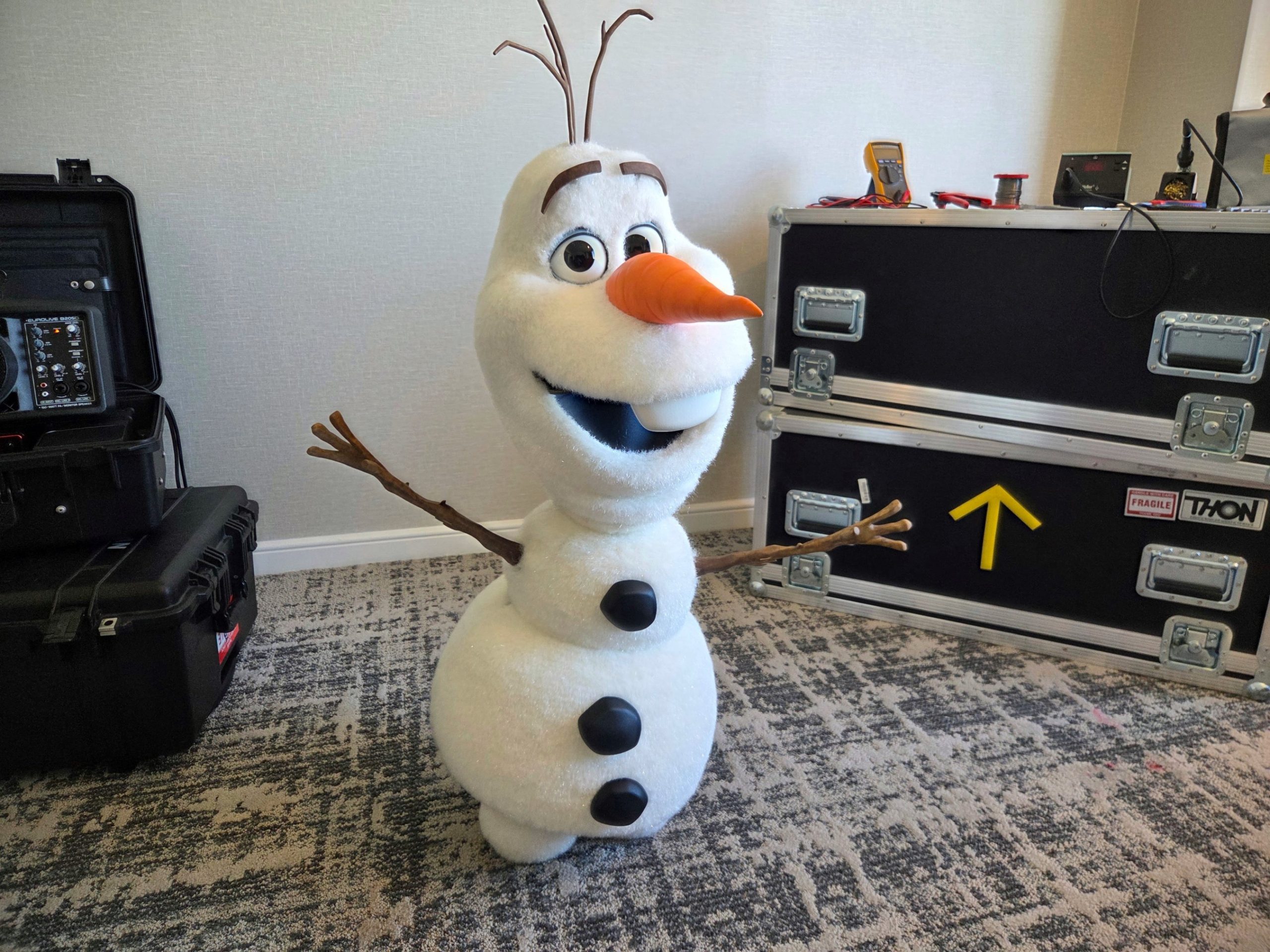

Disney Imagineering reveals the secret to creating lands filled with robot characters.
Known for his role in Disney’s Frozen, Olaf becomes the latest Disney robot wonder. Meeting the Disney Imagineering robot Olaf sparks a desire for kids to encounter him too. Though largely a remote-controlled puppet, this Olaf robot falls into the rare category that conquers the uncanny valley when it moves, trained using Nvidia-powered simulations.
Kyle Laughlin, Disney Imagineering SVP, confirms that reinforcement learning could enable creating entire worlds with interactive characters. Unlike previous robotic droids from Star Wars, Olaf is their first animated character brought to life.
Olaf, not powered by AI, plays pre-recorded lines while performing animated motions. Operated via a Steam Deck, Olaf’s movements convincingly mimic life, attributed largely to syncing of its eyes and body. Disney’s investment in public robot research includes contributing to open-source projects, such as Newton Physics Engine and Kamino, aiding in training complex assemblies like Olaf.
Olaf, with its large head and small neck, posed engineering challenges, such as avoiding overheating and minimizing noise. Waltzing around convincingly, Olaf’s design involved teaching 100,000 virtual versions to move quietly and efficiently.
Disney keeps working towards making robots appear truly autonomous, but Olaf can perform tied into live entertainment choreography systems, appearing in Disneyland Paris performing on a boat. Future iterations may include interacting with other characters, enhancing the power of Olaf’s universe.
Disney Research publicized a detailed whitepaper revealing the workings behind creating Olaf.