

After unboxing the MacBook Neo a few days ago, iFixit has returned with a complete teardown of the new iPhone 17e, uncovering several unexpected repair-friendly modifications within.
### Cross-compatibility grants a 7 out of 10 repairability rating
One of the major criticisms aimed at the iPhone 16e was its absence of MagSafe support. Though the widely held belief was that this wouldn’t significantly affect the device’s intended users, Apple did integrate MagSafe support in the iPhone 17e.
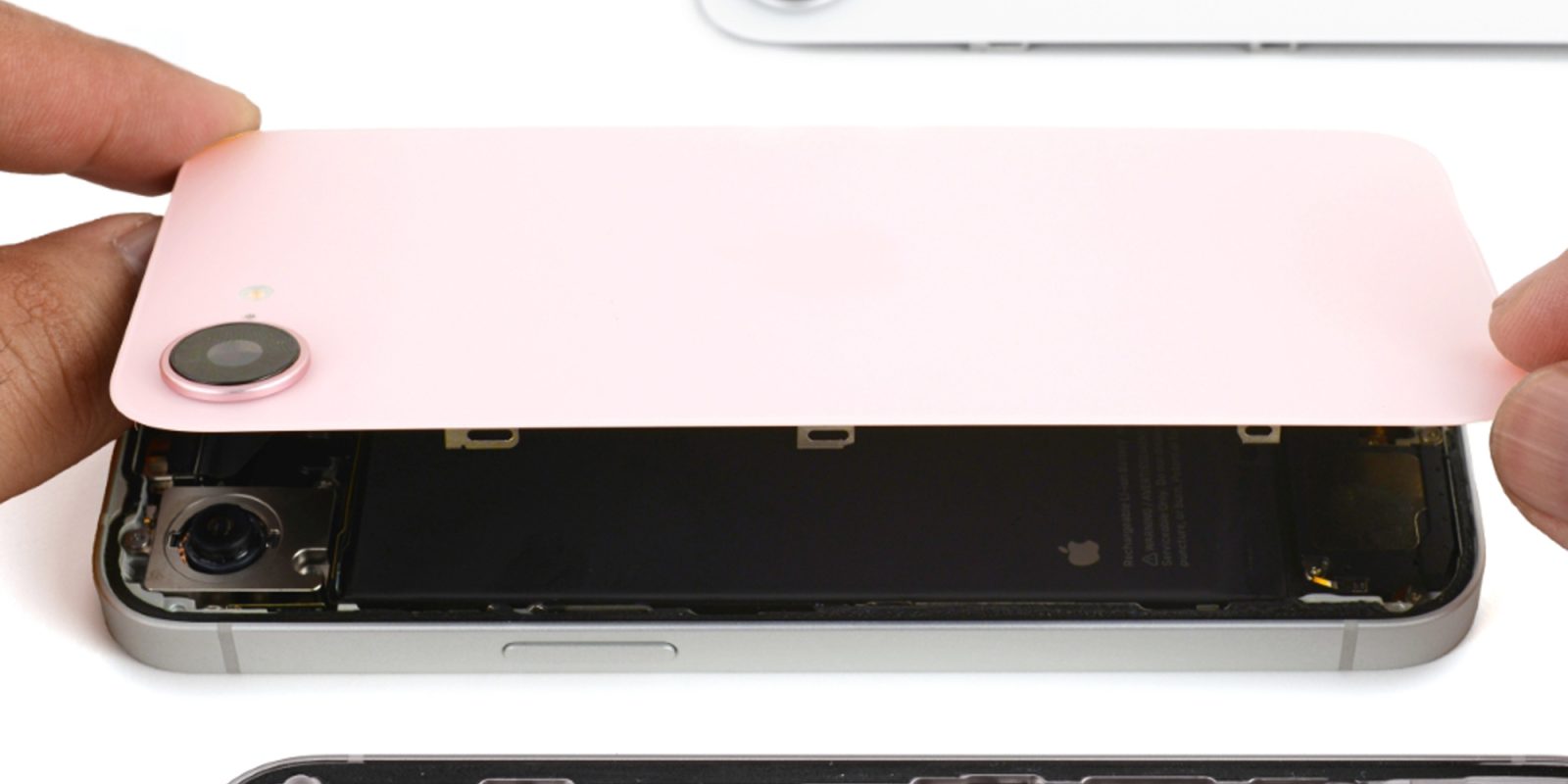
Today, iFixit released its teardown of the iPhone 17e and demonstrated that the device’s MagSafe-equipped back panel is entirely compatible with the iPhone 16e. In effect, this means iPhone 16e owners might be able to add MagSafe features to their devices by merely changing the back panel, with a few conditions:
> “The 16e doesn’t appear to have the software to recognize the MagSafe attachment, so the characteristic “thunk” and animation I anticipated are absent. It’s still uncertain whether a 16e with a 17e back cover can reach the 15W charge speeds of the 17e; we’ll experiment and update once we find out.”
In fact, iFixit mentions that the majority of components are cross-compatible between the iPhone 16e and iPhone 17e. They even successfully booted an iPhone 17e using an iPhone 16e logic board, although Face ID did not function.
As iFixit highlights:
> “Such cross-compatibility is significant. It simplifies repairs, makes sourcing parts easier, and reduces upgrade costs.”
In the teardown, iFixit observes that the disassembly procedure for the iPhone 17e closely resembles that of the iPhone 16e and other recent iPhones, wherein the front and back panels can be accessed separately. This ultimately means “you can replace a battery without needing to navigate through a delicate screen.”
Conversely, iFixit points out that extracting the USB-C port remains a considerably more intricate operation than it ought to be, considering it requires replacement or repair far more frequently than the components it is situated beneath.
Overall, the iPhone 17e (tentatively) receives a 7 out of 10 on iFixit’s repairability scale. This is primarily attributed to its high degree of part interchangeability, which they indicate could be a purposeful attempt to facilitate repairs or a consequence of Apple’s aim to streamline manufacturing.
Regardless, the iPhone 17e seems to be a favorable option for DIY enthusiasts, including those who possess an iPhone 16e.