
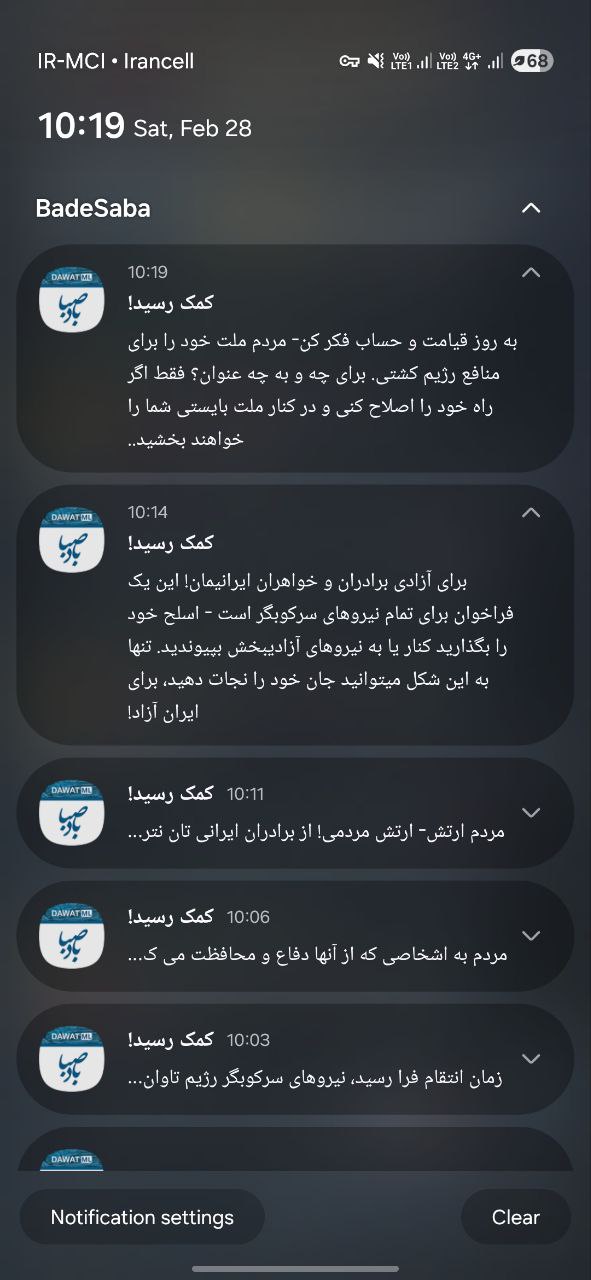

Early on Saturday, cities across Iran, including Tehran, experienced airstrikes led by the U.S. and Israel, resulting in the death of Supreme Leader Ali Hosseini Khamenei and key leaders. These military actions were paired with cyberattacks on Iran, including one that overwhelmed a popular phone app with notifications during an internet outage.
The airstrikes followed unsuccessful negotiations between Tehran and Washington after weeks of mass protests and the country’s longest internet shutdown. As missiles struck, unsolicited notifications were reported on a prayer app, suggesting outside interference rather than government communication.
The BadeSaba prayer app users received messages pushing for resistance against the government, implying tampering with the app for anti-regime messaging. The perpetrator of the hack remains unknown, although the app boasts over 5 million downloads.
The Jerusalem Post indicated cyberattacks were part of the U.S. and Israeli strikes to curtail Iran’s response, recalling past suspicions of both nations conducting cyberattacks on Iranian banks and crypto exchanges to pressure its government since the 1989 revolution.
The conflict threatens to extend to the Middle East, with Iran launching retaliatory missile strikes. Amazon’s Middle East data center in the UAE experienced a fire outbreak when struck by objects amid the conflict. Additionally, important ecommerce routes via the Strait of Hormuz face disruption as vessel movements halt.
Doug Madory from Kentik noted that Iran’s internet connectivity fell dramatically post-airstrikes. This was confirmed by Cloudflare, highlighting the country’s internet collapse on Saturday.