
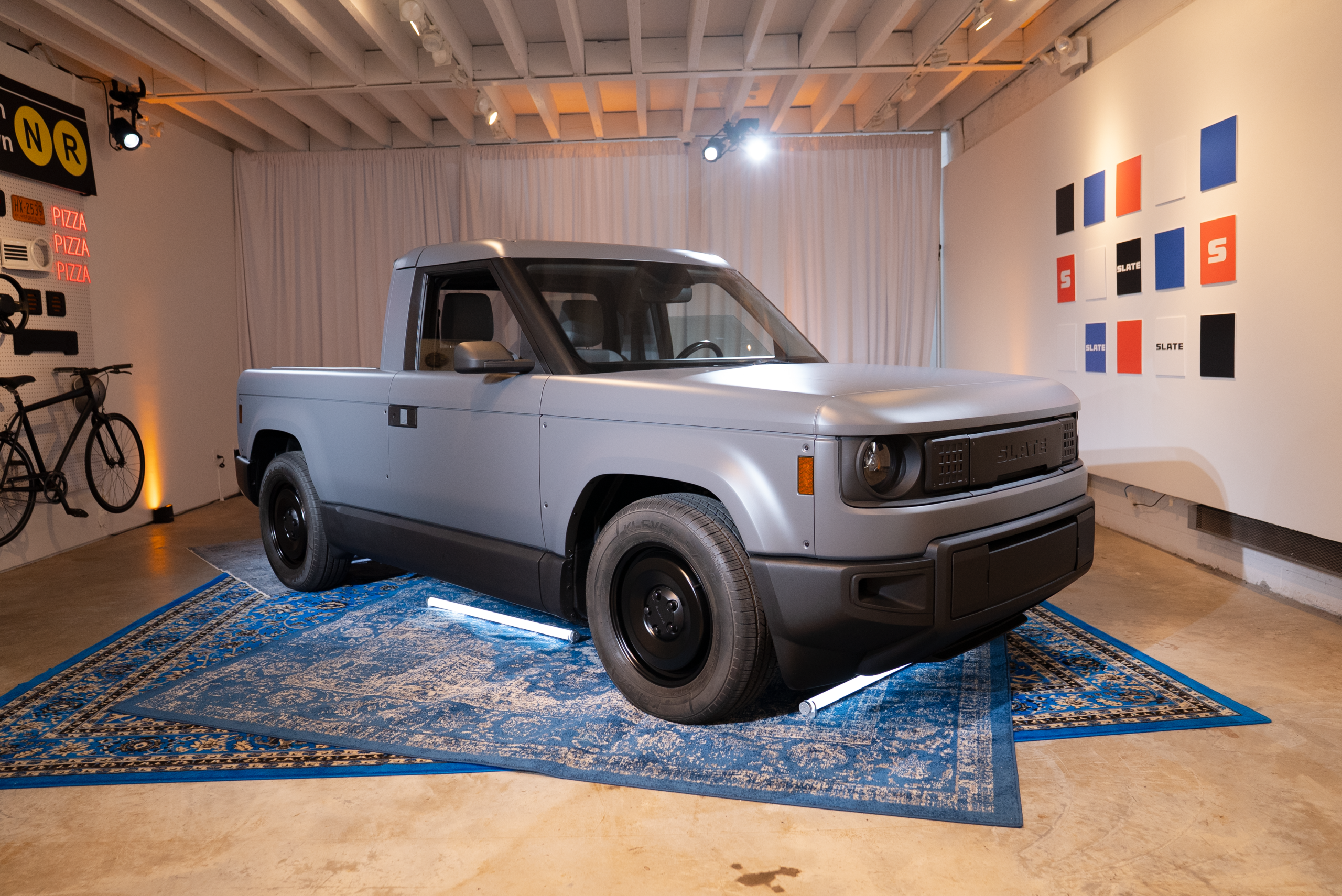

A two-seater electric pickup truck that forgoes traditional features like paint, a radio, power windows, and cell connectivity presents an intriguing question: who is its target audience? The Slate Truck stands out with its diminutive size of 174.6 inches in length, 70.6 inches in width, and 69.3 inches in height, reminiscent of Marty McFly’s Toyota SR5 from “Back to the Future.” Despite its compact exterior, the interior surprisingly offers ample space, designed to accommodate taller individuals. Slate’s head of design, Tisha Johnson, emphasizes that the spacious interior aligns with their philosophy of usability and accessibility.
Initially, the lack of common features in the Slate Truck raised skepticism. However, its minimalist design, which focuses on utility and affordability, won many over. The truck omits paint and a stereo system but allows for customer customization. The Blank Slate model lets users personalize their vehicles with wraps and 3D-printed parts and even transform the truck into an SUV with a kit. The focus on minimizing costs while offering customization aligns with Slate’s philosophy of providing users with more options.
The truck’s design does result in trade-offs, such as reduced aerodynamic efficiency, impacting its range. The Slate Truck offers two battery options—53kWh with a range of 150 miles and 84kWh with a range of 240 miles. While these ranges are modest compared to other EVs, Slate designed the truck for urban commuting, questioning conventional design approaches. Slate’s strategy banks on affordability and personalization to attract users. The company’s experimental approach to simplicity, affordability, and options might appeal to some but may also raise questions about practicality. The first trucks are expected to be delivered to customers by the end of 2026.