
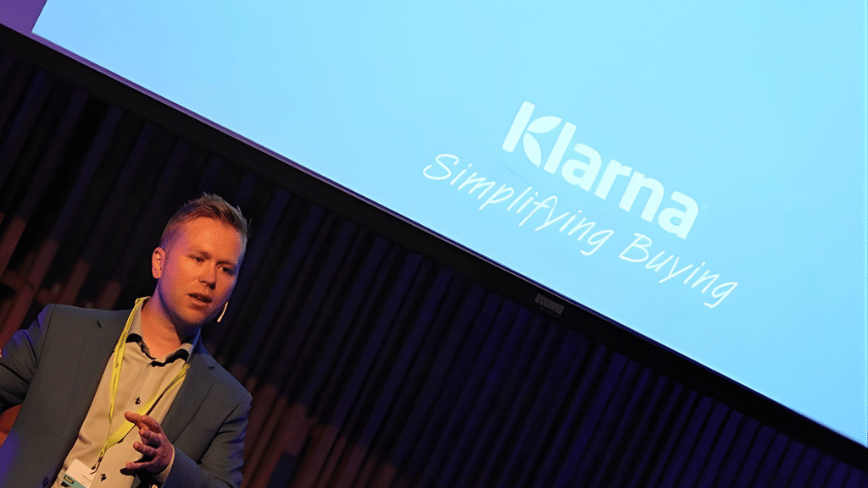

Six months after its New York Stock Exchange debut at $40 per share, Klarna’s stock has fallen to around $12. The Swedish buy-now-pay-later firm, once a symbol of European fintech on Wall Street, has seen over three-quarters of its market value vanish since September. Recently, Klarna announced a $1.7 billion significant risk transfer (SRT) with a Värde Partners-led consortium. It’s designed to free up capital for up to $40 billion in lending. This is Klarna’s largest and most efficient SRT yet, aimed at sustaining growth as markets have reevaluated its valuation.
An SRT allows a bank to transfer credit risk from a loan portfolio to outside investors, often through synthetic securitization. Although the loans remain on the bank’s books, the risk of loss is shifted to third parties. If structured correctly, this transaction offers regulatory capital relief, reducing risk-weighted assets and freeing equity for new lending. For Klarna, which operates under a Swedish banking license, SRTs enable extending capital across a wider loan portfolio than its balance sheet typically allows.
The SRT deal covers $1.7 billion in euro-denominated loans over three years. Niclas Neglén, Klarna’s CFO, highlighted the banking license as a significant competitive edge and the SRT program as key to optimizing capital use. The perception of Klarna’s business model varies; some view it as a tech company with a banking license, others as a bank with advanced software.
This transaction follows Klarna’s $2 billion deal with Elliott Investment Management, doubling a forward-flow and whole-loan sale arrangement. Klarna sells newly originated US financing receivables to Elliott-managed funds, supporting up to $17 billion in US lending over three years. Together, these agreements shape a capital framework supporting over $40 billion in lending capacity, signaling Klarna’s expansion, particularly in the US.
In the US, Klarna’s growth is robust, with a 58% revenue increase year on year in Q4 2025. The firm serves 29 million US consumers, about 11% of the adult population. Its 2025 revenue hit $3.5 billion, a 25% rise, on $127.9 billion in gross merchandise volume. Q4 saw Klarna’s first billion-dollar revenue quarter, with $1.082 billion reported. Globally, Klarna has 118 million active consumers and over one million merchants on its platform, showing rapid growth by crucial lending metrics.
However, the stock market is skeptical, with Klarna’s shares dropping from a 52-week high of $47.48 to around $12. This decline reflects caution towards fintech business models amid credit risk worries in rising consumer delinquency environments. September 2025’s IPO raised $1.37 billion with $40-priced shares, oversubscribed 25 times. That initial enthusiasm has faded.
Klarna focuses on capital efficiency rather than retreating. The SRT and Elliott agreements aim to grow lending without bloating the balance sheet, a valid strategy provided credit performance stays strong and investor interest in underlying risks holds. Värde’s involvement, after $13 billion deployment since 2008, proves their familiarity with European risk transfers. Elliott’s participation shows confidence in Klarna’s consumer receivables credit quality.
Klarna explores AI to enhance efficiency, cutting its workforce from 7,400 to 3,000 through attrition and hiring freezes, substituting some roles with AI. CEO Sebastian Siemiatkowski noted an AI assistant replaced 700 customer service agents, aligning with a pay increase for remaining staff. However, Klarna shifted to a hybrid AI-human service model due to quality issues with full automation, complicating the narrative of seamless efficiency.
The BNPL sector, mature beyond initial hype, faces tighter regulation in the EU, UK, and Australia, with credit losses surpassing pandemic lows. Klarna’s banking license, initially a shield for deposits and lending, now aids accessing SRT capital relief, usually used by established banks not tech entities.
Klarna is crafting a capital-light lending framework with the SRT program, Elliott deals, and banking infrastructure, originating loans at scale while transferring risks to eager institutional investors. Success depends on consistent creditor trust from entities like Värde and Elliott, fragile if Klarna’s credit performance falters.
Despite market doubts, Klarna’s operational strategy shows promise. Revenue grows, the user base expands, and its capital structure matures. Still, a 76% drop from IPO highs remains a critical market verdict. Klarna’s upcoming financial engineering tests will assess whether this judgement is premature or accurate, contingent on consumer credit’s future health and whether $40 billion in lending becomes a growth catalyst or a liability.