
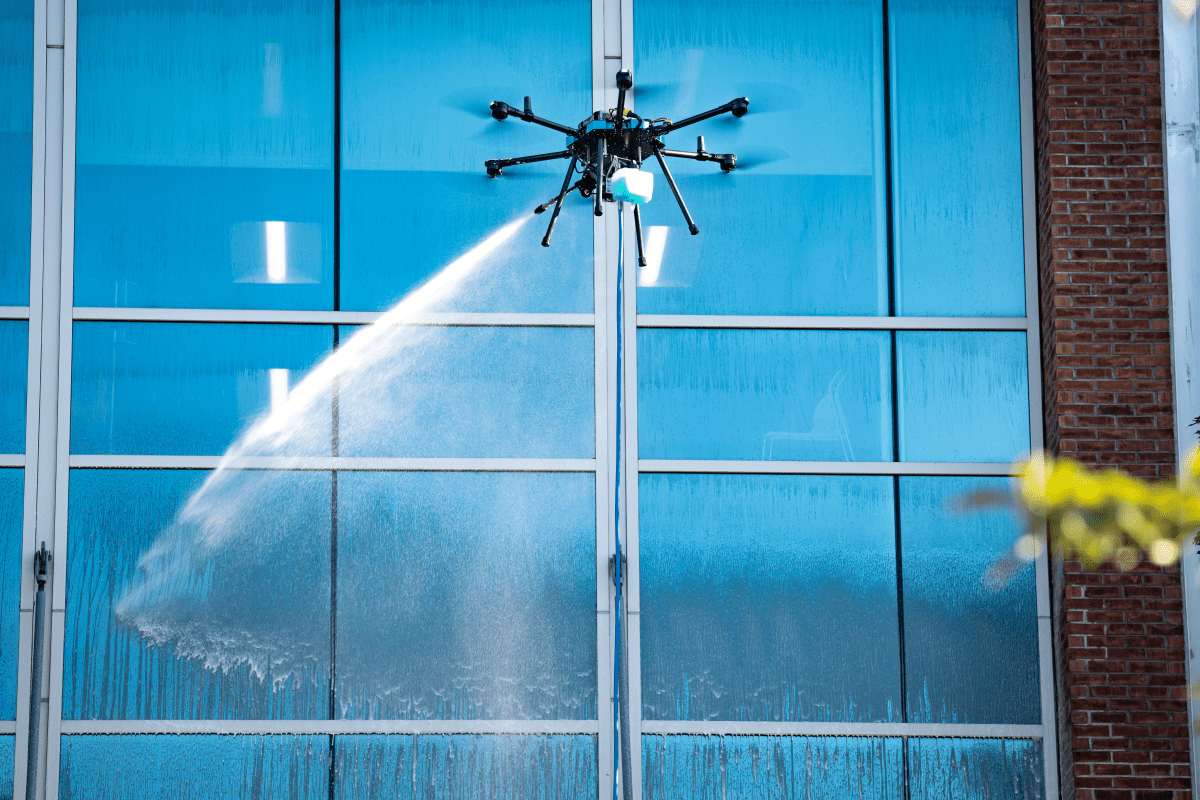

Andrew Ashur, founder and CEO of Lucid Bots, a window-cleaning robot startup, humorously describes his company as the opposite of the current robotics trend. While many firms are focused on creating humanoids or showcasing robots performing stunts, Lucid Bots’ drones are working to make traditionally risky tasks like window cleaning safer and more efficient.
“The reality is many are still selling hype, and we offer performance that impacts our customers’ profits and losses,” Ashur told TechCrunch. “We’re not just in labs but on actual job sites.”
Based in Charlotte, North Carolina, Lucid Bots is a full-stack robotics firm offering Sherpa drones and Lavo robots to cleaning companies. The company designs and manufactures its robots in the U.S. and recently completed a $20 million Series B round co-led by Cubit Capital and Idea Fund Partners, totaling $34 million in funding.
The funds will be used to hire more staff to meet demand, as Ashur joked they have run out of parking spaces at their facility. “We have more demo requests than time allows, so we need to expand capacity and staff,” Ashur said. “It’s challenging when we can’t fit in all the demos.”
Initially, demand from customers and investors was low. It took five years to ship the first 100 robots, requiring significant effort to convince VCs to support a founder without robotics experience.
Ashur conceived the company while studying at Davidson College after witnessing window washers struggle on a windy day. This inspired him to think about technology’s role in enhancing safety.
“Built infrastructure is the world’s largest asset class, yet we face aging structures, expanding complex infrastructure, and fewer workers. We needed drones and robots to bridge the gap,” Ashur stated.
Founded in 2018, Lucid Bots started as a cleaning company, taking contract jobs to understand the industry better. After two years and some chemical burns, they designed the drone they needed.
Recently, Lucid Bots has gained sales momentum, nearing 1,000 units sold. They continue to improve their robots and drones, using data to refine their products. They’re also expanding into areas like painting and waterproofing.
“We recently waterproofed a large university stadium using the same technology as the Sherpa,” Ashur said. “Our existing customers led us there, and we’ve received about 50 leads monthly for painting and coating before marketing that option.”